
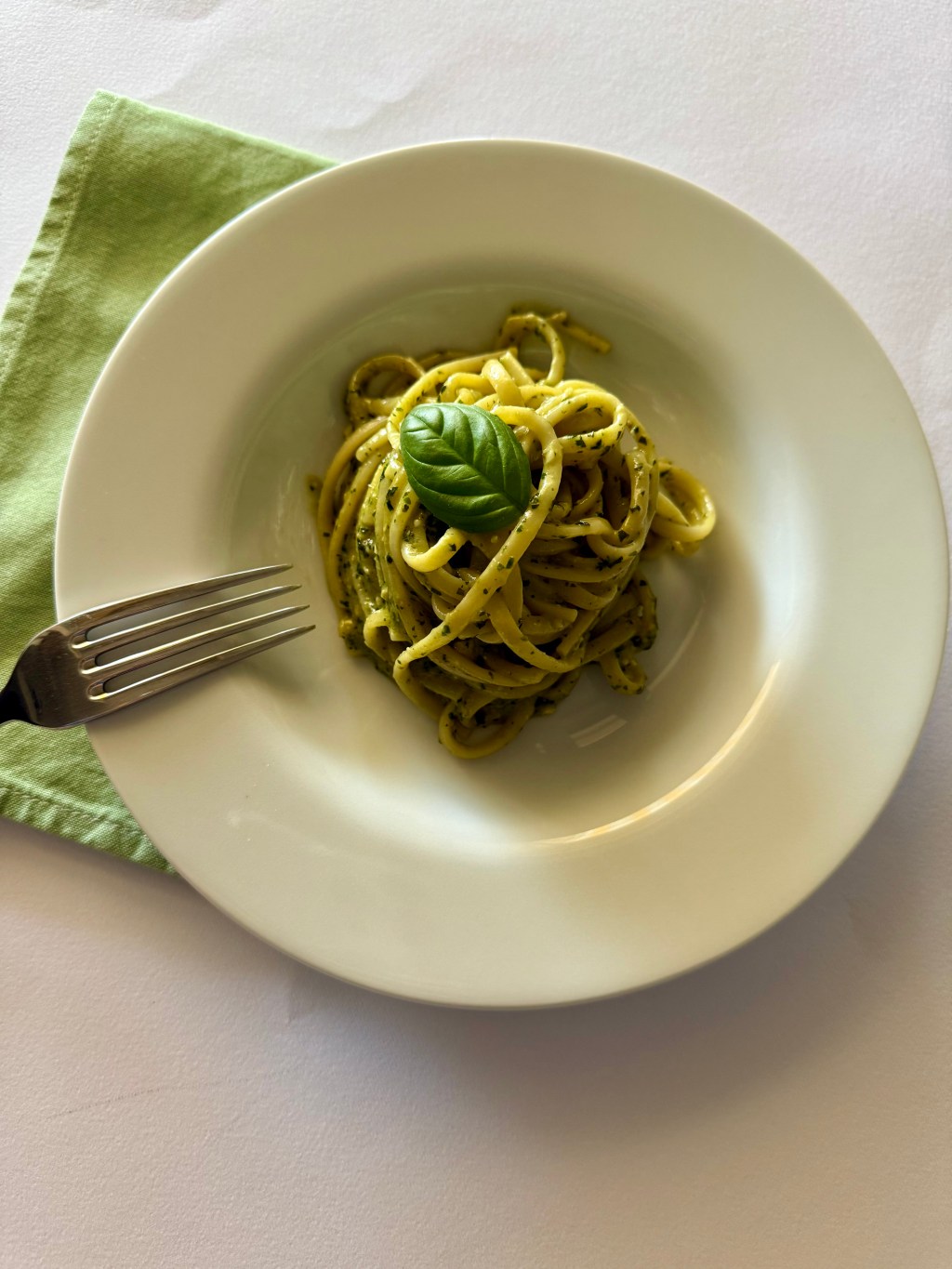
Pasta with pesto alla genovese is the typical dish from the Liguria region, in the north-western part of Italy.
Pesto is a tasty green sauce made with basil, pine nuts, Pecorino and Parmigiano Reggiano cheeses, olive oil, and salt.
Buy it readymade in a jar and it will liven up the monotony of student cooking when you’re at uni.
And once you’ve grown up (and have even less time to cook and now have a family to feed!), you’ll find that those jars will continue to be a lifesaver.
But today we’re going to make our own pesto. It’s a hot summer’s day, and when it’s like this, we all crave something freshly made.
I’ve bought everything I need to make my homemade pesto and I’m already getting all that wonderful zingy fragrance from the fresh basil.
For the pesto sauce
Makes 2/3 good-size portions.
- 60g fresh basil leaves
- 30g pinenuts
- 25g grated Pecorino cheese
- 25g grated Parmigiano Reggiano cheese
- 1/4 tsp ground garlic, or as much as you prefer. I tend to go light on garlic.
- 1/4 sea salt, quanto basta (as much/little as you prefer)
- 90ml olive oil
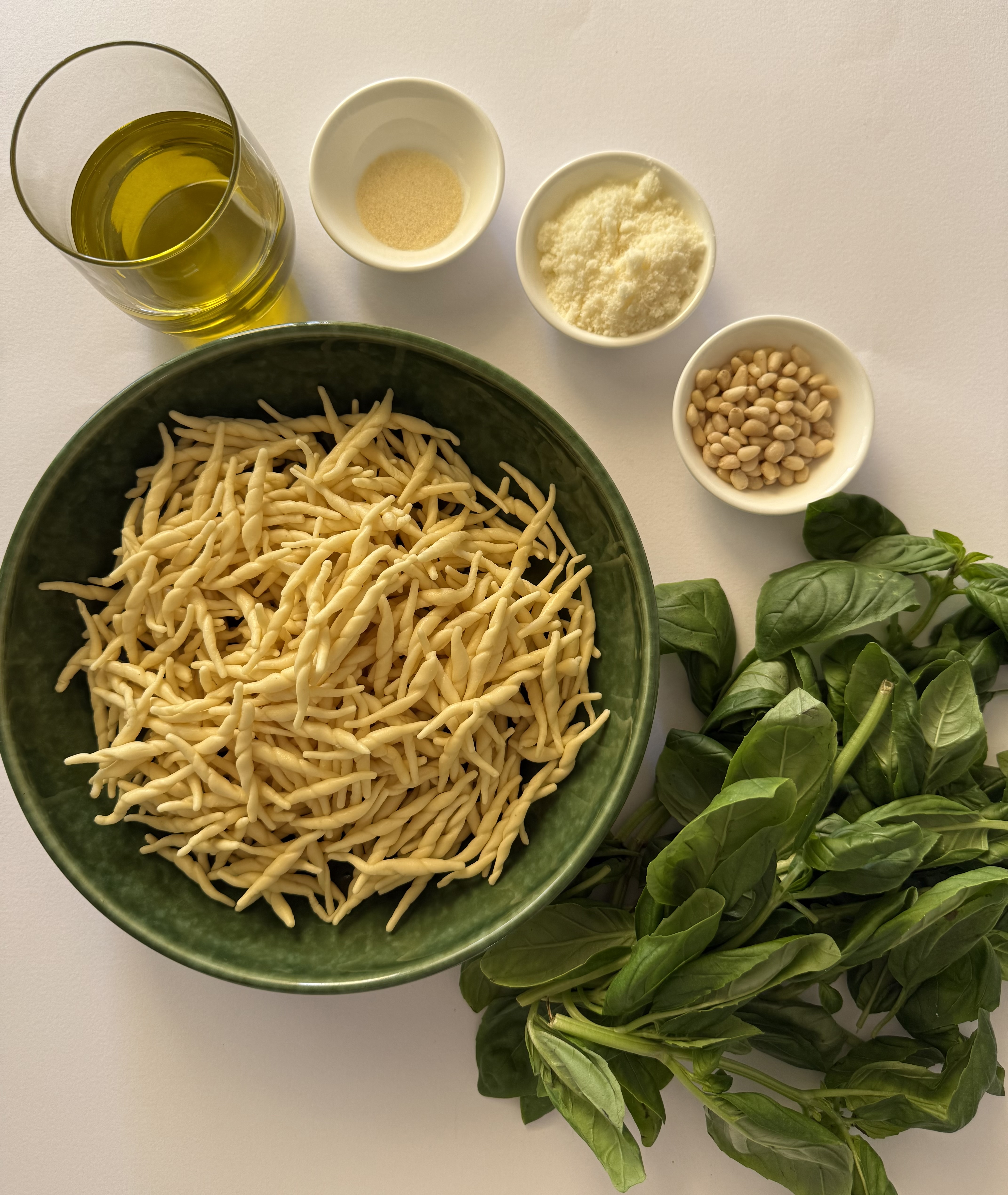
For the pasta
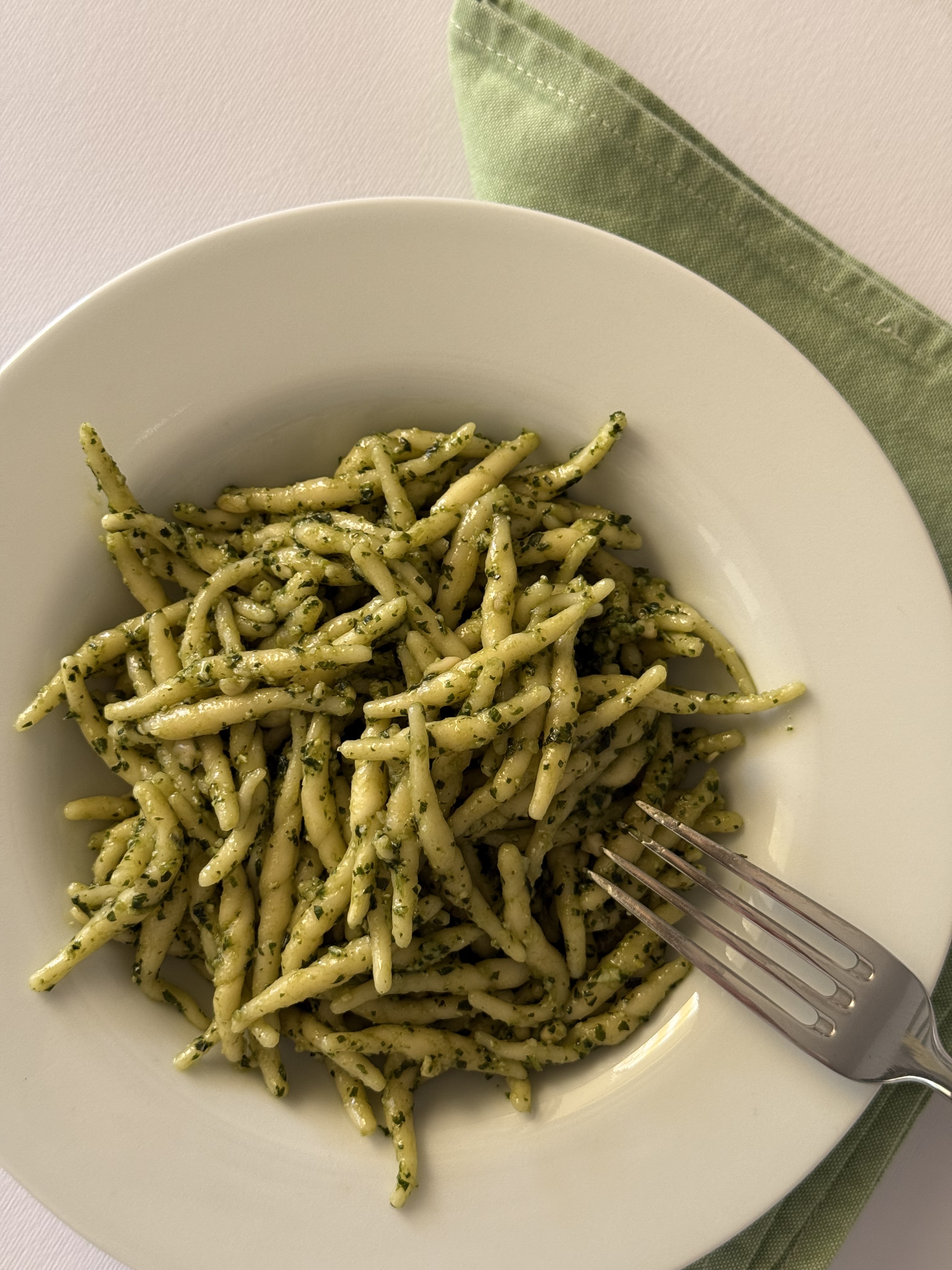
It’s nice to change up your pasta shape sometimes, so I served my pesto with traditional e Ligurian pasta: trofie—short pasta which is short and thin with a twist in the middle; and the second time with linguine—a long pasta like flattened spaghetti.
You’ll need minimum 80g to 150g of dried pasta or 100-150g of fresh pasta per person.
You’ll find many different recipes for pesto on the Internet. The same ingredients but in really varied quantities. There is no right or wrong recipe but this one works for us. You can always tweak the recipe to your liking.

To make the sauce
I used my mini food processor for this. I put all the ingredients inside, pushing down the basil leaves and adding the oil a little at a time, with a good mix in between. Once it’s reached a creamy consistency, your pesto is ready.
To serve
Cook your pasta al dente. Once it’s ready, take out a cupful of the boiling water- you’ll need it in a minute. Then drain the pasta.
Put the pasta back in the pan and add your pesto to the pasta.
Stir with a fork until the sauce is well mixed in. Adding some of the reserved pasta water from the cup will help make it creamier.
Then plate up your pasta with pesto and sit back and enjoy reading the look on your family’s faces as they tuck in: You.Made.This?
You can buy basil plants at your local supermarkets. There are usually three or four small plants inside. The best thing to do to make them last longer is to repot them in a larger pot of soil, separating the stems from each other and giving the plants some space to grow.
I did this one year and the basil did really well. We named it Billy and even took him on holiday with us to Bibione on the Adriatic Sea. We put basil leaves in every pasta dish we made and every salad and even in a glass of water with lemon slices. Ah Billy, you were the best!


 casaalison
Leave a comment