
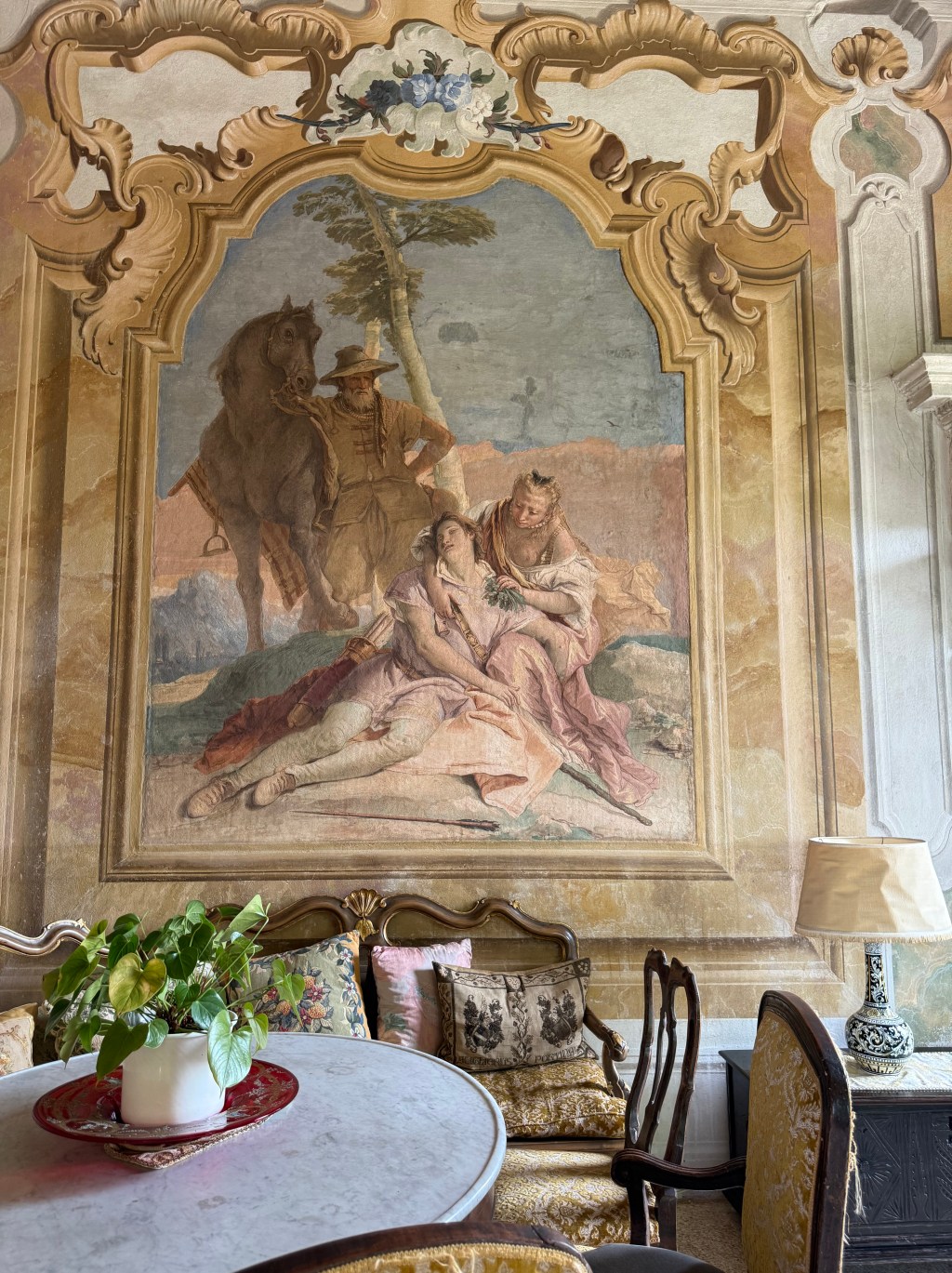
If you enjoy art and nature then you will adore Villa Valmarana ai Nani, a charming villa located in the hills above Vicenza and famous for its beautifully detailed frescoes by Gianbattista Tiepolo (1696-1770) and his son Giandomenico Tiepolo (1727-1804).
Inside, you can also admire some tastefully decorated rooms with beautiful furniture and ornaments and faux flowers.
The History of the Villa
The villa was built for local lawyer Giovanni Maria Bertolo (1631-1707), who died without heirs. Following his death, the villa was bought by the San Faustino branch of the Valmarana – a local noble family – in 1720. To this day, it is still in the hands of the Valmarana.
The Legend of the Dwarfs
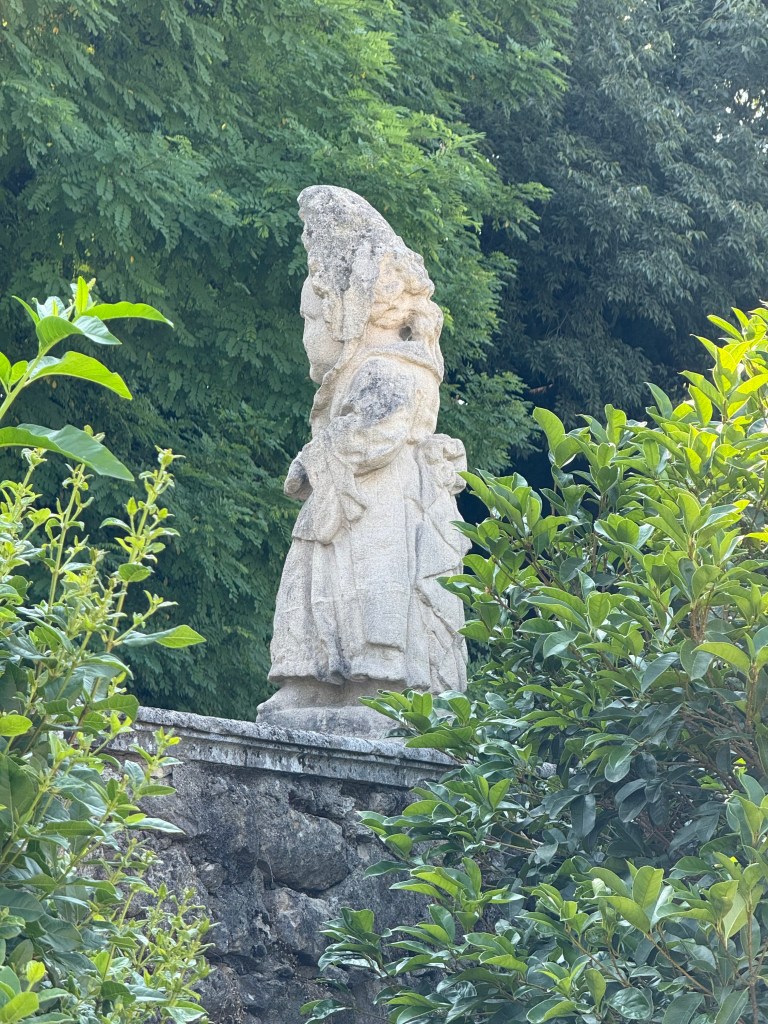
Nani in Italian means dwarfs. This is one of the statues of the dwarfs set on top of the wall enclosing the grounds of the villa.
Legend has it that there was once a dwarf princess living in the villa.
A Tour of the Villa
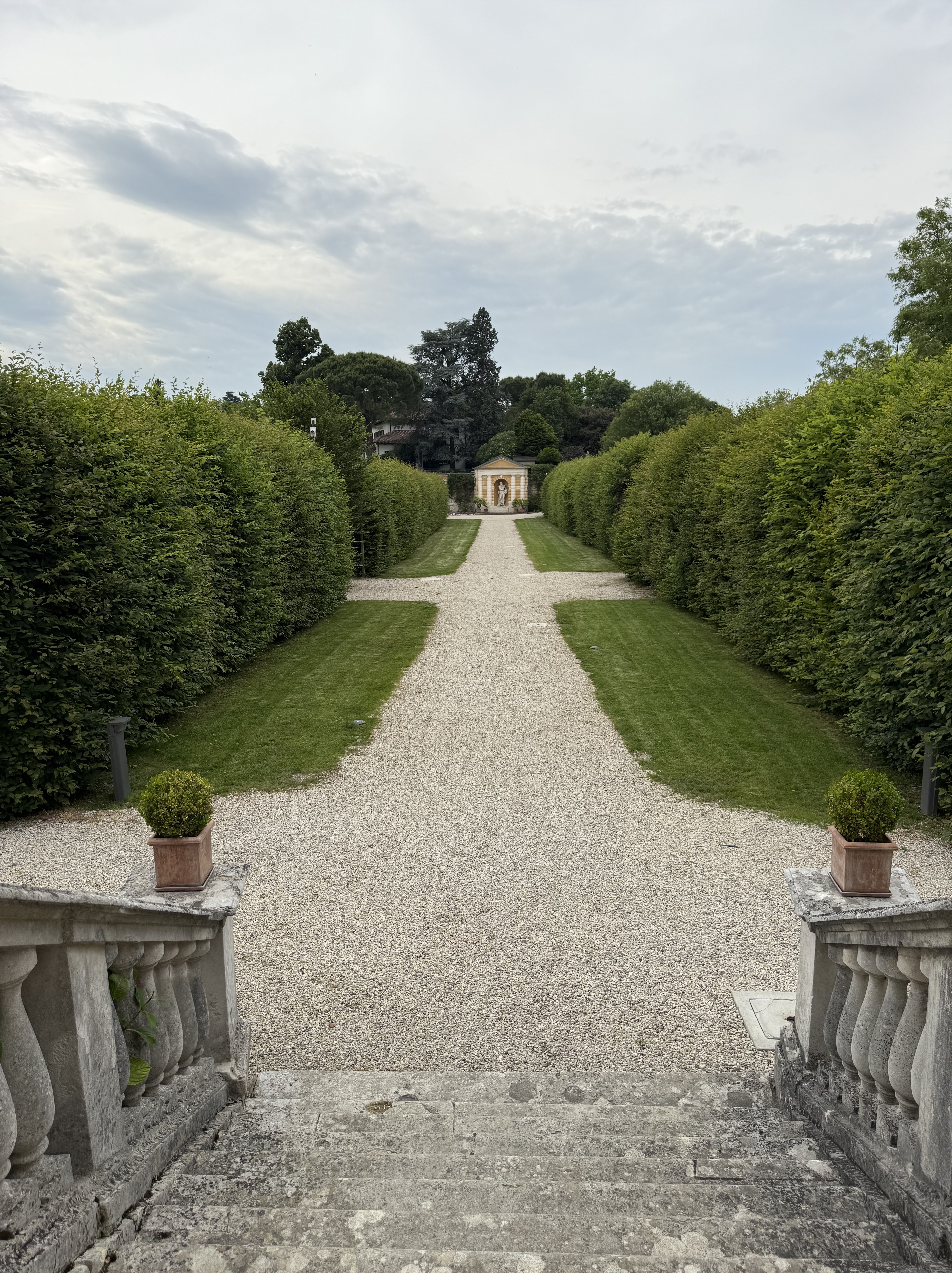
I visited three areas: the Main House, the Guesthouse, and the Park. We’re going to go up this wonderful flight of stone steps and start our tour in the Main House.
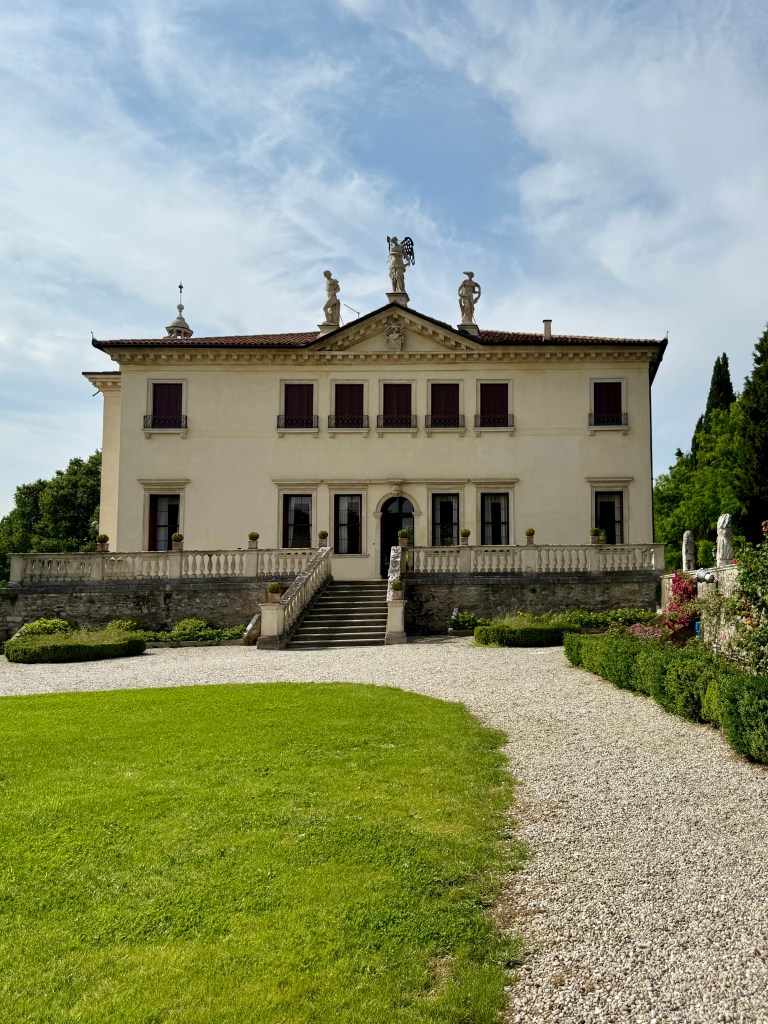
Inside the Main House there’s the Main Hall and four other rooms, all decorated with frescoes by Giambattista Tiepolo.
You’ll notice that these frescoes have a common colour theme of pastels. Each fresco illustrates a different scene from classical Greek literature. Each room carries the name and the author of one of these major works.
You can look at these frescoes as beautiful paintngs alone. And you can also read them as visual stories representing intense, and ever eternal human emotions.
The Main Hall
The frescoes in this room tell the story of the sacrifice of Iphigenia.
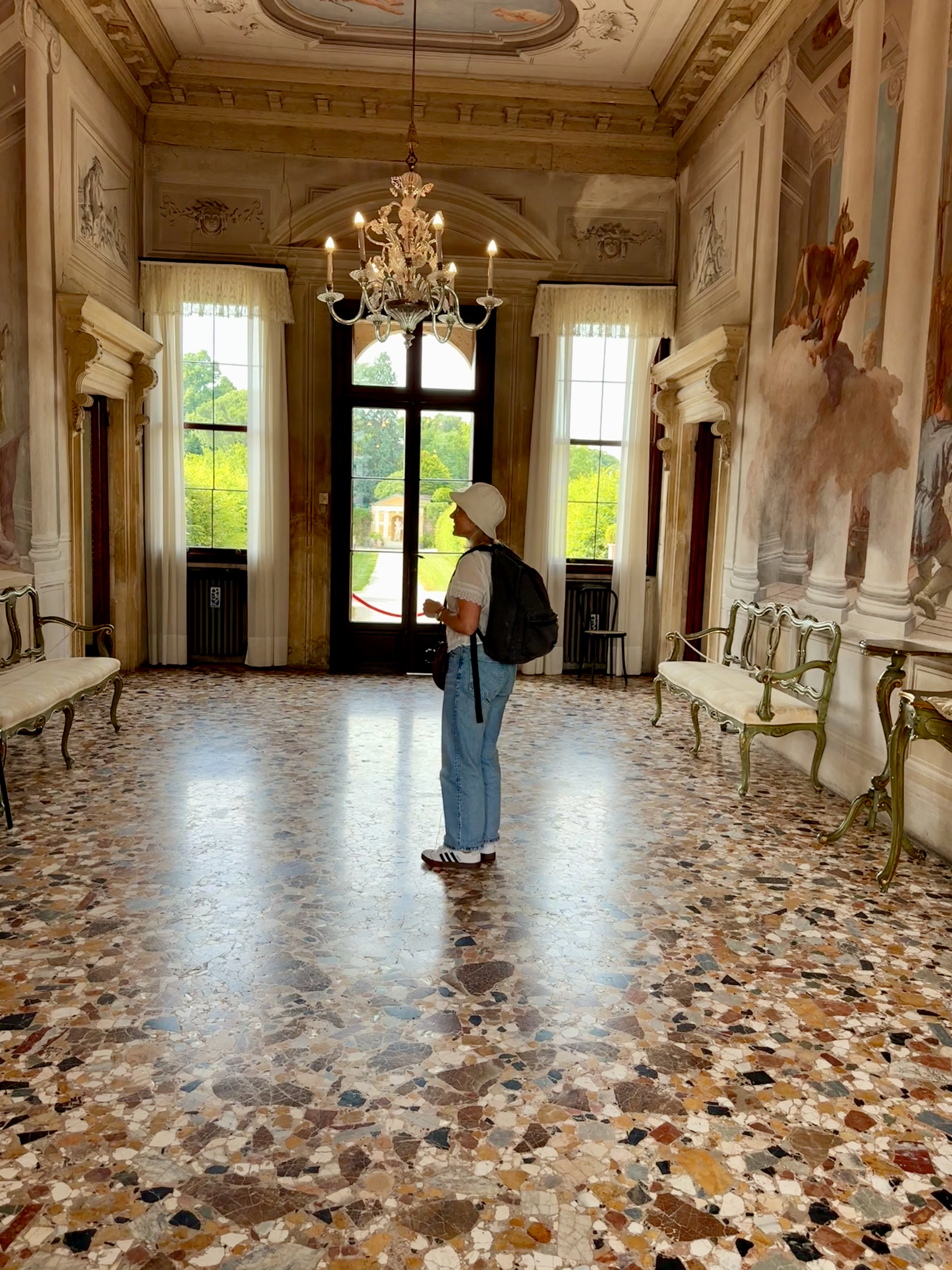
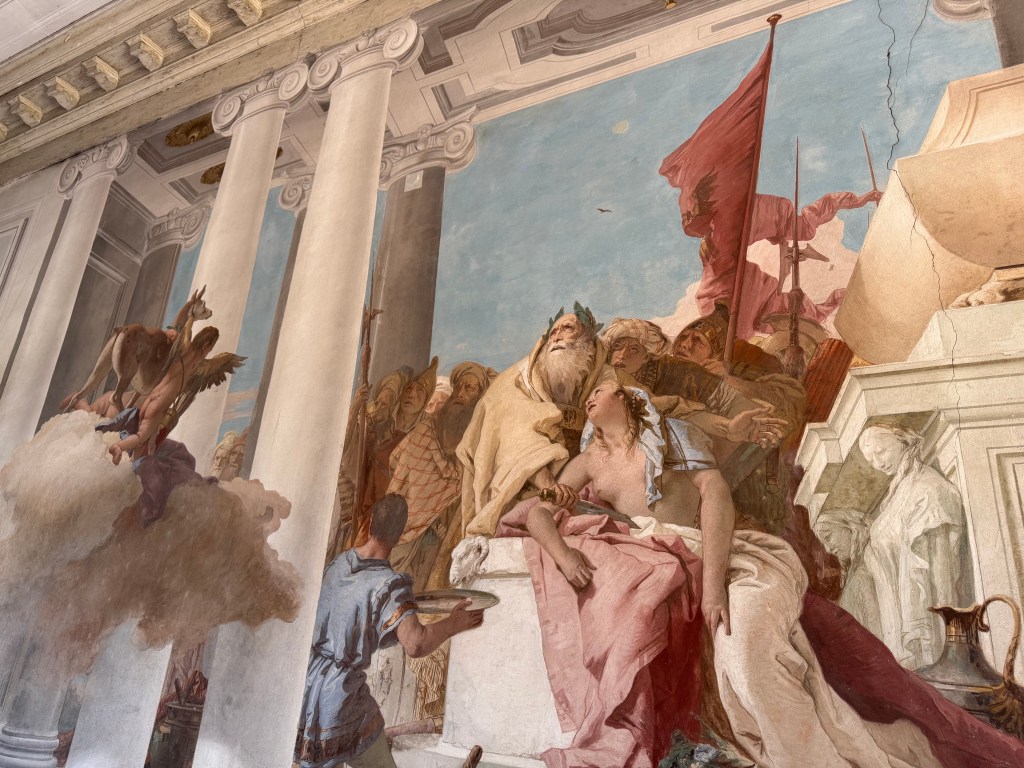
The story is set during the wars between Greece and the city of Troy. The Greek king, Agamemnon, must sacrifice his daughter Iphigenia to the goddess Artemis in return for favourable winds for his fleet of ships. In this version of the myth, the goddess takes pity on the family and a deer is sacrificed in place of Iphigenia.
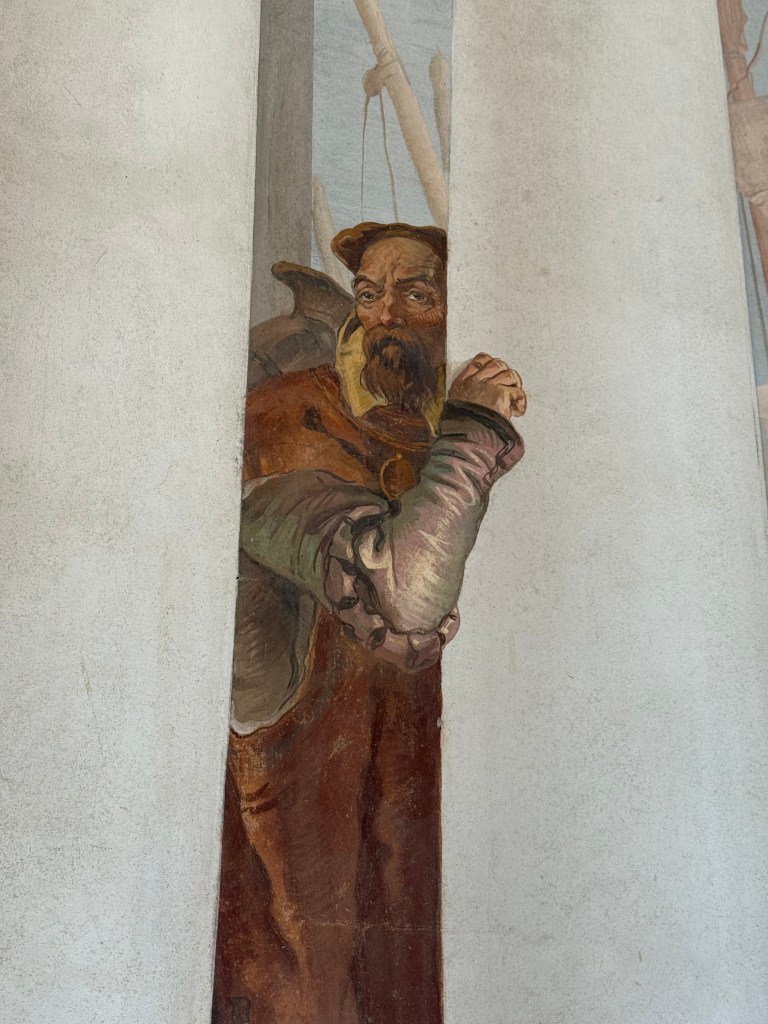
The gentleman peeping out from behind this frescoed column is Giustino Valmarano who commissioned Tiepolo to create the frescoes.
The other four rooms around the Main Hall
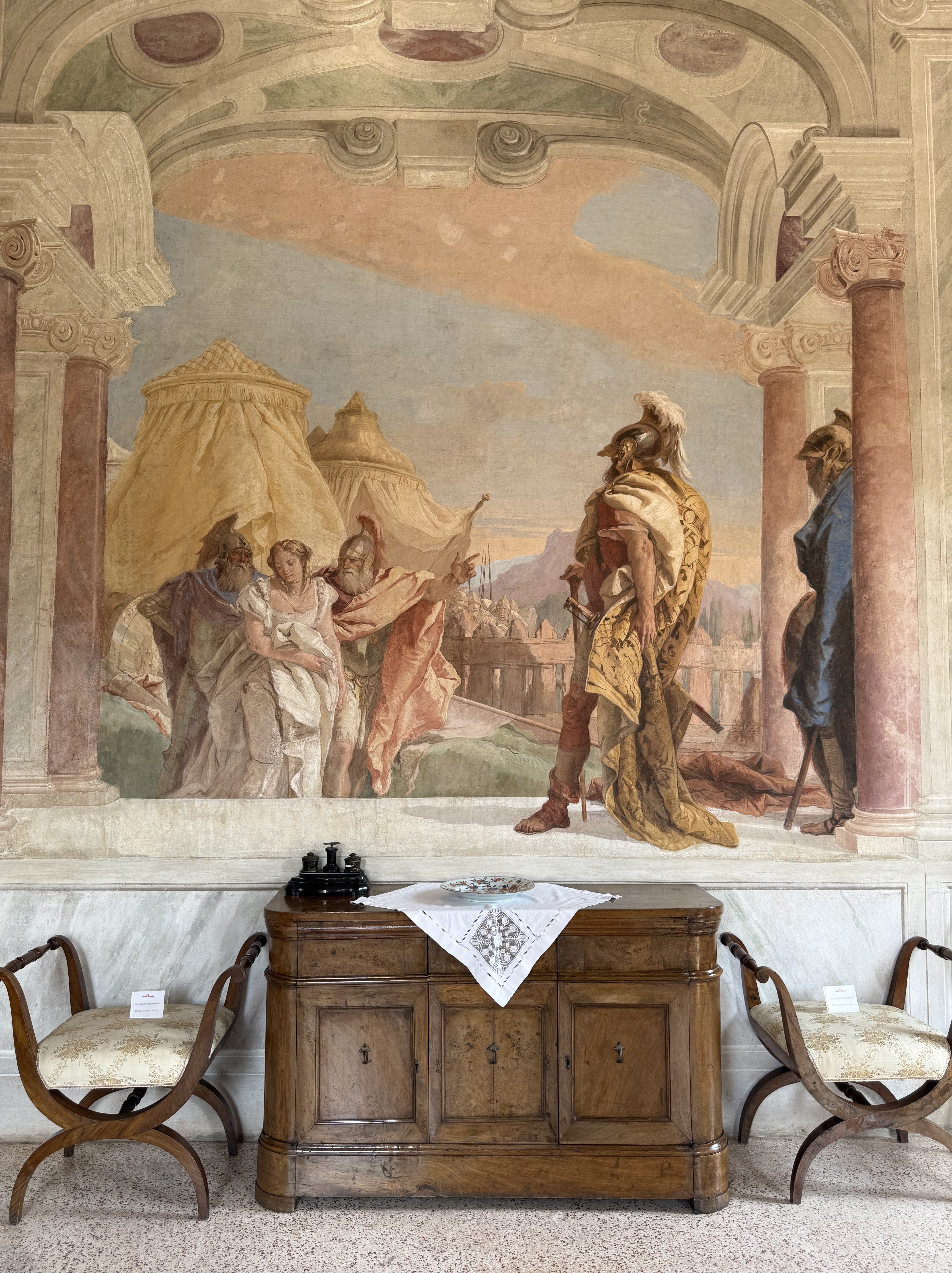
The Iliad Room (Homer)
In this story, Agamemnon kidnaps Achilles’ slave girl. This enrages Achilles who symbolically removes his helmet and withdraws from the Trojan Wars..
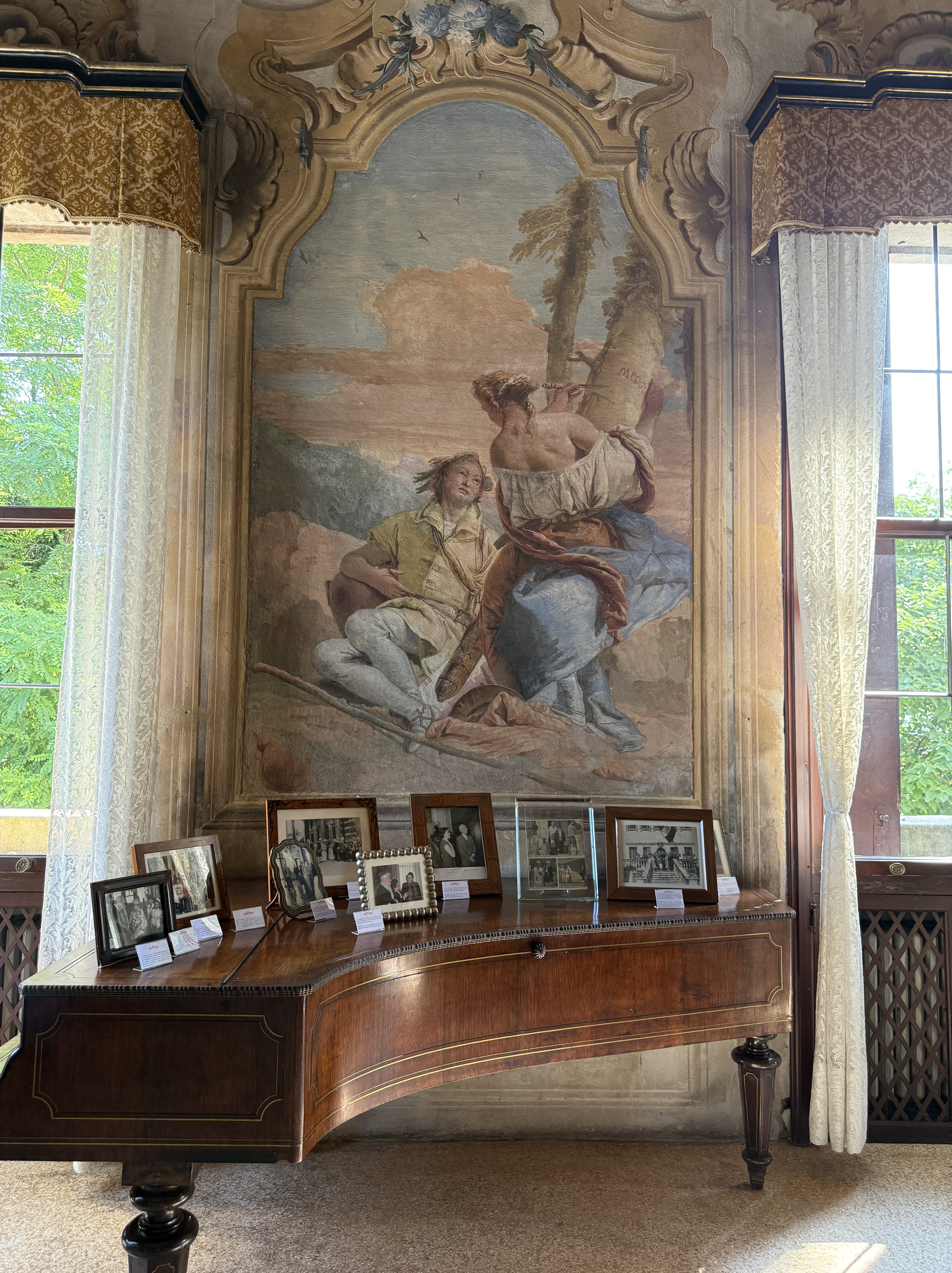
Orlando Furioso (Ariosto)
The Christian knight, Orlando, is in love with princess Angelica. But she, in turn, has fallen in love with a simple soldier. The two carve their names in a tree as a sign of their mutual love – driving Orlando crazy.
Aeneid (Virgil)
These frescoes show the story of the Trojan hero, Aeneas, whose incredible destiny is to found a new city in Italy: Rome.

This ceiling is a testimony to the destruction of war. It was damaged by flames from Allied bombing during World War II.
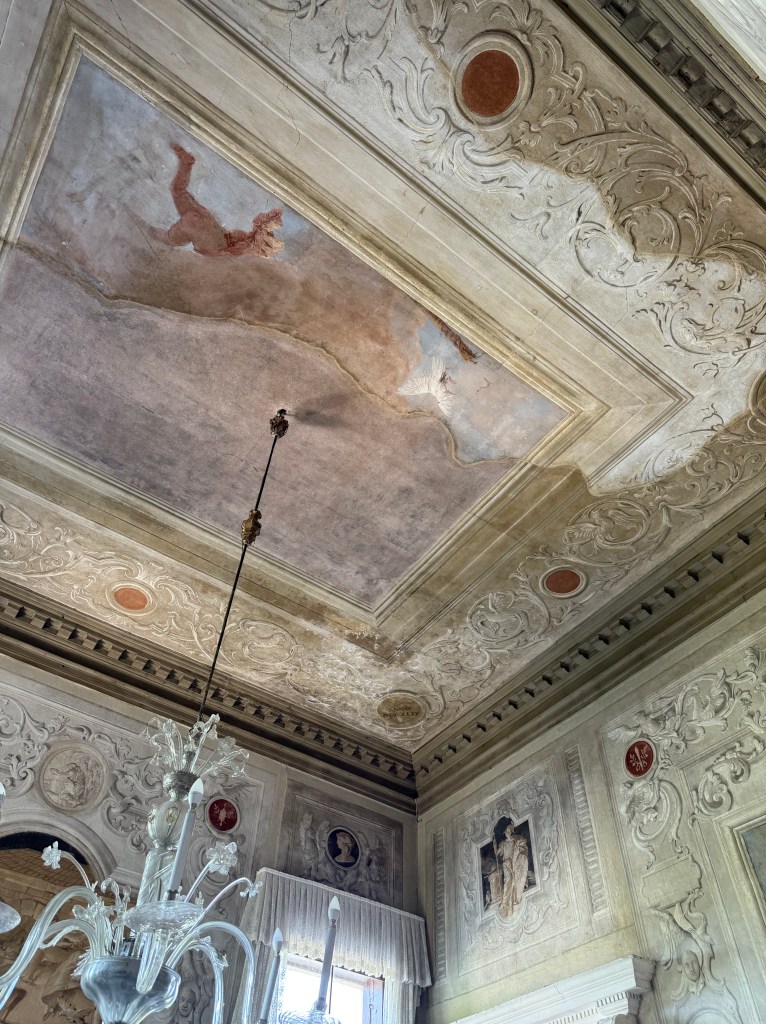
Jerusalem Delivered (Tasso)
This story goes back to the time of the Crusades and the adventures of the Christian knight, Rinaldo. In this scene, his duty is tested when he falls under the spell of the enchantress Armida.
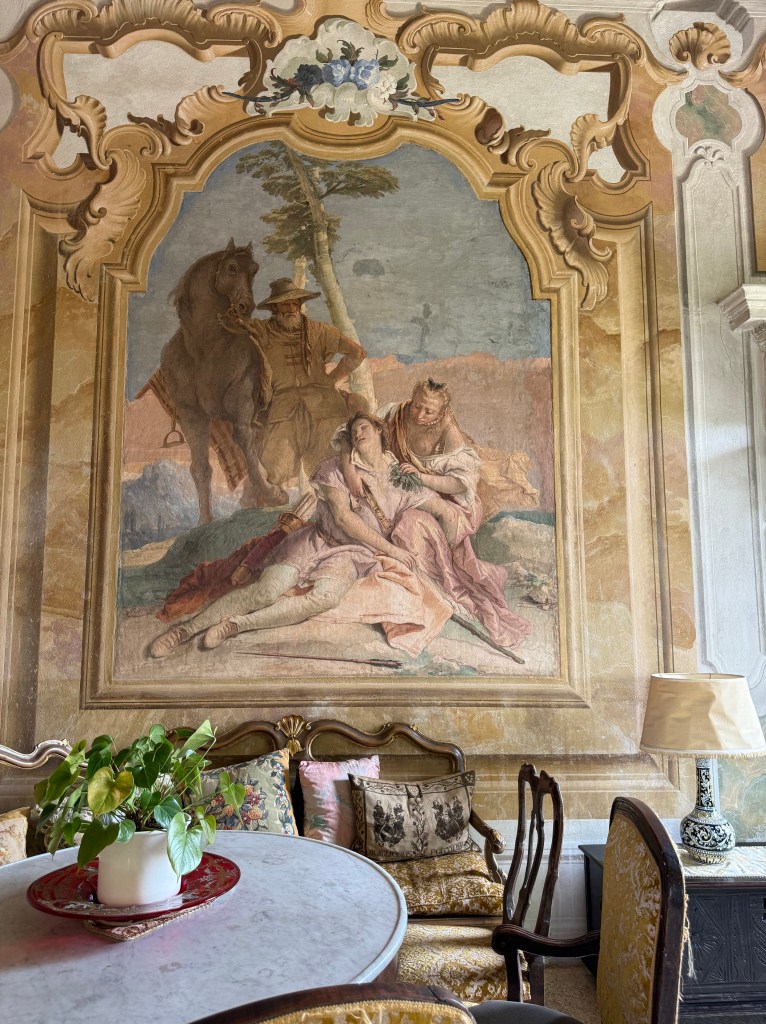
The Guesthouse
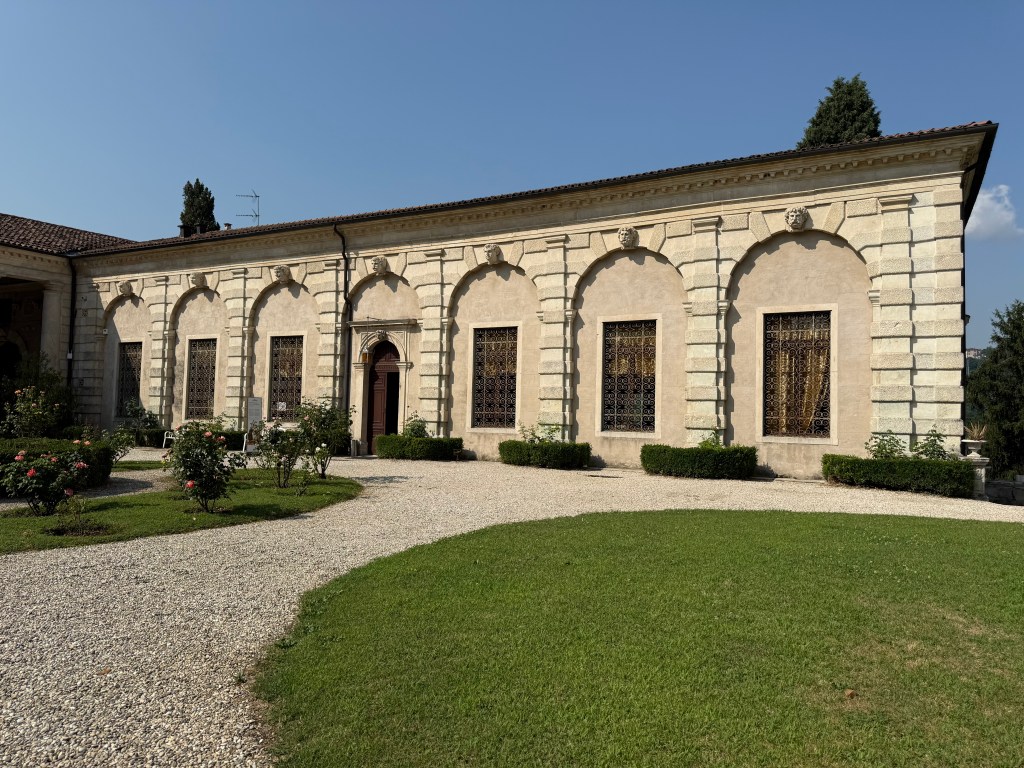
After our visit to the Main House is over, there is still so much to see and now we’ll go to the Guesthouse; this building here with the walled in arches to keep out the summer sun and the winter cold.
The Main Hall
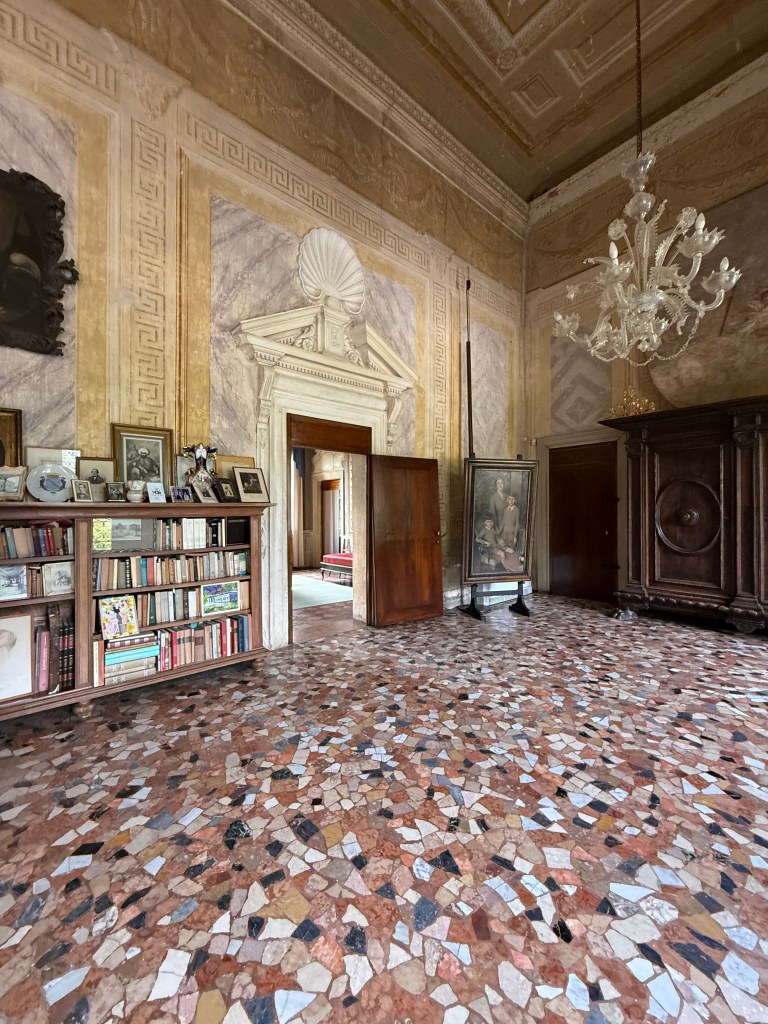
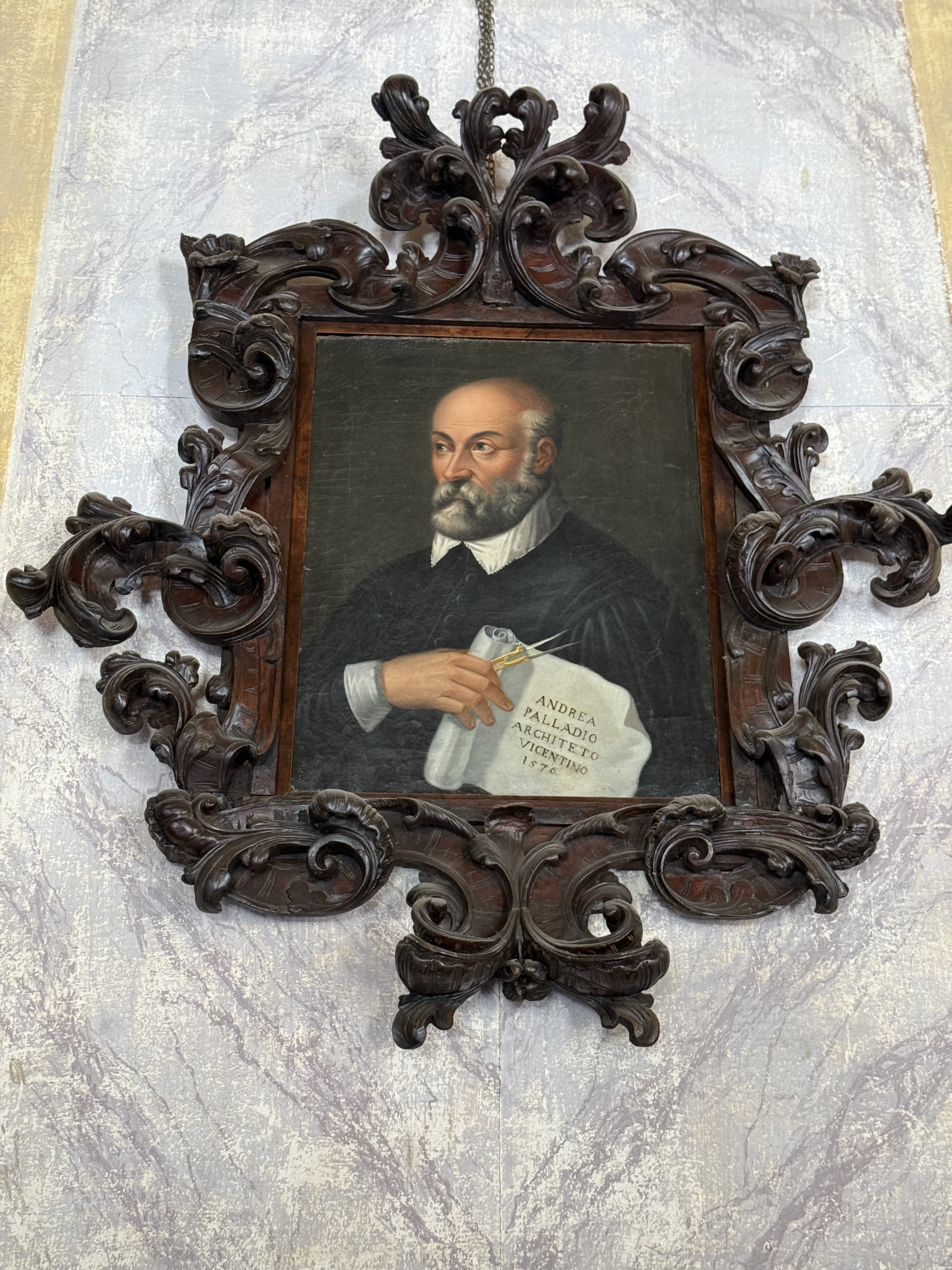
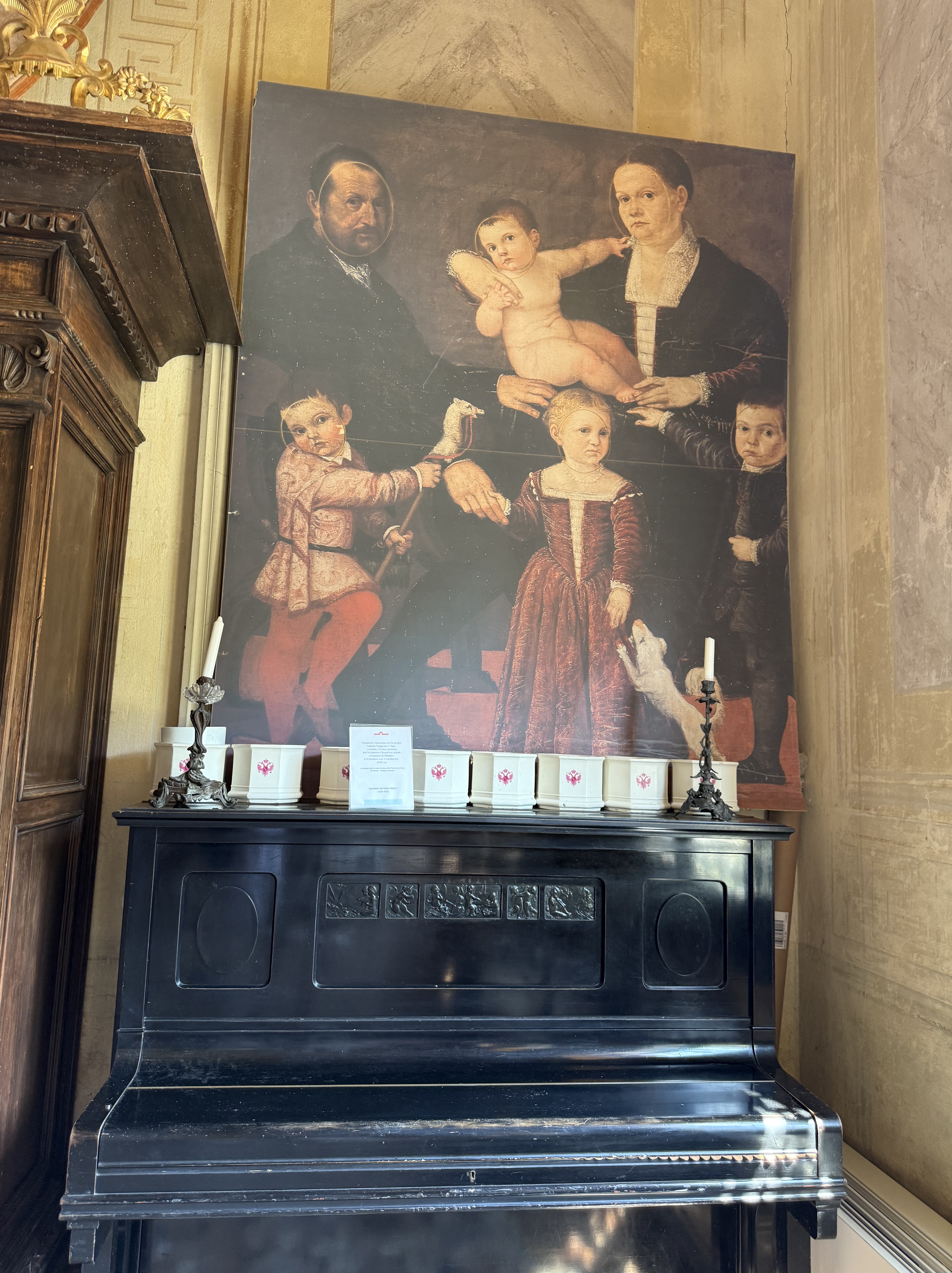
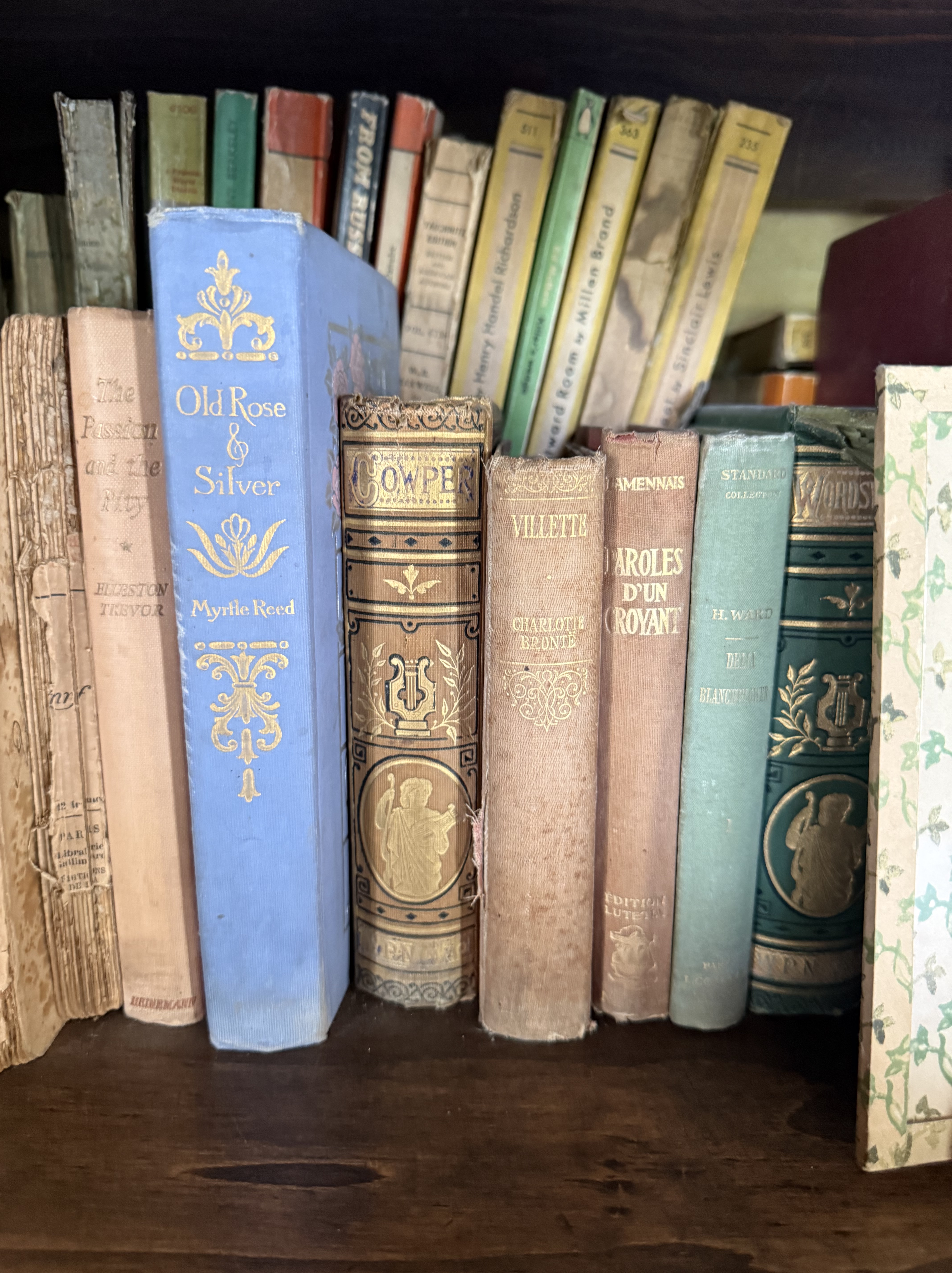
Take your time to wander around the Main Hall as it’s full of unexpected items. Bookcases with interesting books, a portrait of Palladio and a Valmarana family portrait
The Rooms
Leaving behind the Main Hall, the next part of the visit continues with rooms decorated by Giandomenico Tiepolo. compared to the rooms in the Main House, you’ll see that the colours of the frescoes are more intense.. The subjects are real people – nobles and country people and their everyday lives.
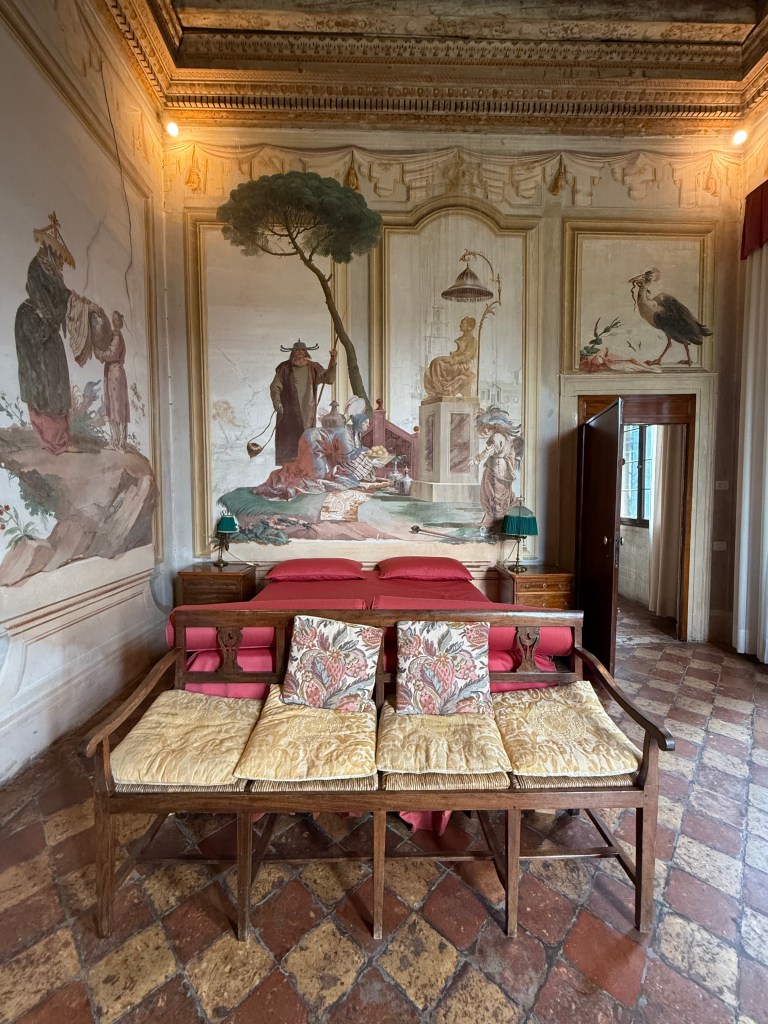
The Chinese Bedroom
There are a lot of things going on in this incredible room. Above the bed, you can see a woman making offering of fruit to a goddess.
There are frescos showing the commerce of silk and porcelain.
Vegetation appears to be literally growing over the frames of the frescos, making the space seem bigger than it is.
The Peasants Room
Yet another magnificent room. This one has a highly decorated ceiling. The frescos show country people having a rest from their labours. If you look carefully, you can see they’re eating polenta, a poor man’s food. Polenta is still typically served with traditional autumn and winter dishes in northern Italy.

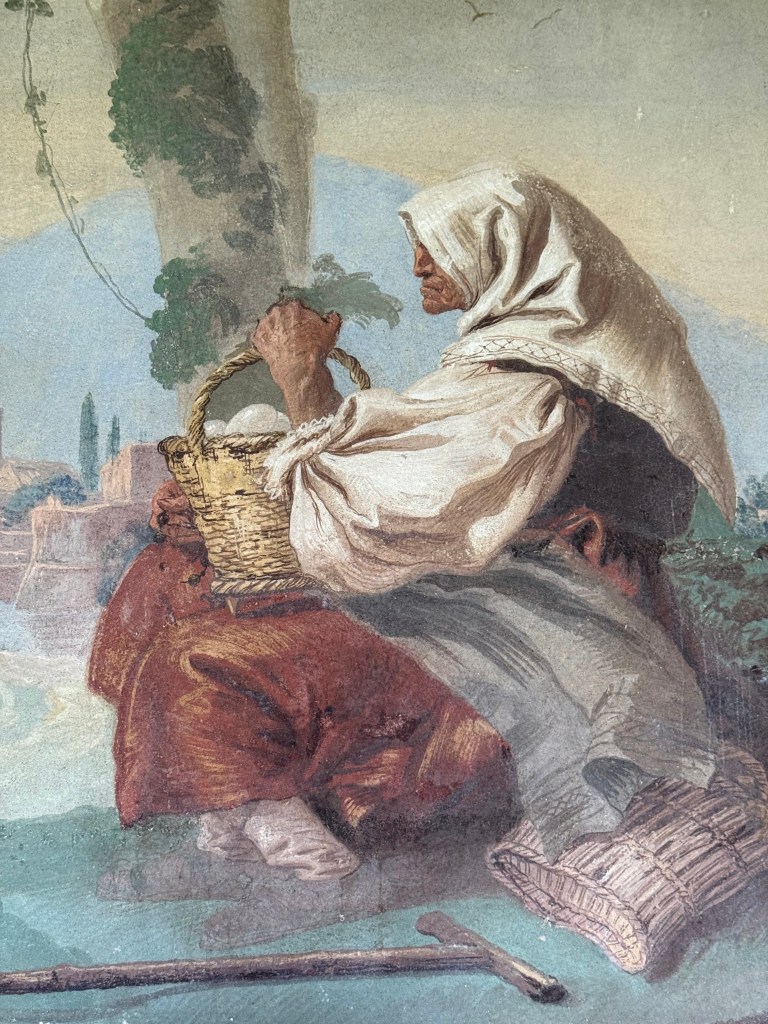
The Walks Room
The frescoes in this room show two noble ladies going for a walk at sunset. In the middle and holding a parasol is a cicisbeo (lover or escort of a married woman in 18th century Italy).

I adore this room especially because I think the soft furnishings have been chosen really well. That soft moss velvet sofa with those scrunchy cushions in orange and dark red. I would love to lounge there with a good book for an afternoon.
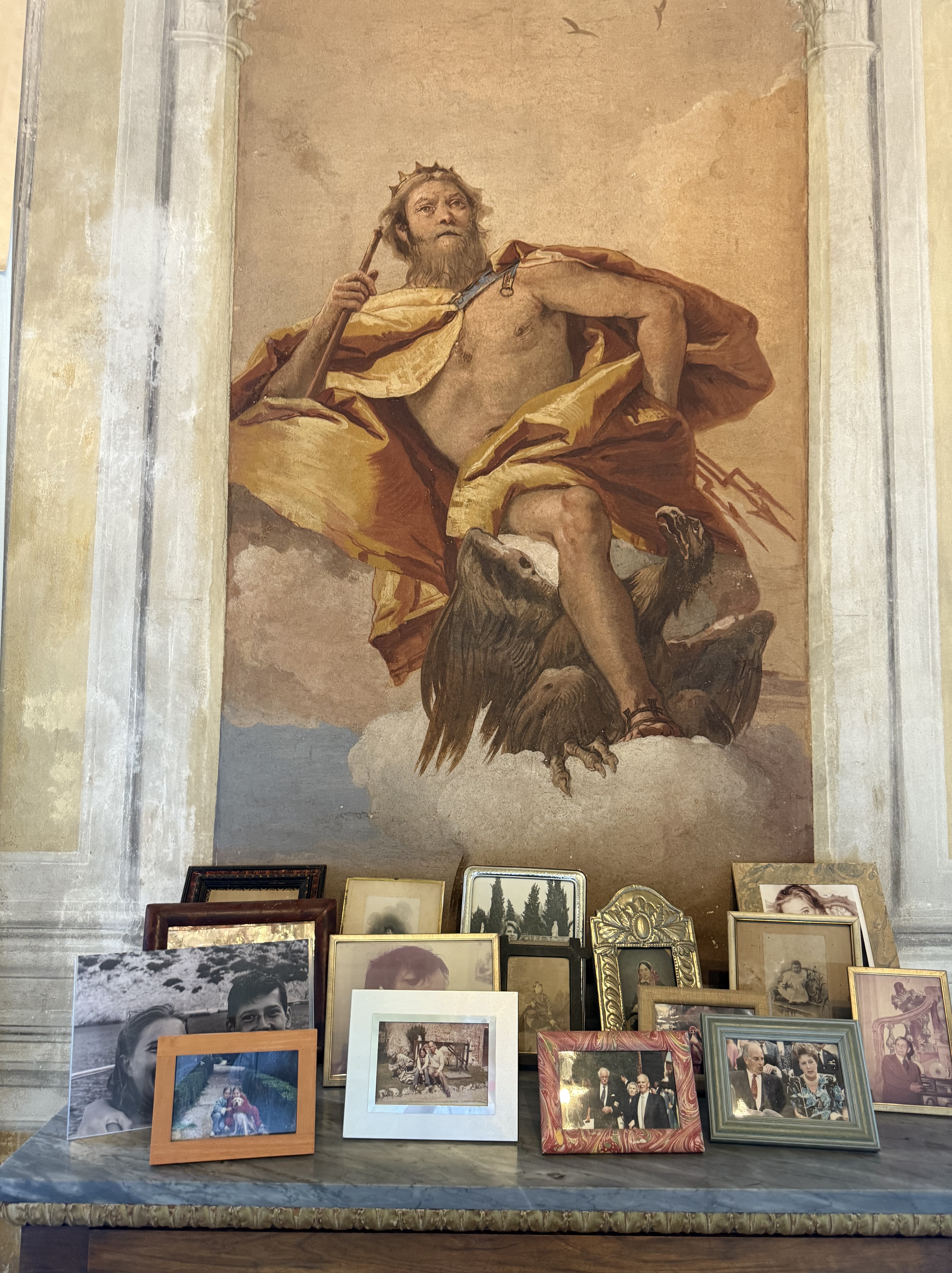
The Gods of Olympus Room
A return to classical themes as this fresco was painted by Giambattista Tiepolo.
The Carnival Room
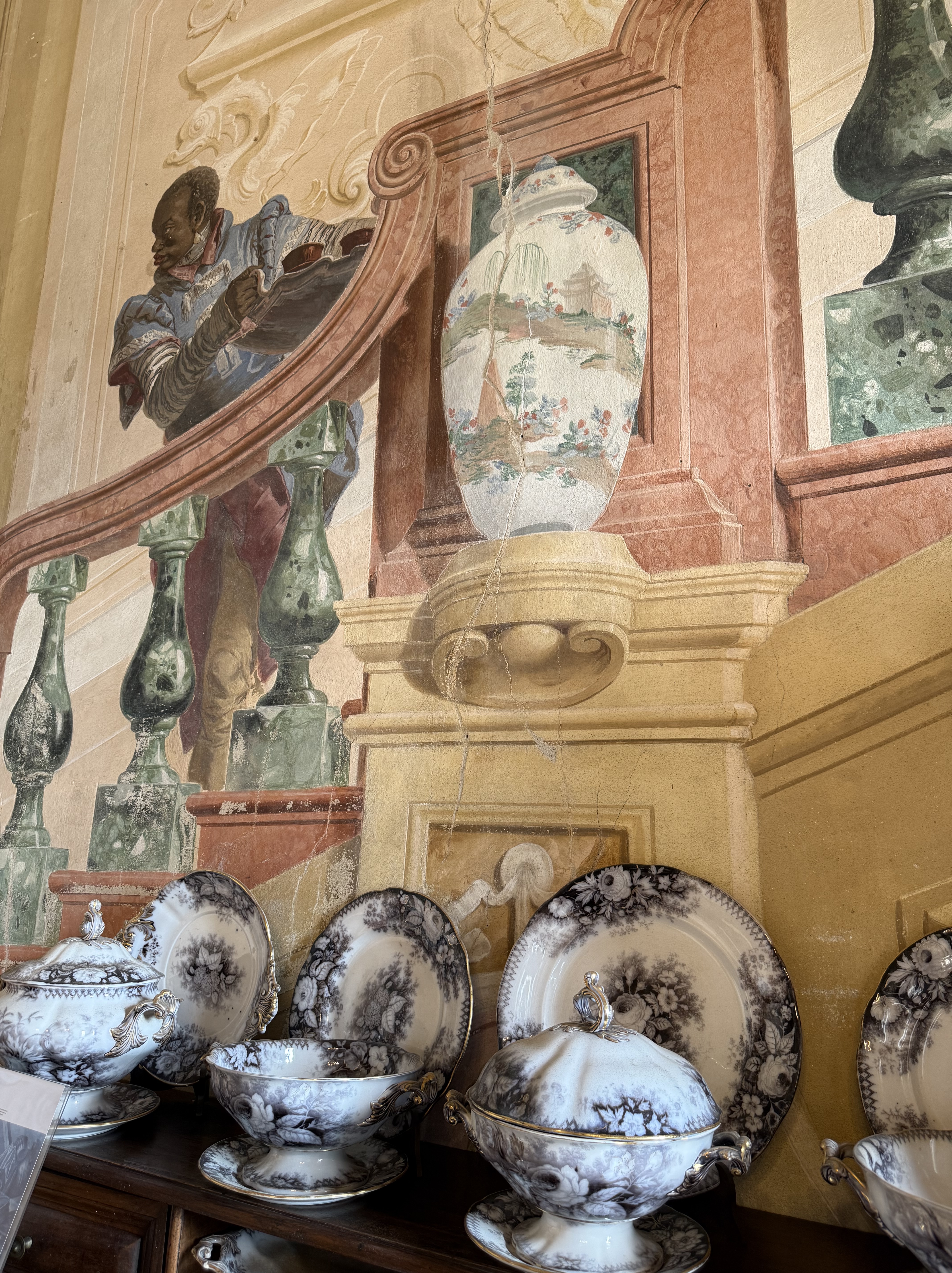
This room contains this brilliant troupe l’oeil marble staircase. Tiepolo’s manservant is behind, carrying some cups of hot chocolate.
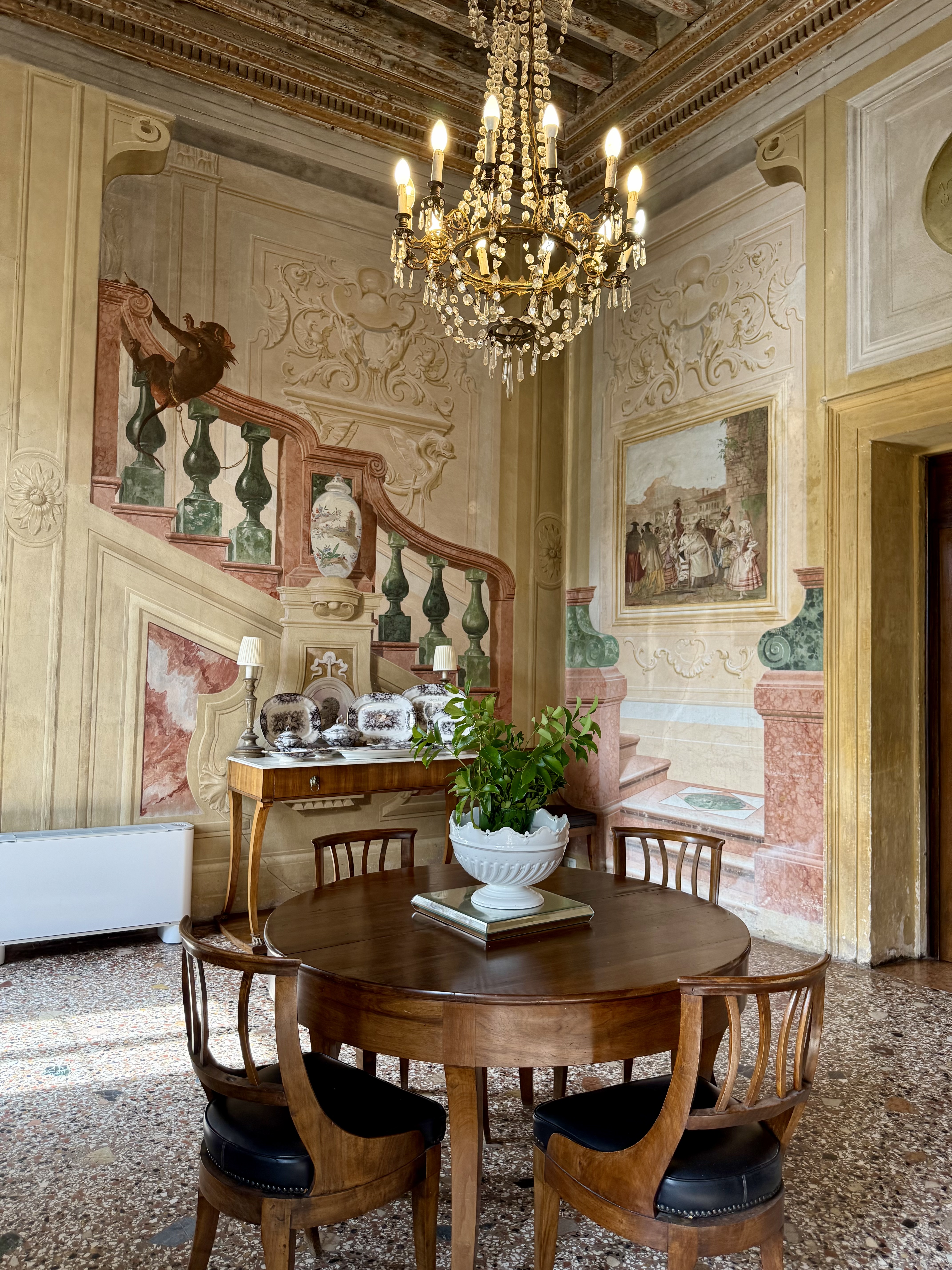
On the right you can see a fresco of a Venetian carnival scene with men and women wearing masks.
The Park
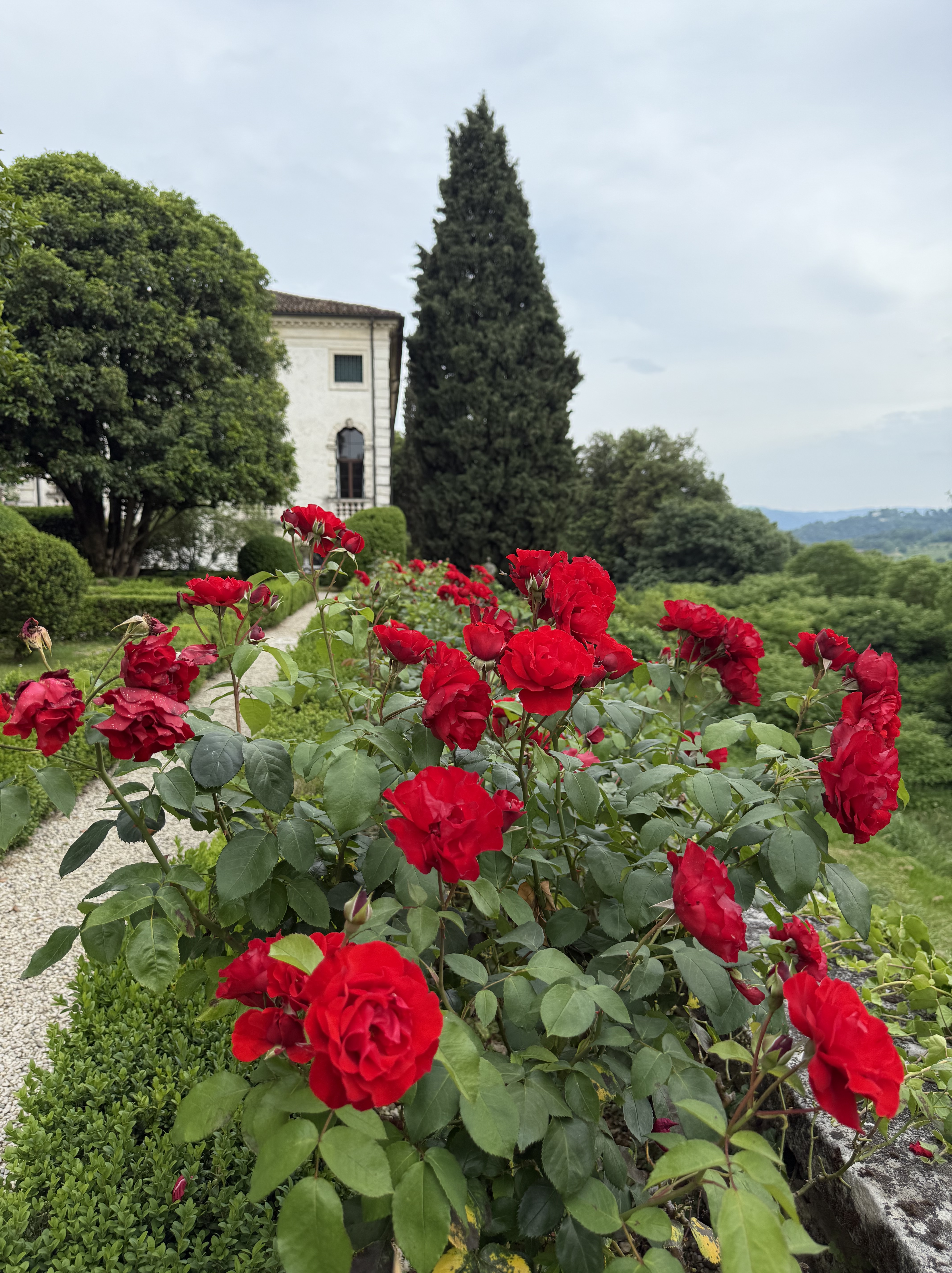
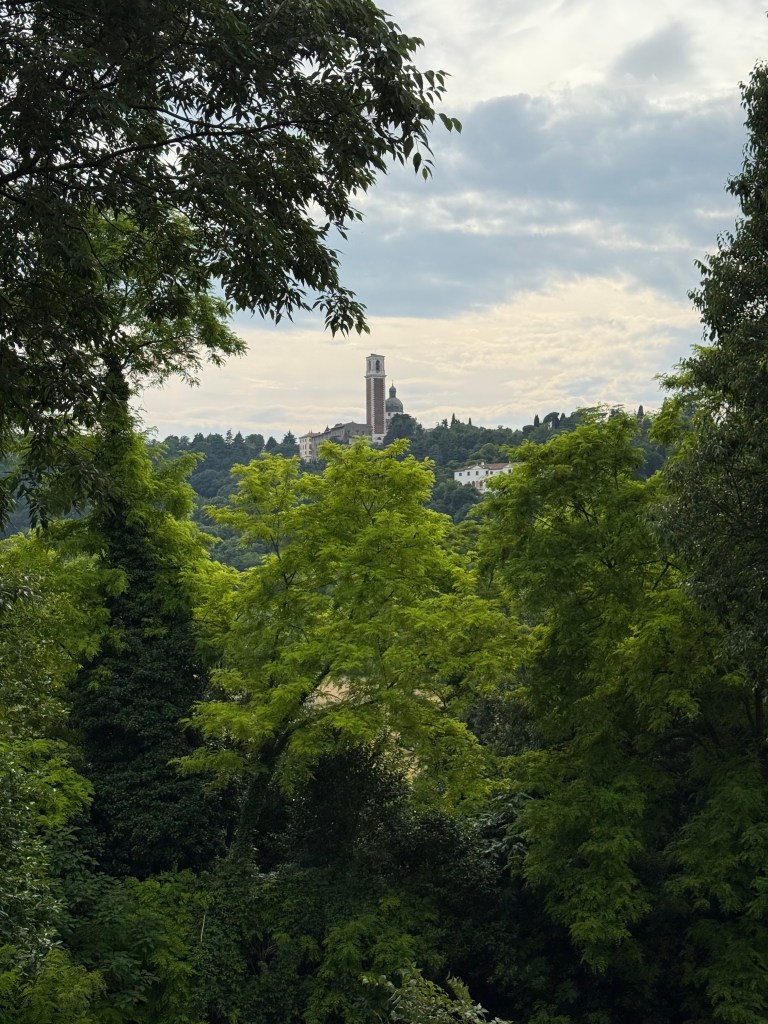
The day I visited I had the whole park to myself. It was like being in my own private garden. After all that concentration I used up in my visit to the houses, I really needed some time alone to wander around the gardens and recharge my batteries.
The Nymphaeum
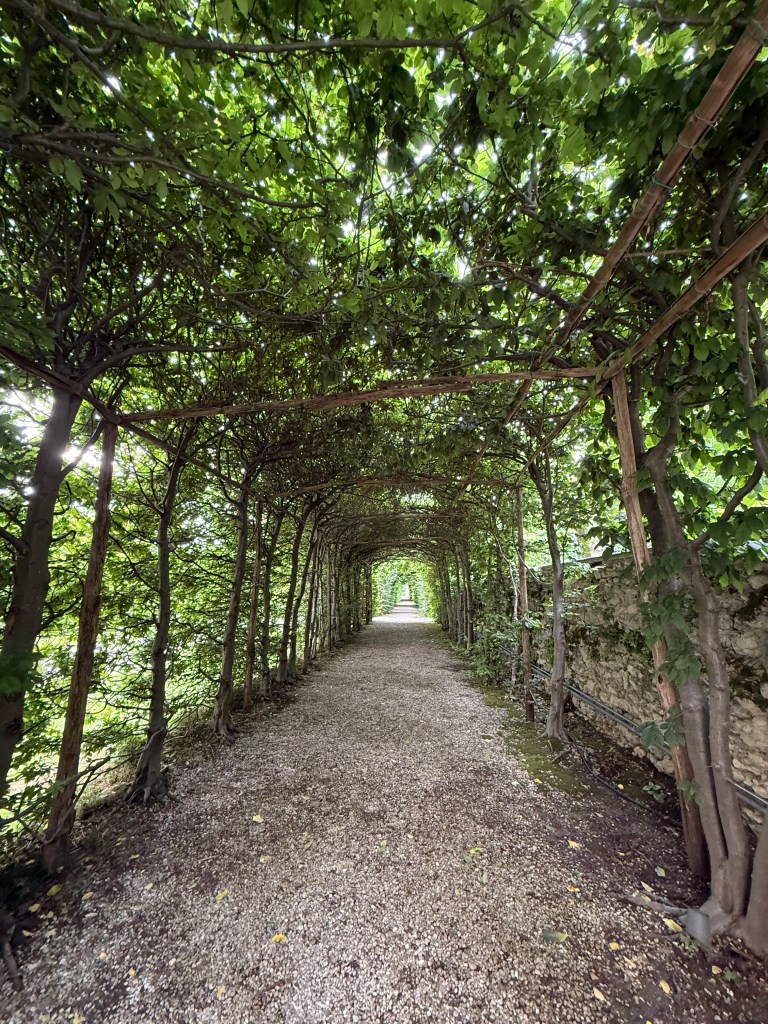
You can walk from the back of the Main House to the Nymphaeum along the gravel path or under the green arbor.
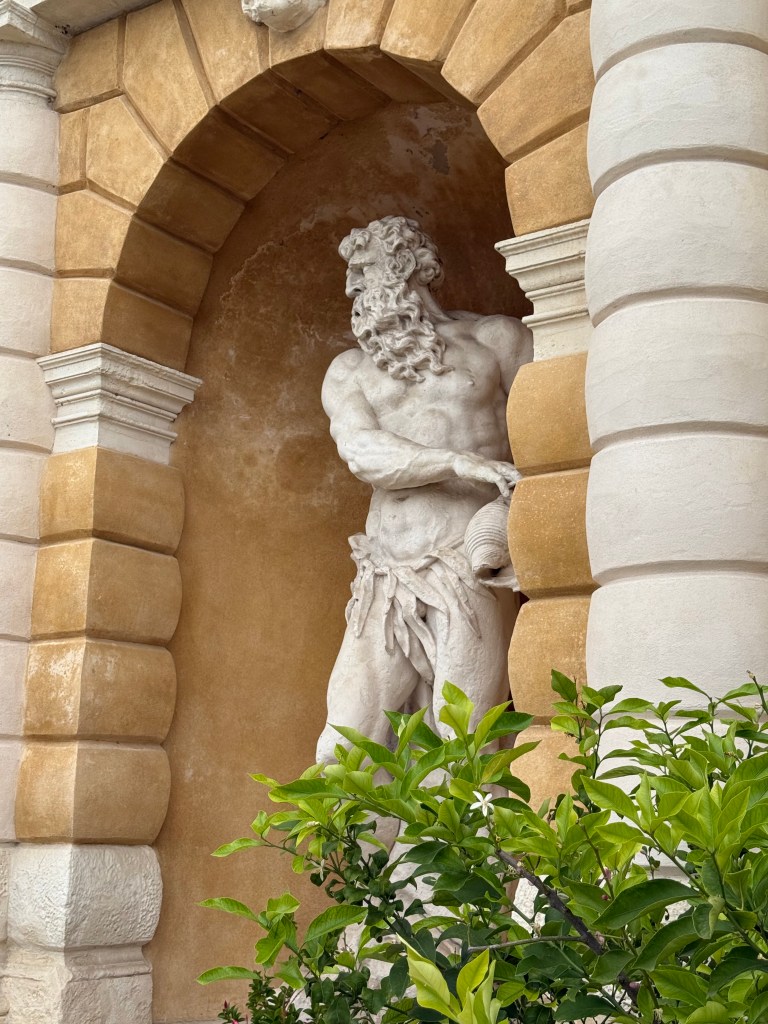
You arrive at the statue of Triton, son of Poseidon. He had the gift of being able to calm stormy waters by blowing into a conch shell.


 casaalison
Leave a reply to Hans Arne Westberg Gjersøe Cancel reply