
Once Christmas is over and Epiphany has passed on 6th January and you’ve taken down the decorations indoors and the fairy lights no longer twinkle on the balconies and everywhere is looking a bit bare and empty – sigh no more because it’s time to enjoy the next winter festival: CARNEVALE!
It usually begins in January and finishes with a blast on Martedì Grasso (Shrove Tuesday) which falls at the end of February or in early March.
That’s the day when according to the Catholic Church, you should finish up any rich and fatty food in the house in preparation for fasting during the forty days of Quaresima (Lent) which begins the day after on Mercoledì delle Cenere (Ash Wednesday).
Carnevale celebrations like processions of carri (decorated floats) and people and children dressed up in costumes can be seen everywhere during this period. And the streets and piazze (city squares) are littered with coriandoli (confetti) and stelle filanti (streamers) that get thrown at Carnevale.
CARNEVALE TREATS
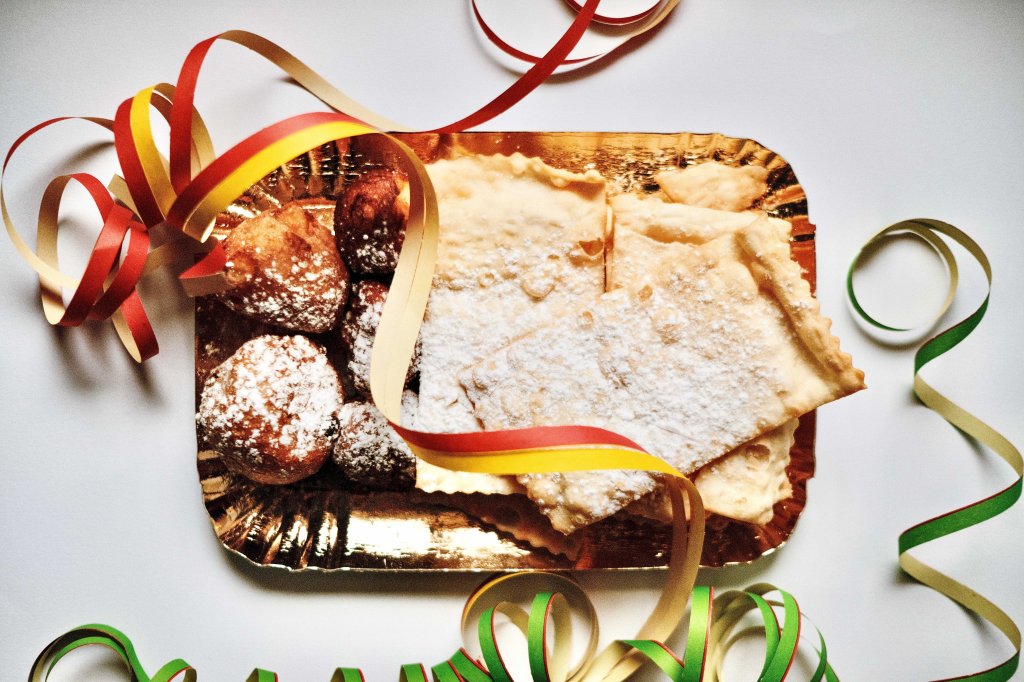
In Italy the Carnevale festivities begin in early January when you’ll see Carnevale traditional pastries in your local pasticceria and baker’s. The names for these differ from region to region but in the Veneto we call them frittelle and crostoli.
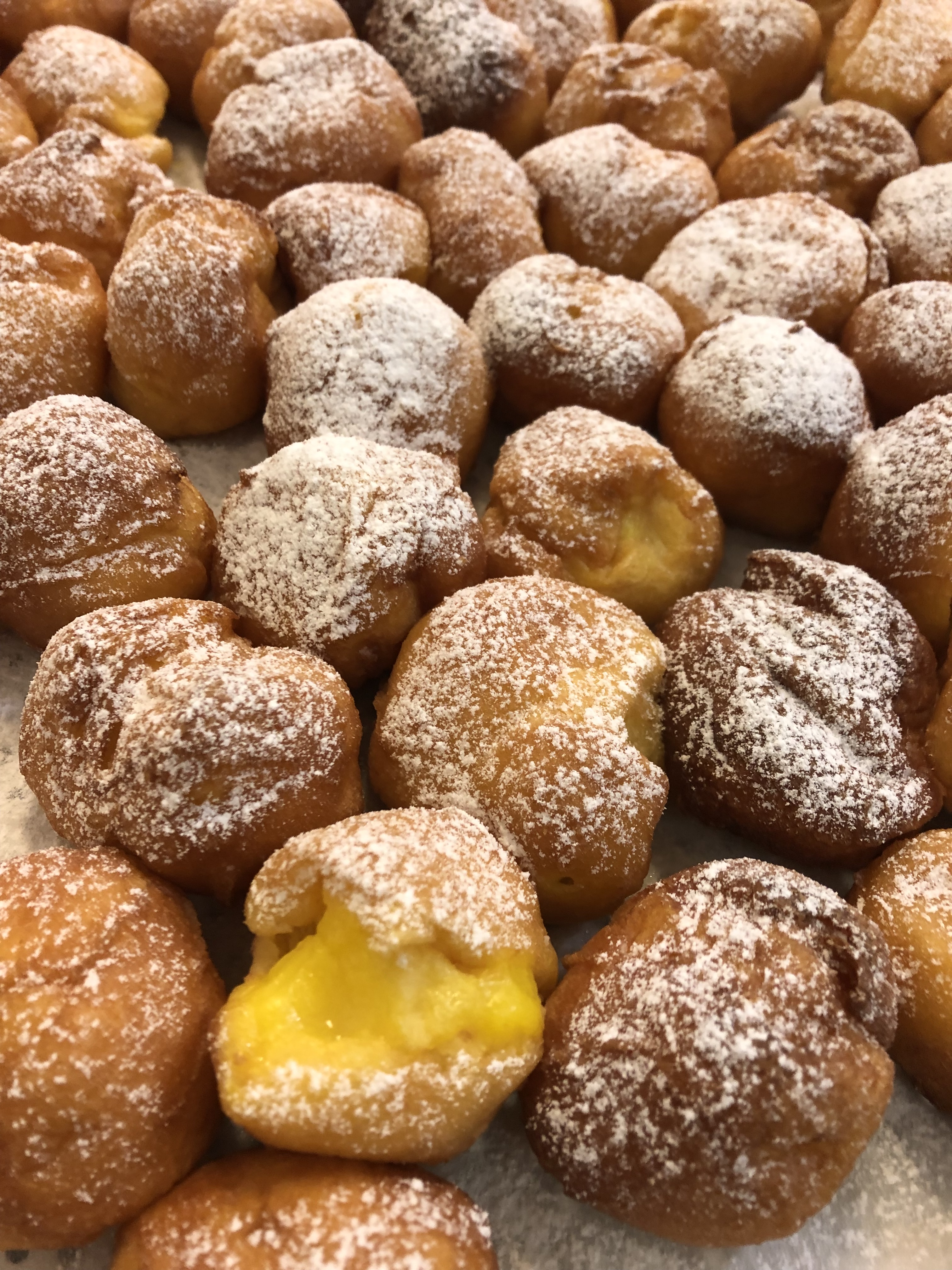
Frittelle are deep-fried balls of dough, which has been flavoured with a touch of vanilla. Sometimes they’re made with added raisins, and sometimes they have a a sweet filling: alla crema (filled with custard) or with Nutella, or allo zabaione (a custard cream made with egg yolks, sugar and sweet wine). Either way, they are scrumptious.
Crostoli are light, crumbly-crunchy pastries dusted with icing sugar and extremely moreish….you’ve been warned!
VENICE: THE CITY OF CARNEVALE
We’ve visited Venice many times at Carnevale to see the people dressed in costumes and masks against the backdrop of the lagoon or some other atmospheric spot, but this time we wanted to do something different.
Out of all the events on offer, because Venice is non-stop during this period, I chose a presentation on the history and production of Venetian masks at CA’ MACANA showroom and workshop in Dorsoduro 3215, Venice.
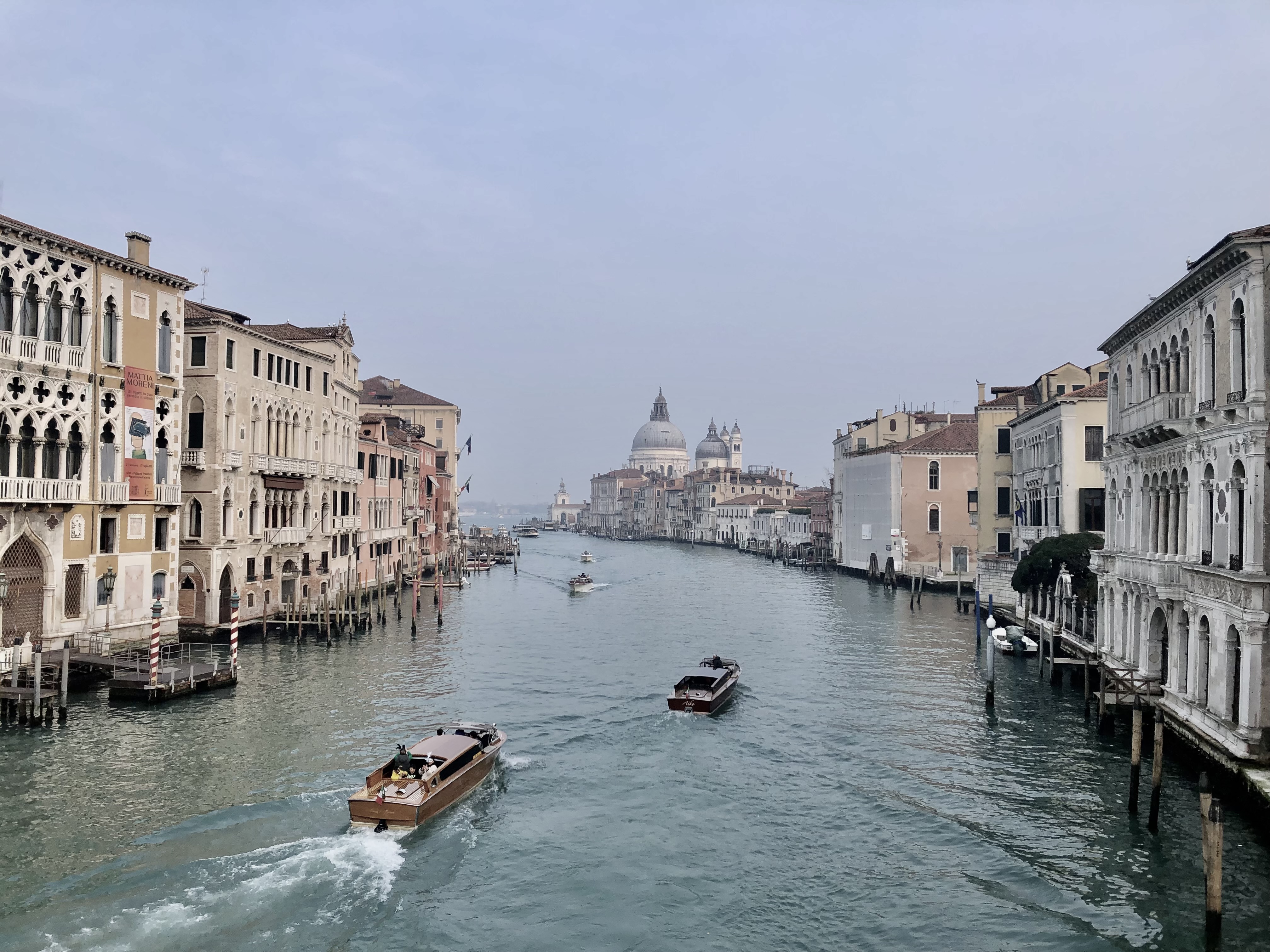
This was completely free and is available in Italian or English, you just need to book a place through their website: camacana.com. It took about 20’ to walk there from Venice Santa Lucia train station and would have taken less except we stopped so many times, as you do in Venice, to take in the beauty of every little bridge, the reflections of the buildings in the water of the canal and the colourful boats nearby.
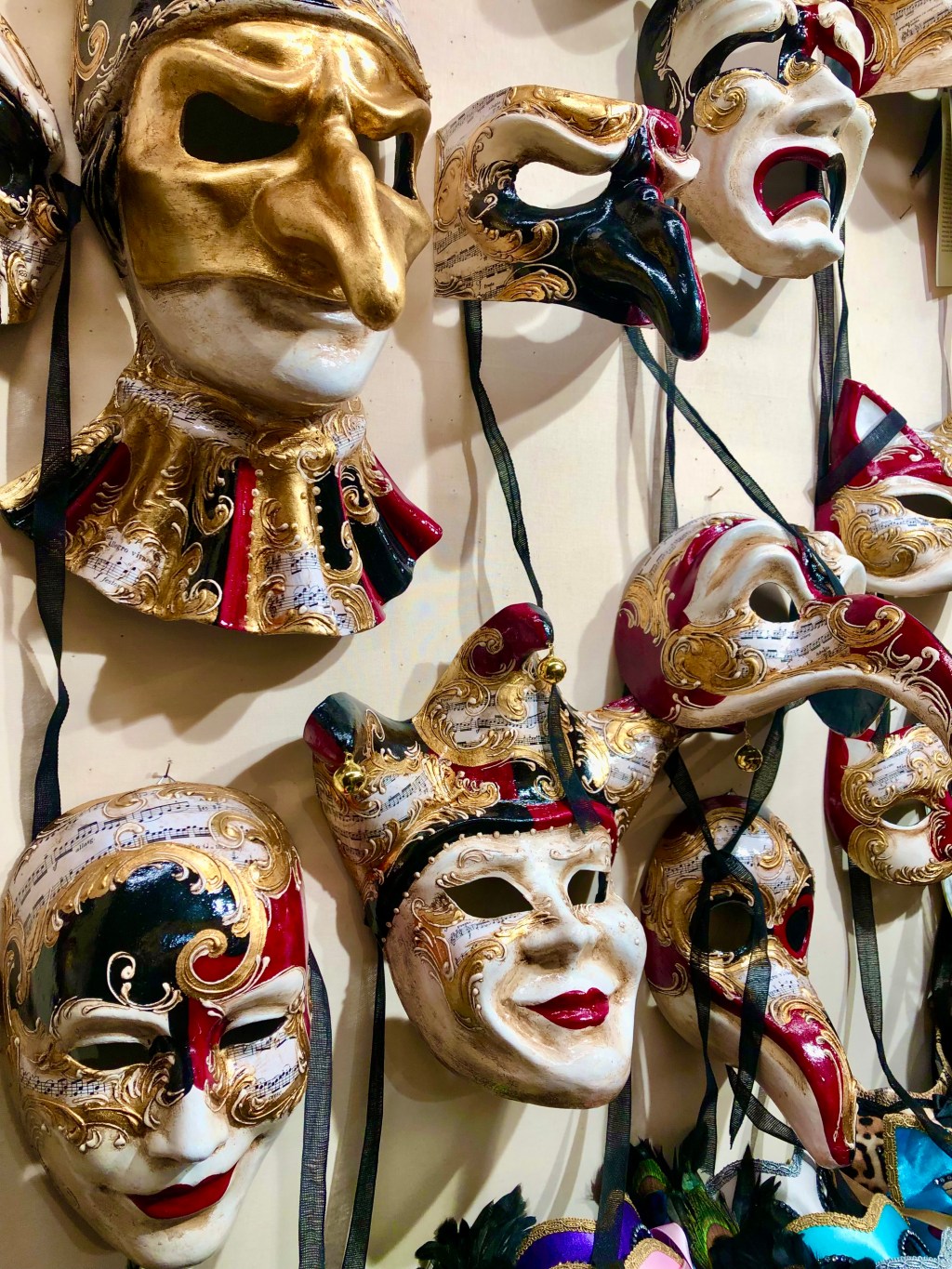
The showroom is down a typical narrow Venetian calle (street) and is glowing inside with masks of all sizes and colours. There are large gilded mirrors where you’re encouraged to try on a mask and see the transformation it creates on your own reflection.
With some extra time on our hands before the event, we wandered as far as Accademia Bridge that crosses the Grand Canal allowing you to behold, in the true meaning of the word, one of the most beautiful and stunning views of the city.
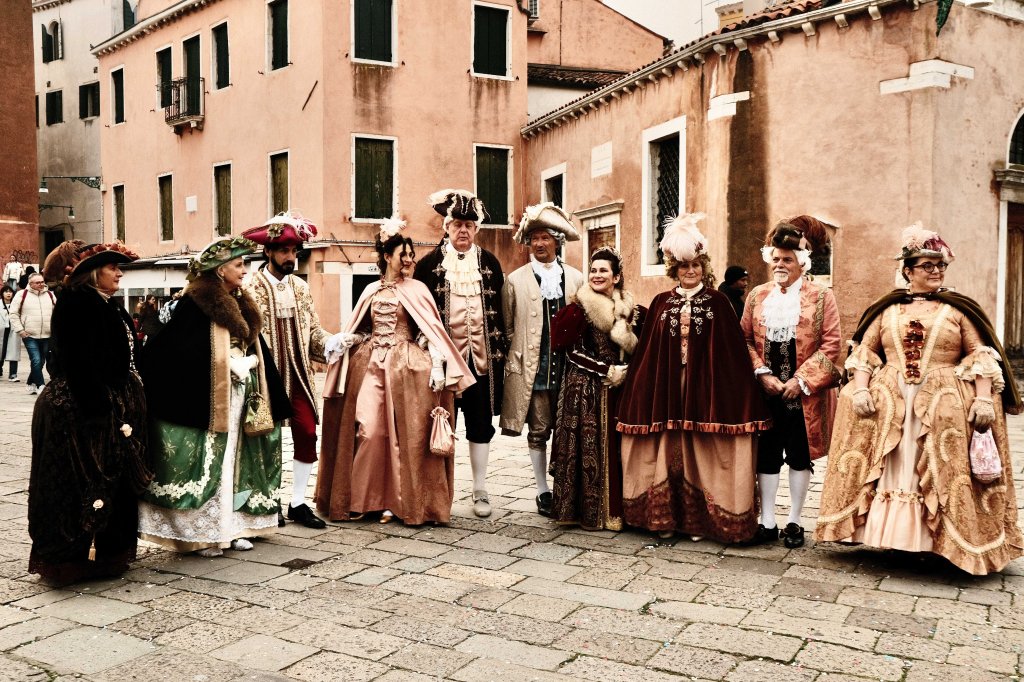
On our return we found a group of dancers in beautiful baroque costumes of richly embroidered cloth, finished with lace collars and cuffs and an abundance of flounces and ruffles. As if planned beforehand, the colours of their costumes blended seamlessly into the facades of the buildings around them: green, brown and washed out peach.
THE TRADITIONAL VENETIAN MASK
So, onto the main purpose of our visit. Behind the showroom some steps lead to the bottega (workshop) where the masks are made.
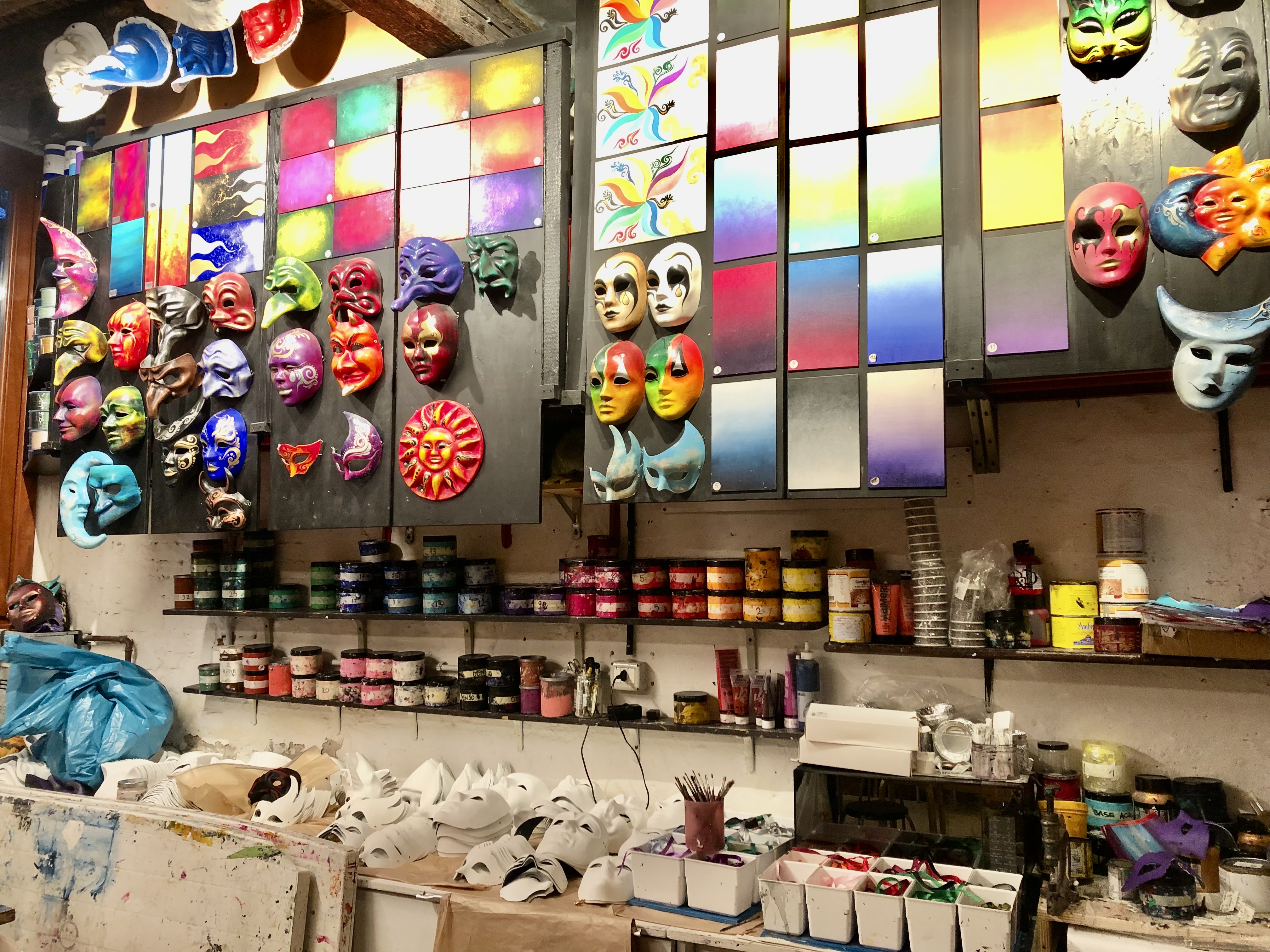
For anyone remotely interested in arts and crafts activities, this place is your place! Walls covered with sample colours; grinning, crying or poker-faced masks looking down on you. The rows of finger-stained paint pots, the odd jars of brushes and the general messy abundance of it all give the idea of something creative and wonderful going
on.
The artist at Ca’Macana told us that a true Venetian mask is made by hand, using
more or less the same techniques and materials as they’ve always done.
First the mask (a sun, moon, cat face, jester’s face or whatever) is carved from clay. Liquid setting plaster is then poured into the clay mould.
Once the plaster has dried out (around 90 minutes depending on the weather, after all, Venice is rather damp!), it is separated from the mould.
Then the mask Is covered with a sort of papier-mâché, using carta di lana (a thickish sort of grey card).
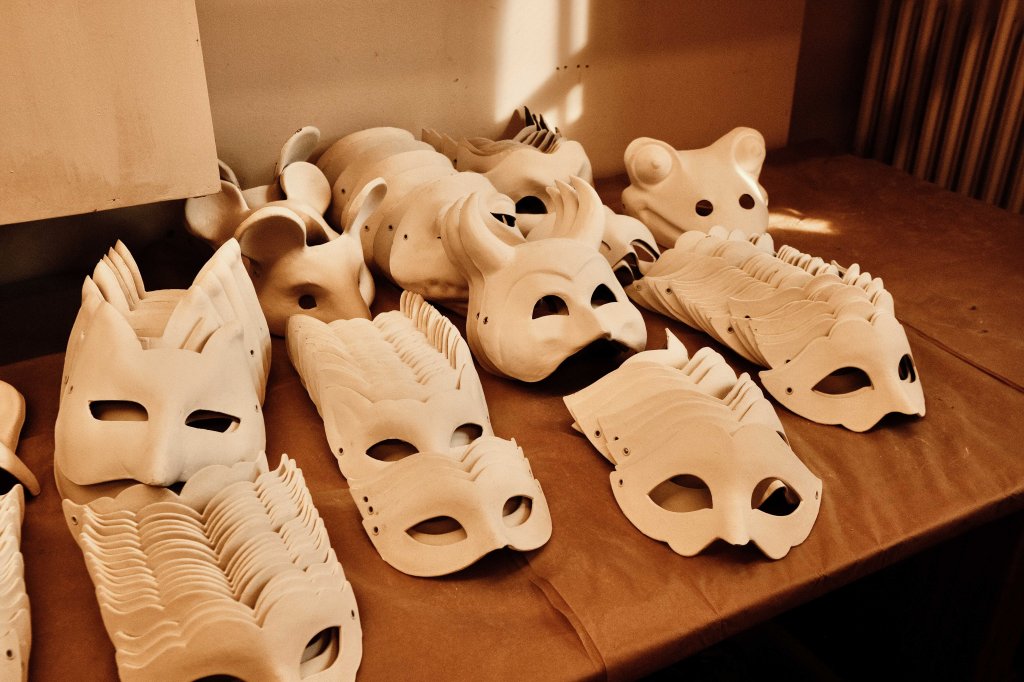
Once this has dried out, (around 24 hours), the mask is sanded down until smooth and then painted white.
The artist can then add colour to highlight various facial expressions on the mask. Like a makeup artist, the cheeks can be emphasised, a long nose can be made even longer.
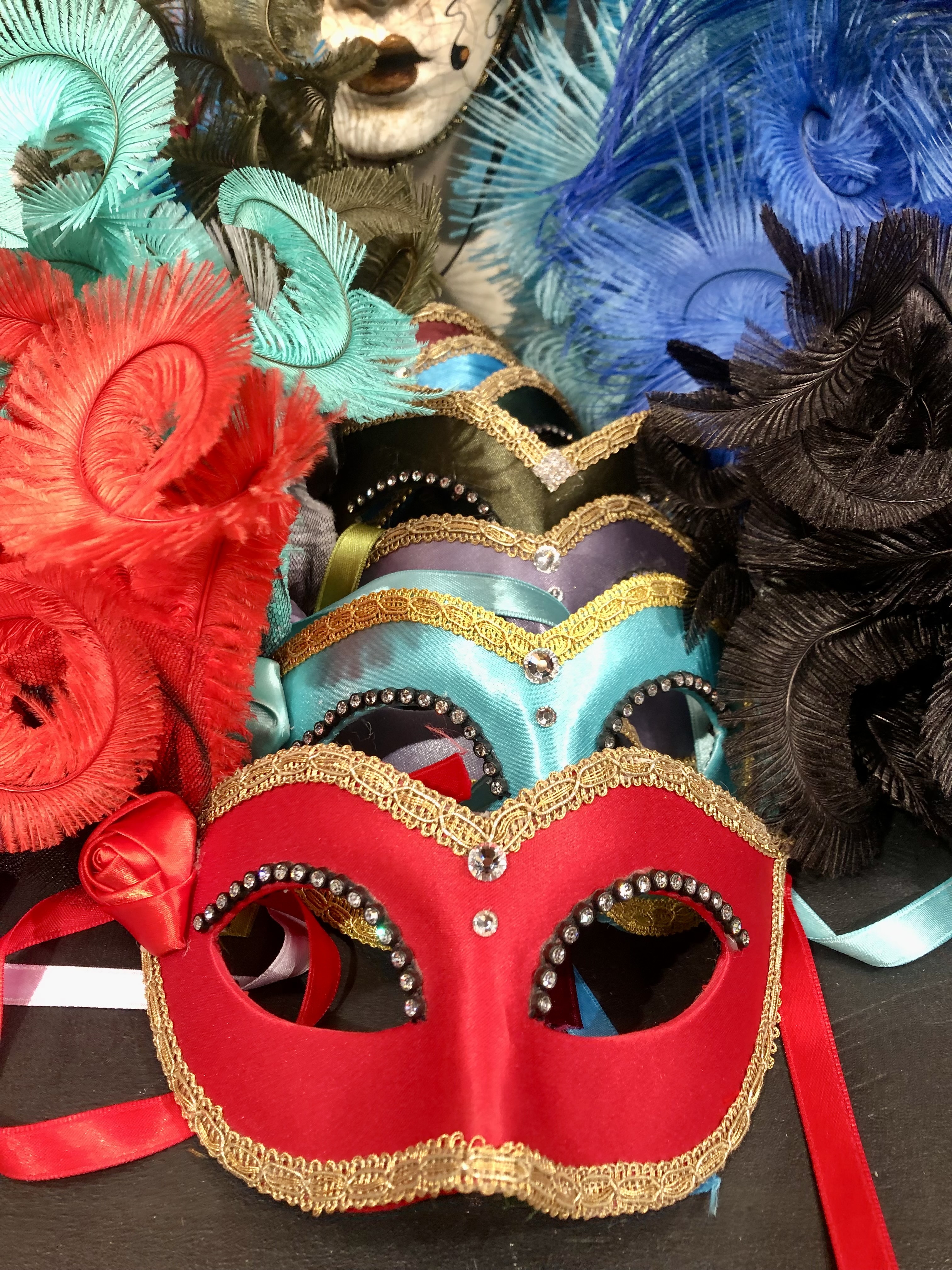
Or decorate a simple mask like the Colombina with the addition of trimmings, ostrich feathers and Swarovski crystals and a sort of imitation gold leaf.
So this was the mask making.
We also learnt that in the past the Venetians would wear a mask many other times of the year so that they could go about the city unrecognised: visit a gambling house and win or lose without anyone knowing; court someone or be courted, all while maintaining their privacy and intrigue.
The typical Venetian mask for this purpose was the Bauta: a white mask designed to fit over the face with extra room for breathing and eating. This extra space also modifies the voice, like when you talk through a cardboard tube when you’re a child and suddenly you’ve got a deep and strong adult voice.
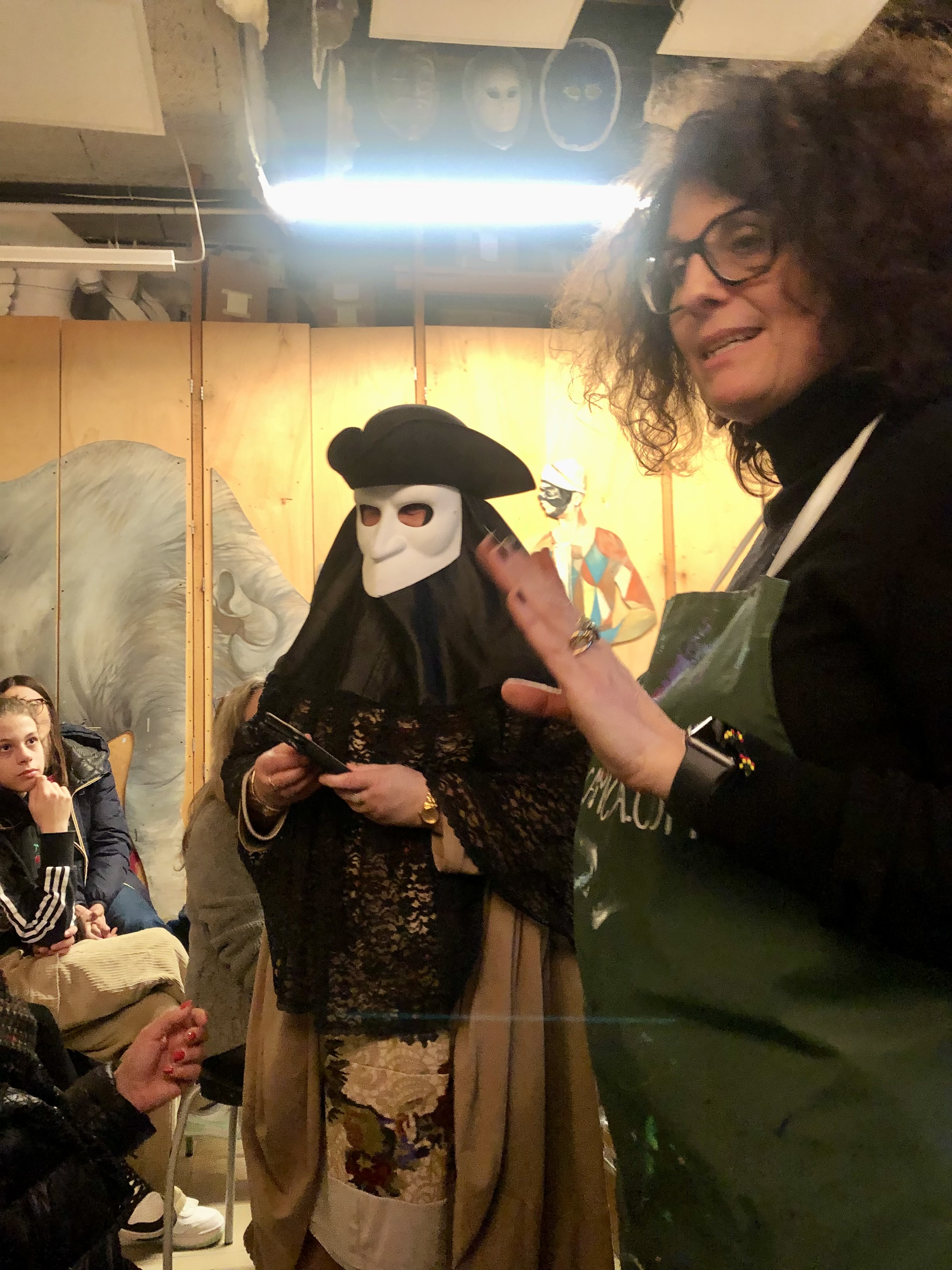
To complete the disguise, the mask is worn over a lacy black shawl, which covers the shoulders and upper body so there’s no way of guessing the wearer’s physique either. Everything stays in place once the black tricorn hat has been put on top.
APERITIVO at BACAROTTO, Calle San Rocco 3961, Dorsoduro
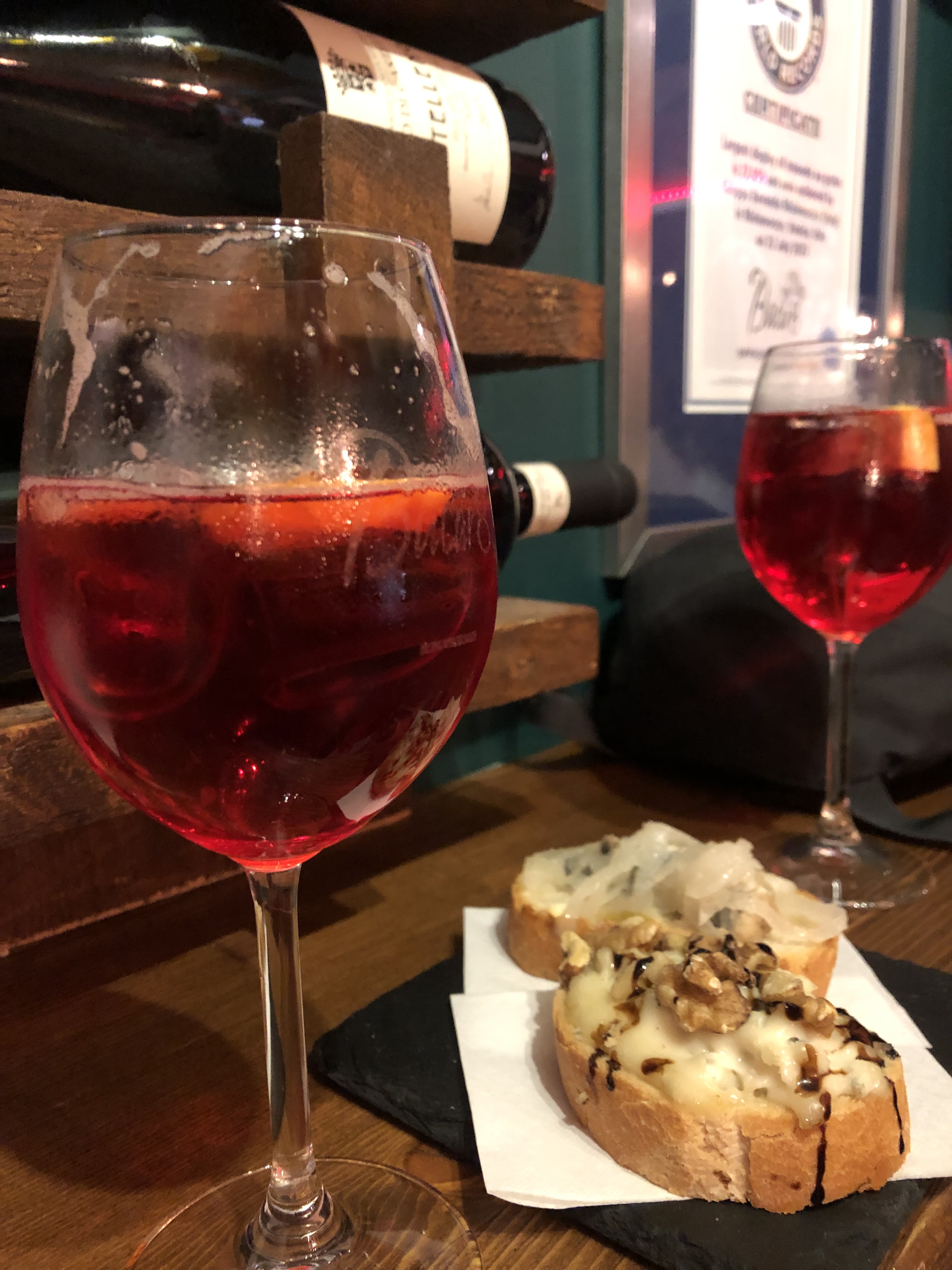
We stopped at this small but lively bar on our way back to the train station. We had a typical local aperitivo to toast another great day in this city: Select spritz. It tastes like a happy medium between the sweet taste of Aperol and the bitterness of Campari.
And on the side we had another typical Venetian finger food: bread with sarde in saor (lightly fried sardines with onions).



 casaalison
Leave a comment