
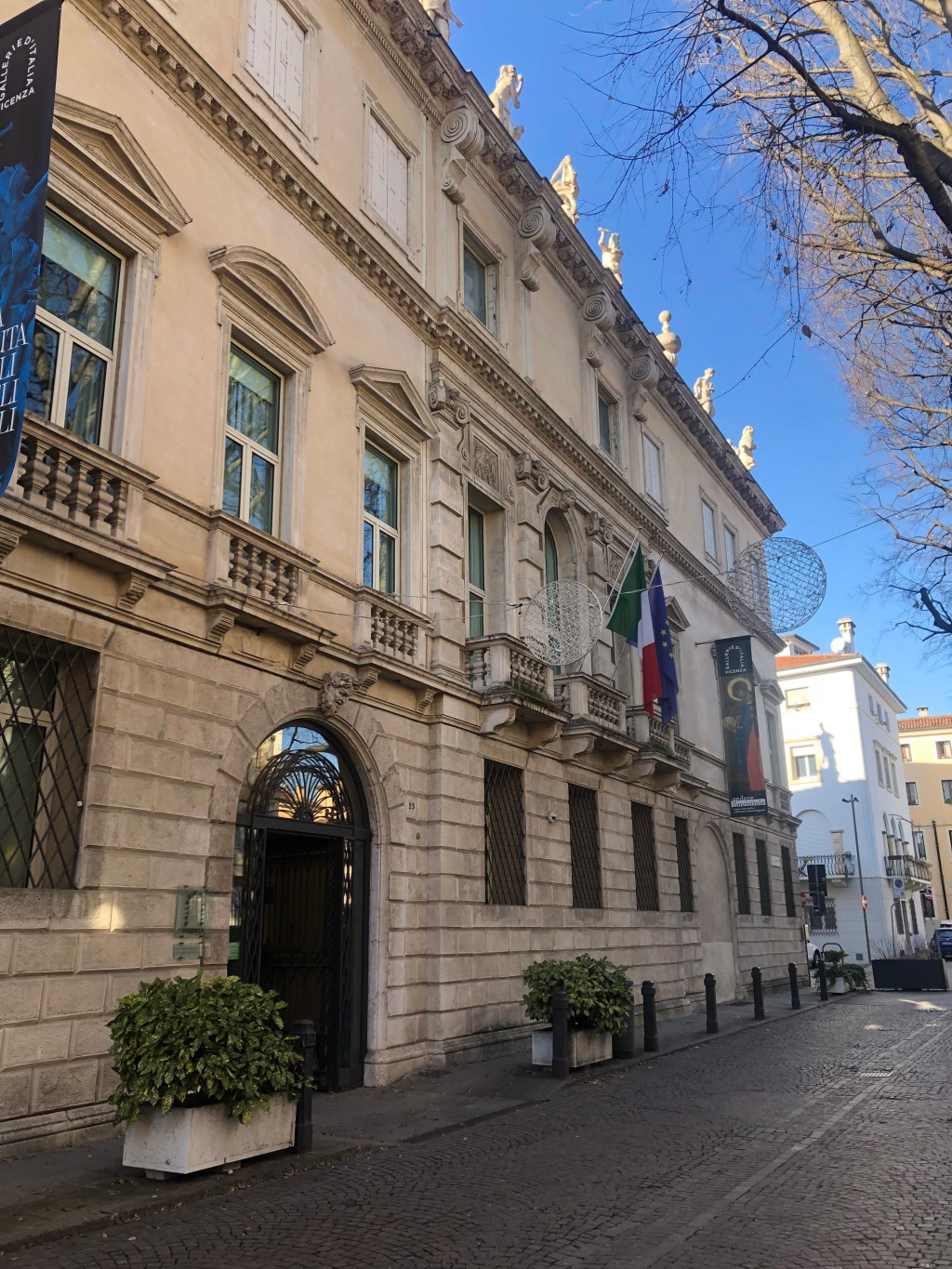
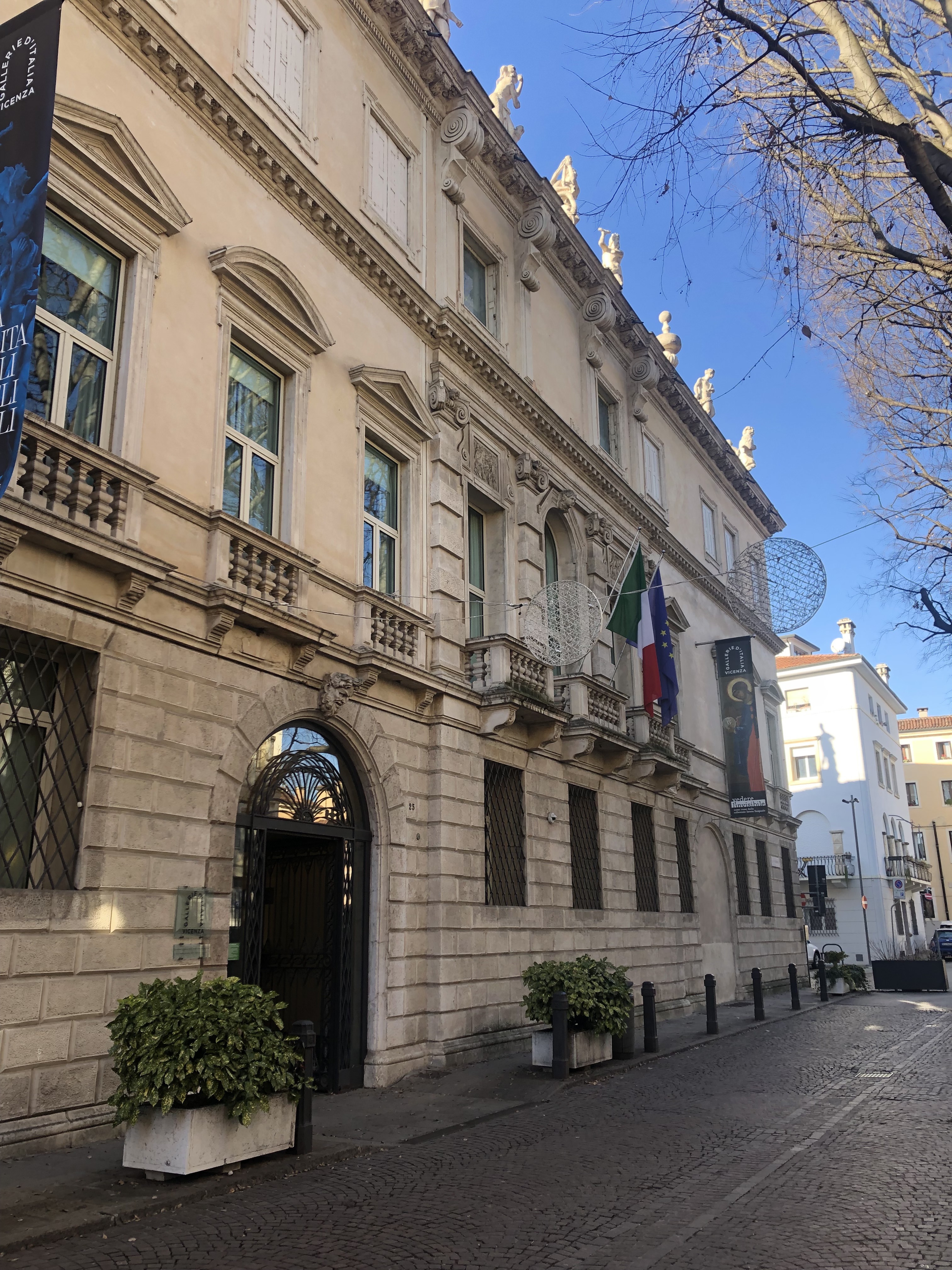
Like many beautiful buildings in Vicenza, the calm and formal neoclassical exterior of this building contrasts with all the colourful and dynamic wonders you can find inside.
There are permanent collections to enjoy and at any time there will be a temporary exhibition which completely changes what’s on offer, many times with something original and unexpected.
It was built in 1676 for Giovanni I Leoni Montanari after the family had made their fortune in the textile industry. They then progressed to raise their social status too by becoming part of the local nobility. And needed a house that was in line with their status.
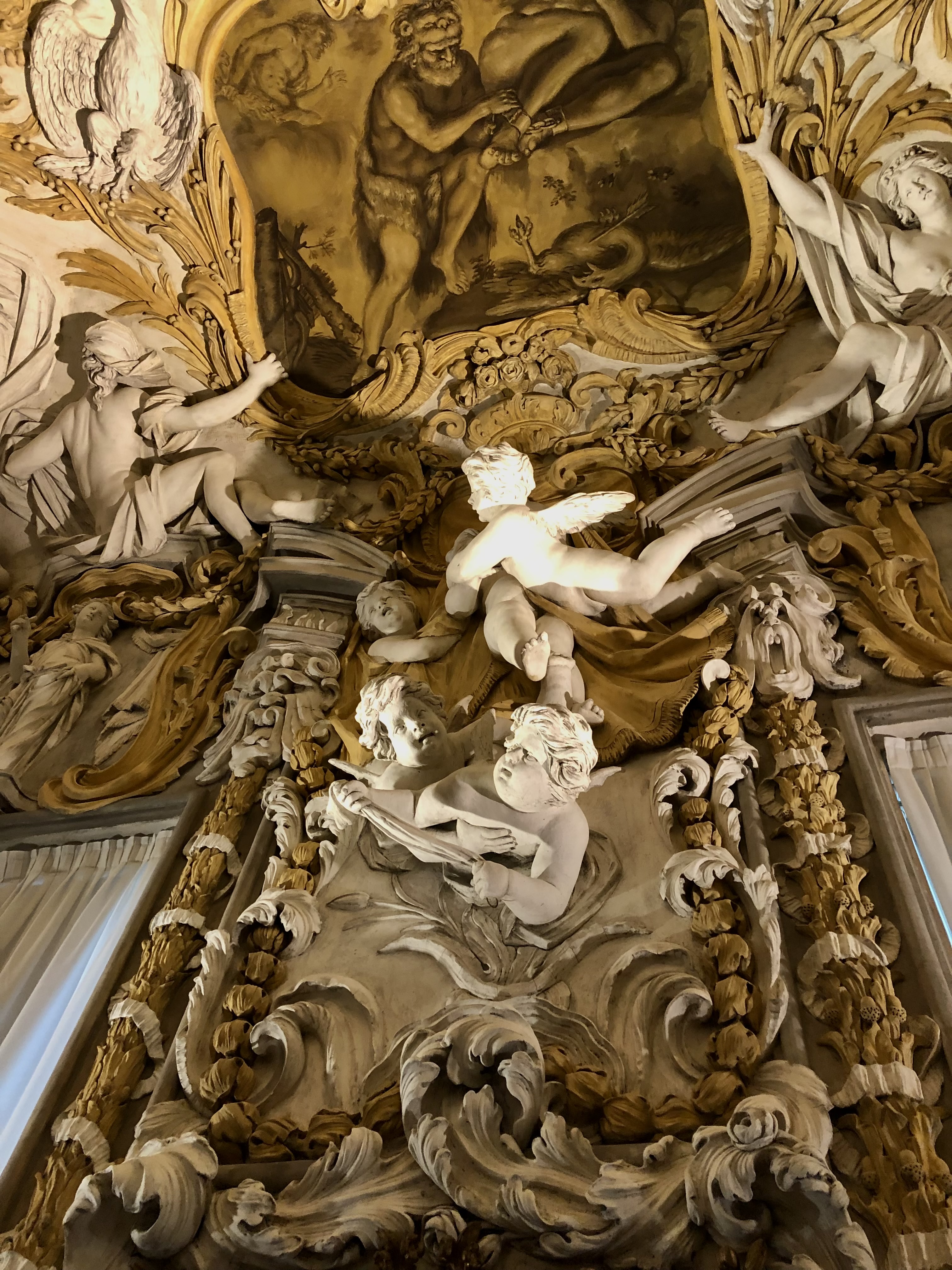
Inside you’ll see lots of stucco work, which is a sort of plaster which is moulded into cherubs, flowers, fruit and garlands.
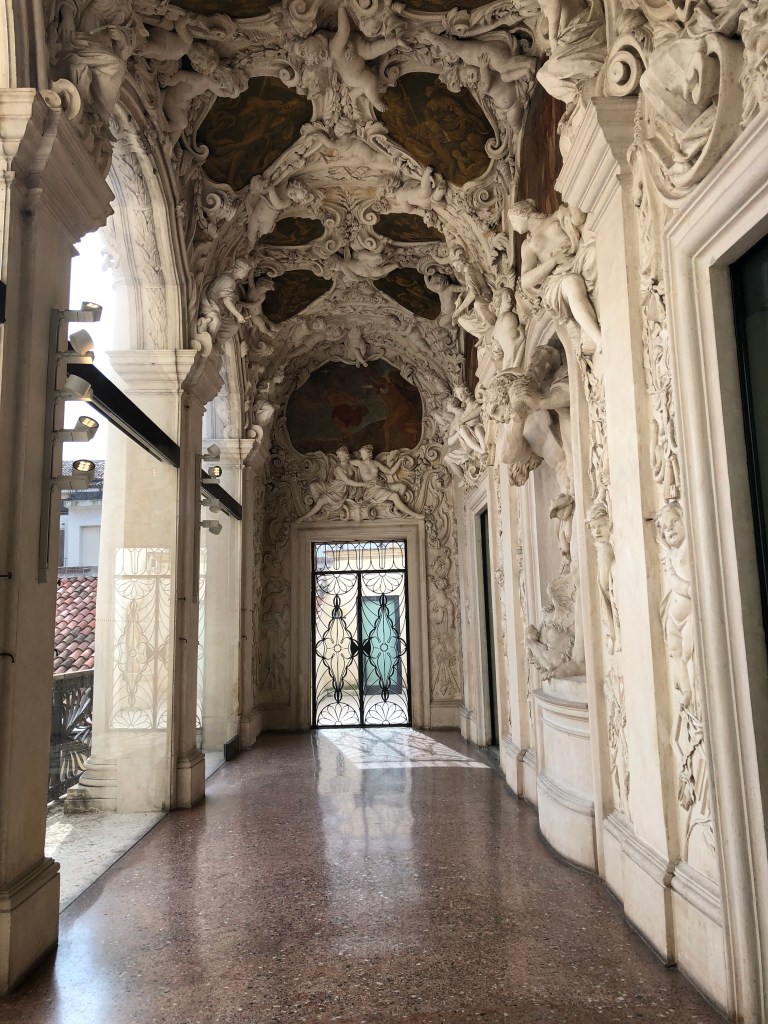
There’s also a loggia where the family might have taken some fresh air even when it was raining or in the summer with some shade.
Now this wonderful building is owned by the Intesa San Paolo bank foundation and is part of the Gallerie d’Italia which has sites in Naples, Turin and Milan.
This is one of my favourite places to visit and revisit in Vicenza when I need to satisfy my desire to look at beauty, so let’s begin the visit:
The Russian Icons on the Ground Floor
Here we are in a small museum in northern Italy and yet you can find one of the largest collections of icons outside of Russia. Most are kept in the vault while the rest are on display.
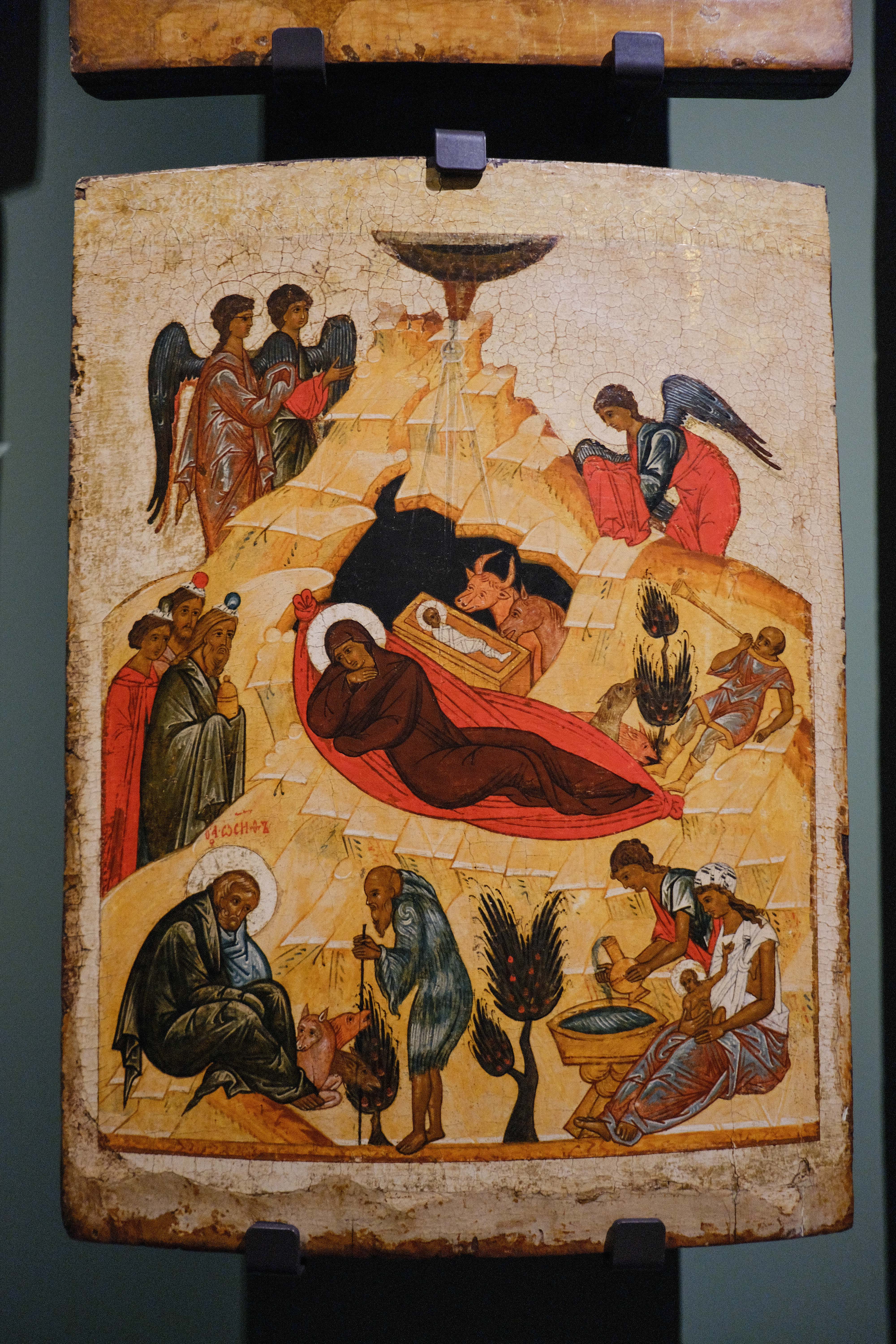
These icons are not just beautiful pictures. They are sacred images often depicting Jesus Christ, the Virgin Mary or saints of the Russian Orthodox religion and used as a connection to the spiritual world.
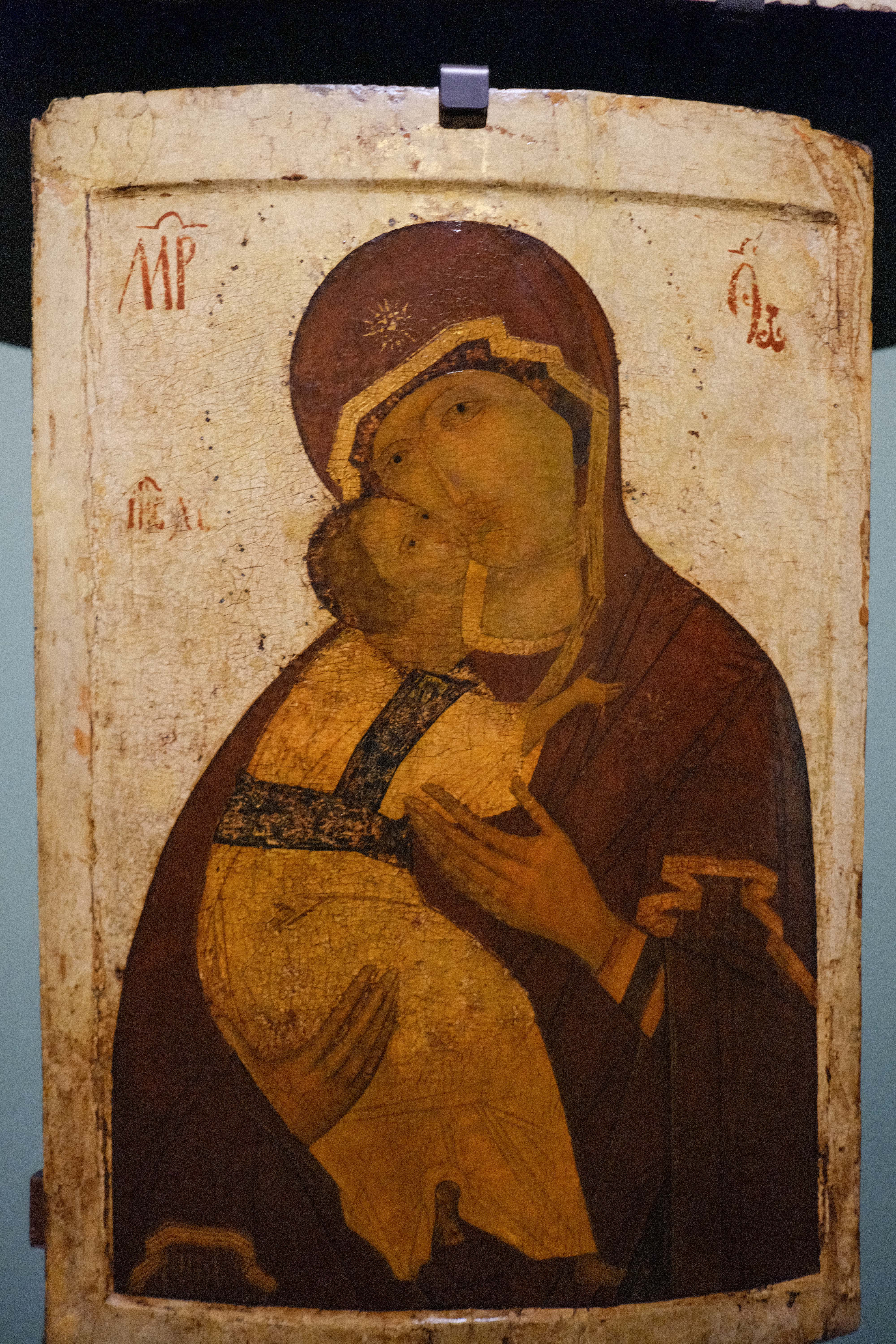
The first room is a multi sensorial delight which put the icons in their true context: you enter through the automatic doors into a would-be Russian Orthodox Church. In an instant, you are wrapped in the heady perfume of incense, the ringing of bells, and the methodical chanting of priests.
On the walls and ceiling of the room, run visuals of Russian Orthodox churches seen from above with gleaning golden domes and steeples, videos of the faithful lighting long and slender beeswax candles in church and praying before an icon. After enjoying the moment and when you’re ready, and your senses have experienced enough it’s time to move into the next rooms.
First you’ll find yourself in a long corridor. No fancy multimedia effects here, just beautiful forest-green walls which show off the browns, ochre and reds and gold of the icons on display.
If you look at the layout of the icons on display, you can see Royal Doors at the centre (making a sort of pointed arch) with many icons set around. This represents the iconostasis which in Russian Orthodox churches is a screen of icons separating the altar and priests from the nave and the faithful.
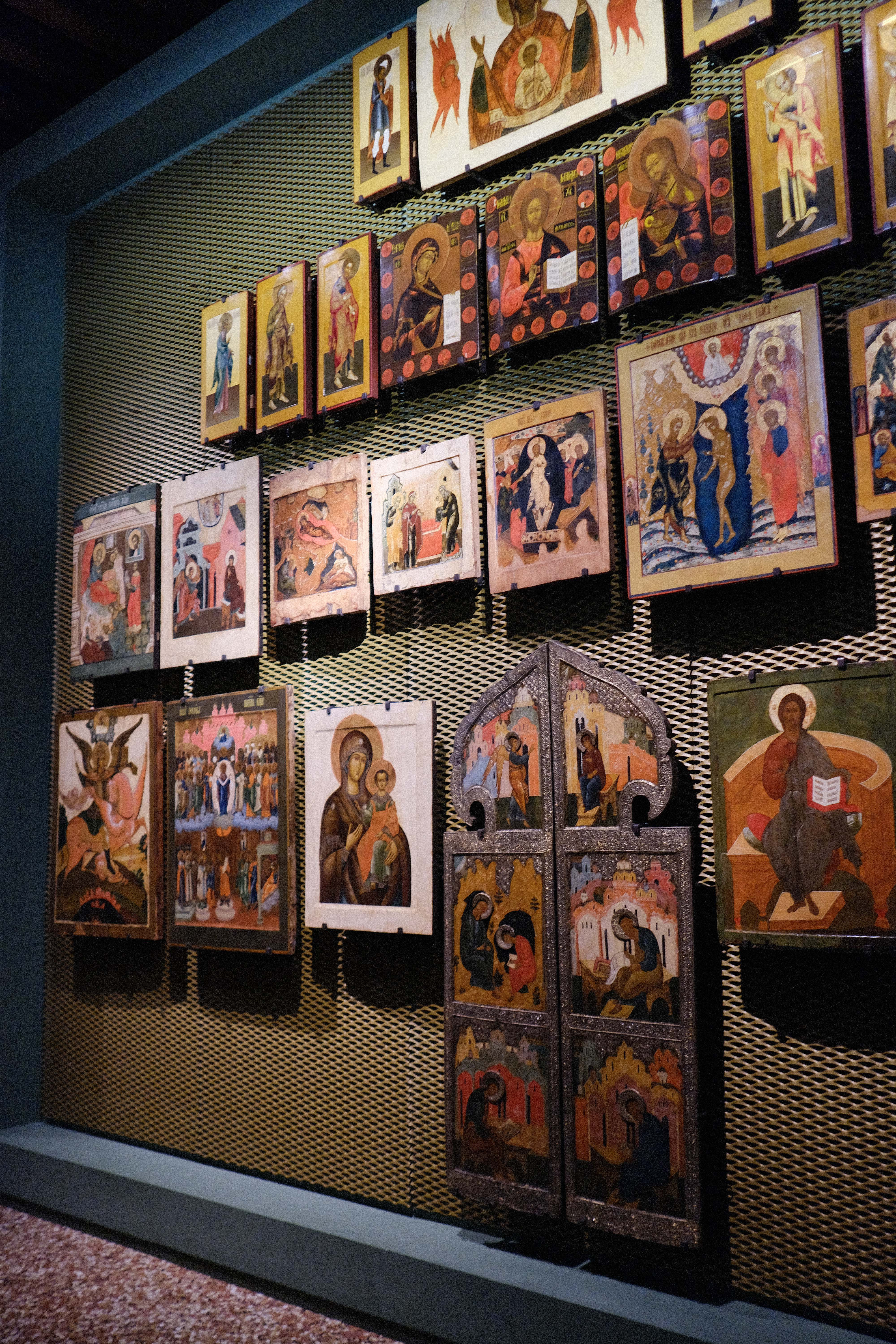
Now just enjoy looking at the icons and especially at the incredible details, such as the heavily decorated rich patterns on the clothes, decorated cups and the character lines on a face.

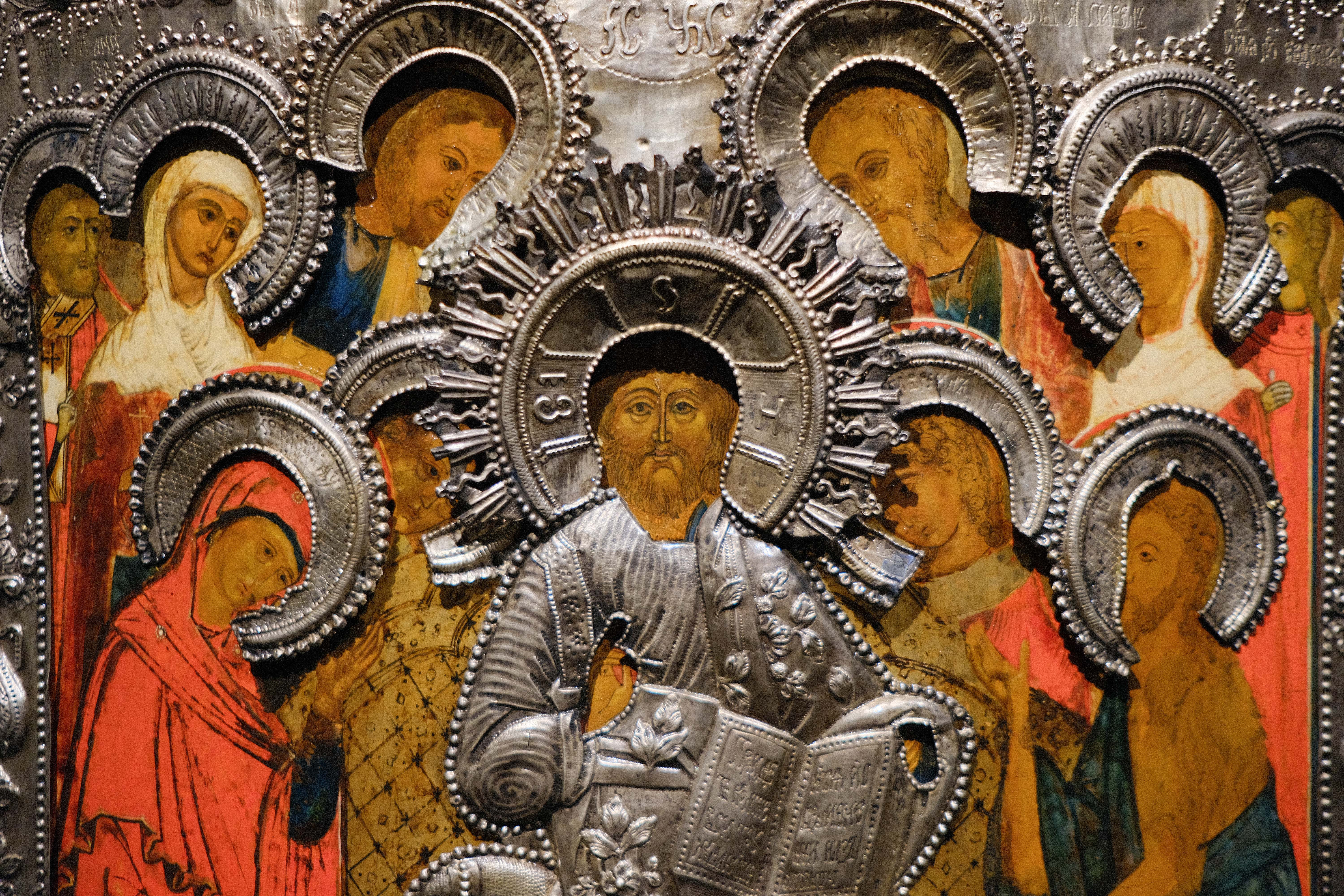
The last room displays some examples of icons with a riza: a covering made of precious metals like silver which has been beaten from the inside using a repoussé technique to make a detailed and elaborate deisign.
How is an icon made?
Look at the photos
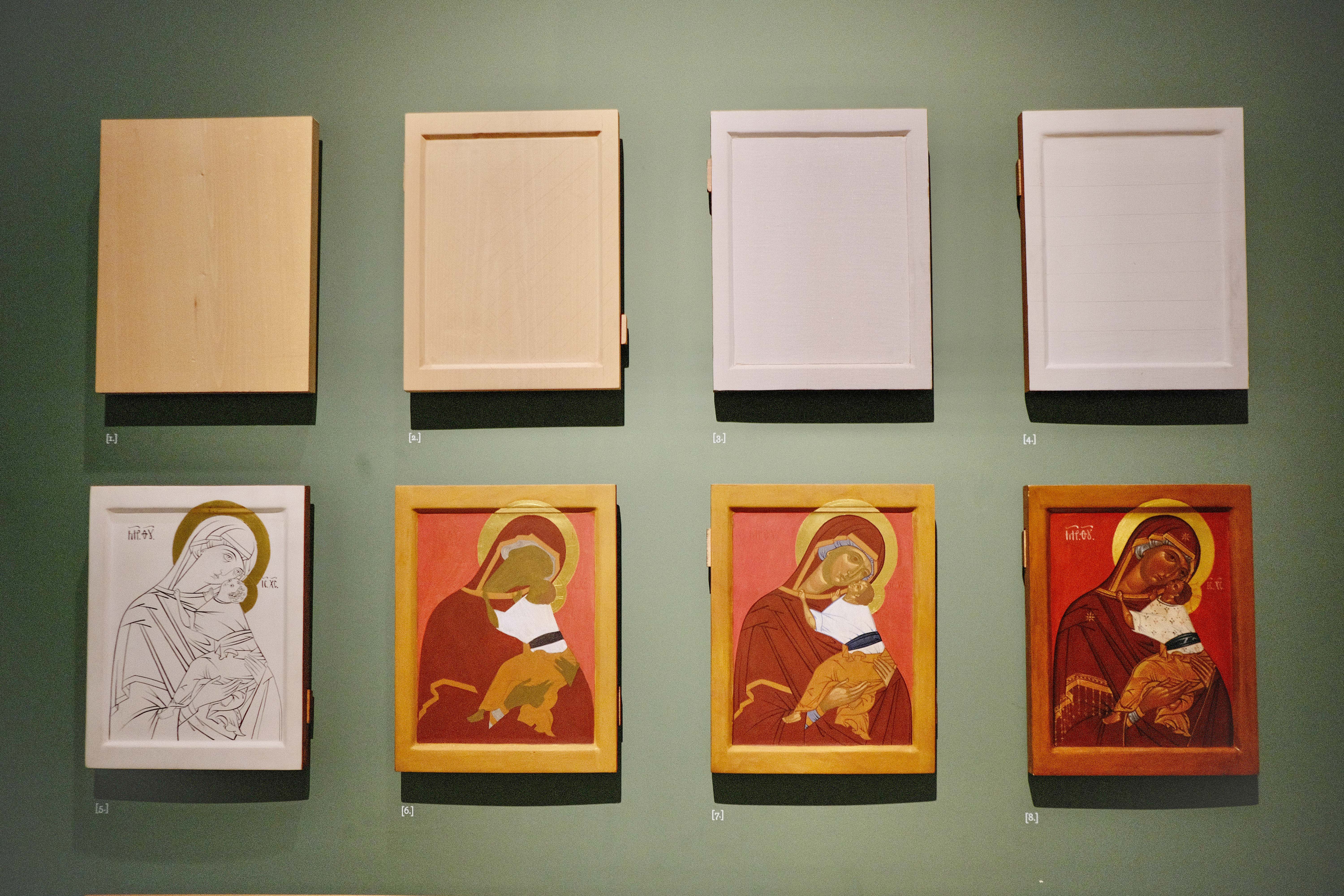
It all begins with a tree. This could be a linden, beech, oak, fir, birch, or cedar. The wood for the icon is taken from the middle of the trunk and should be free of knots or sap. It should be perfect. A rectangular piece of wood is prepared.
A recess is made in the piece of wood, diagonal lines are made across the panel and then several coats of glue are layered over the top.
Linen is stretched over the panel, preventing the wood from expanding and contracting (as wood will naturally do, depending on the weather).
The base is primed.
The initial drawing is made.
The drawing is painted using pigments created from the natural world: minerals, plants and animal products combined with egg yolk.
The colour white is used to give light to the finished painting and gold is added to small details.
The icon is varnished and complete.
Temporary Exhibitions on the First Floor
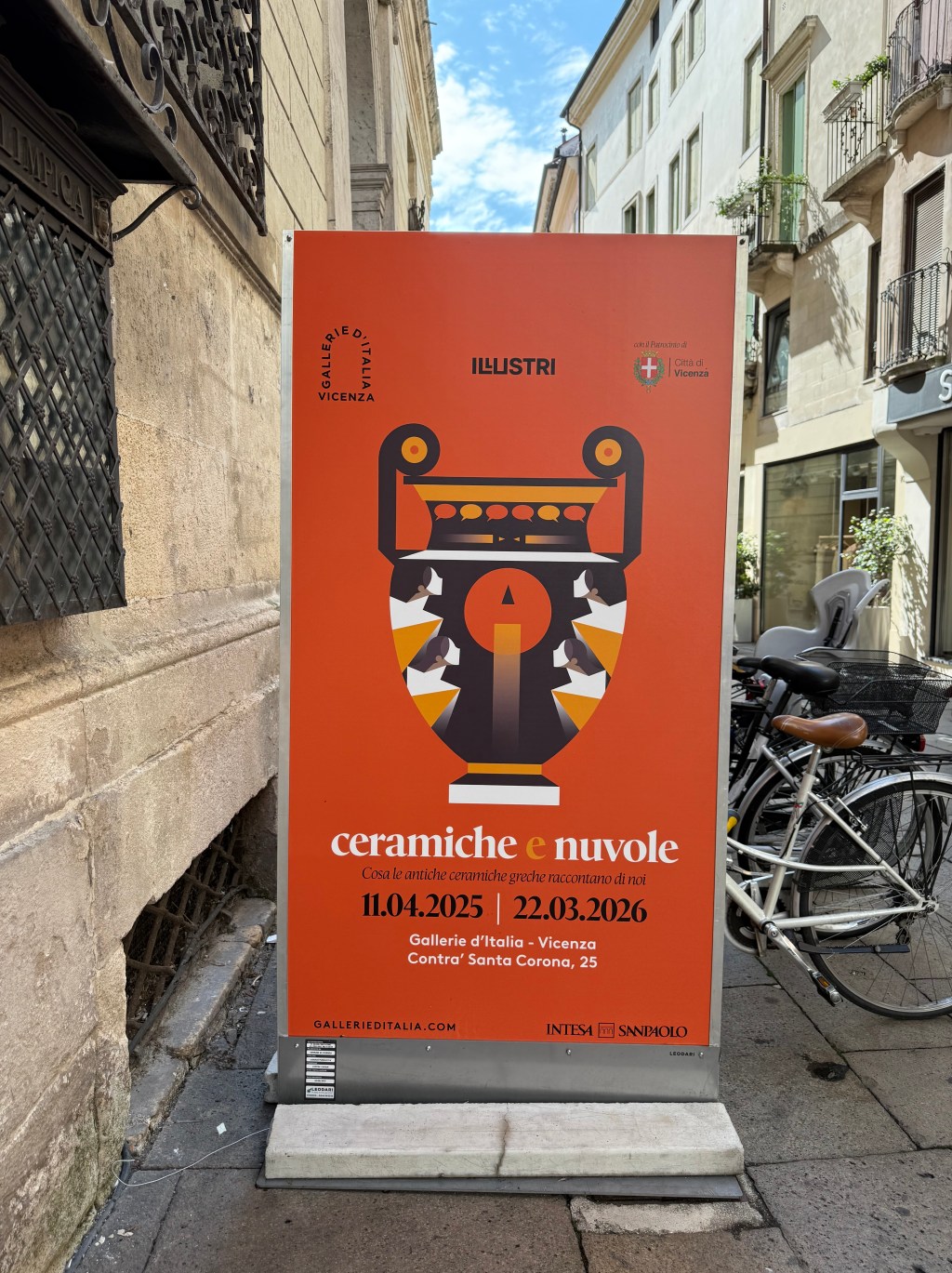
“ILLUSTRISSIMO JAVIER JAÈN’ contemporary artist from Barcelona. I caught the last day of this exhibition and regretted not going there sooner (maybe the posters advertising it around town didn’t inspire me ) as it was really cool and thought provoking at the same time.
There’s CAFUERTERA with the muscly coffee maker showing off his biceps as if to say: strong coffee pot, strong coffee.

And the star of the show, GOYA, with the provocative banana lounging on a candy pink background.

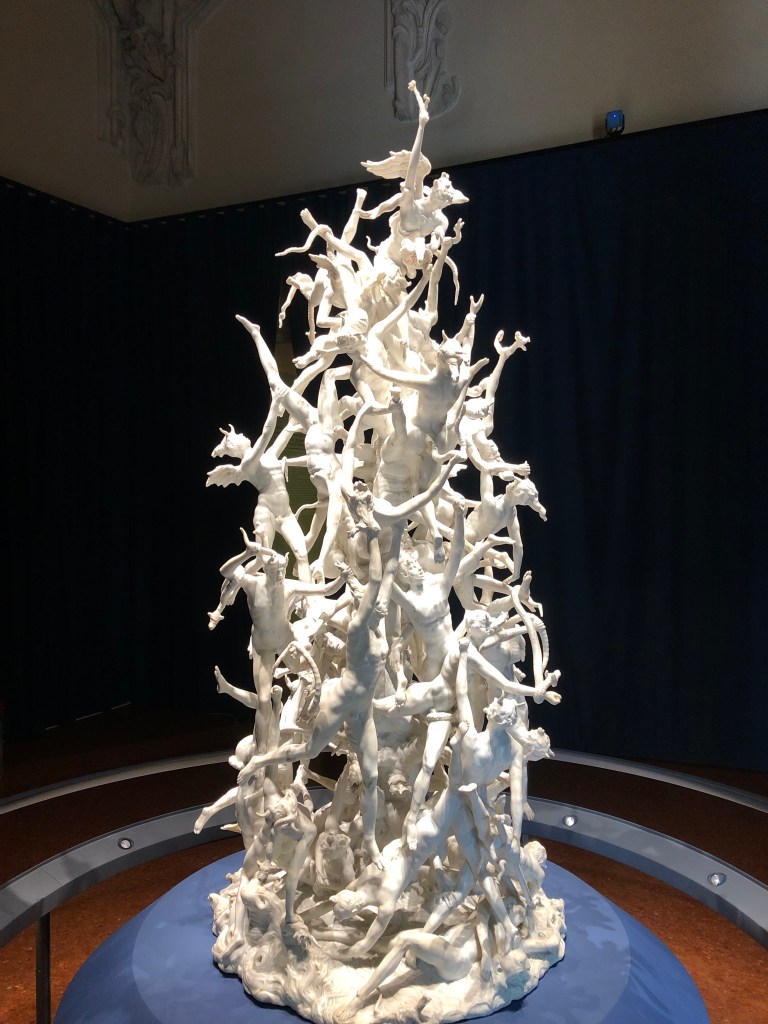
The Fall of the Rebel Angels by 17th century sculptor Francesco Bertos. Carved from a single block of pearly-white marble, this sculpture is 170cm high and is truly amazing for its size and the seeming fragility of the angels tumbling down into hell.
Permanent Collection
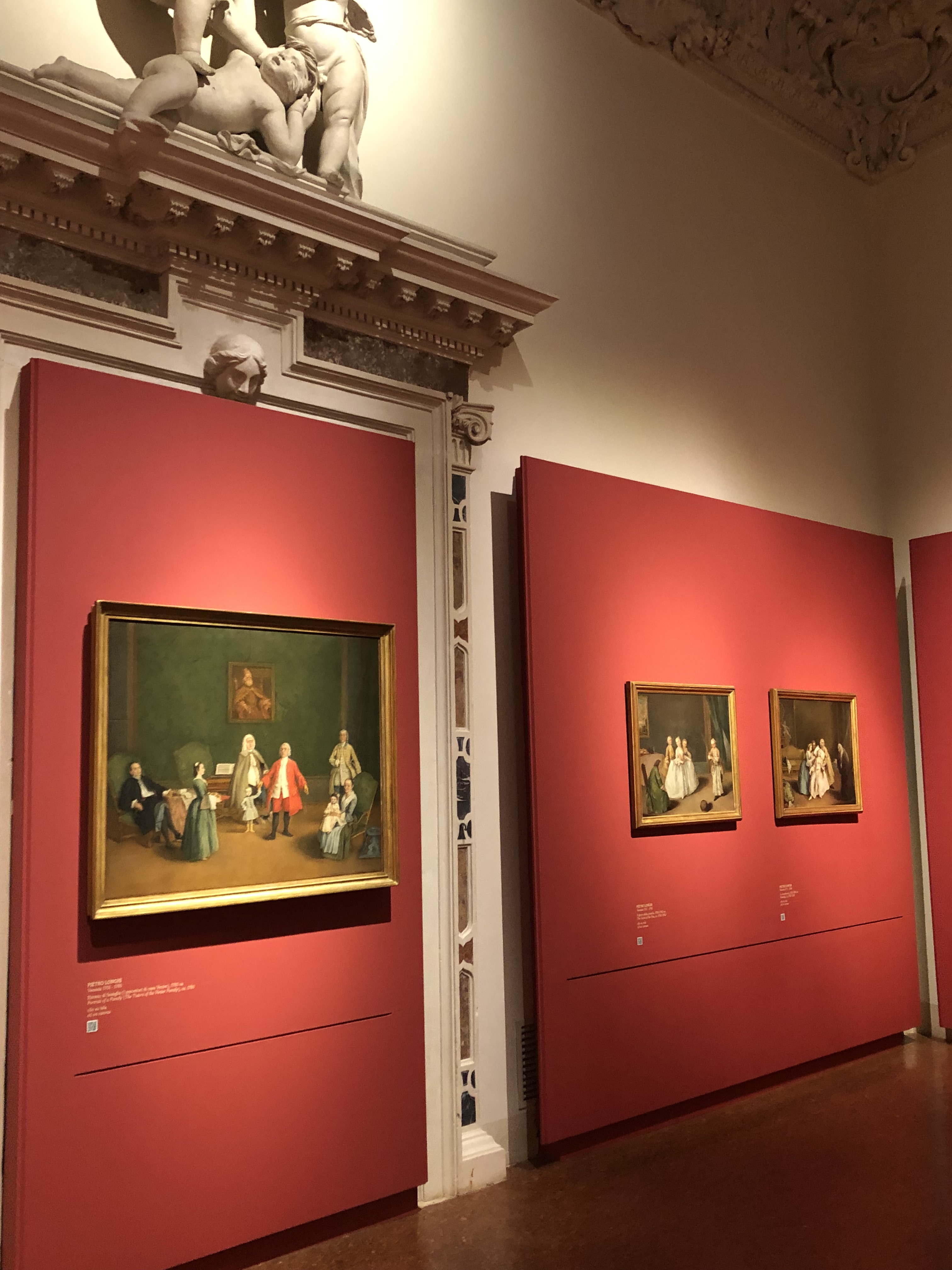
PIETRO LONGHI
Venetian painter of the 1700s famous for genre painting: scenes of everyday life of the Venetian nobles and lower classes. You could say he was the documentary photographer of his time.
You will see The Game of the Cooking Pot which shows a scene of this game for adults, the aim is to hit the pot until it breaks open to reveal the surprise hidden underneath.
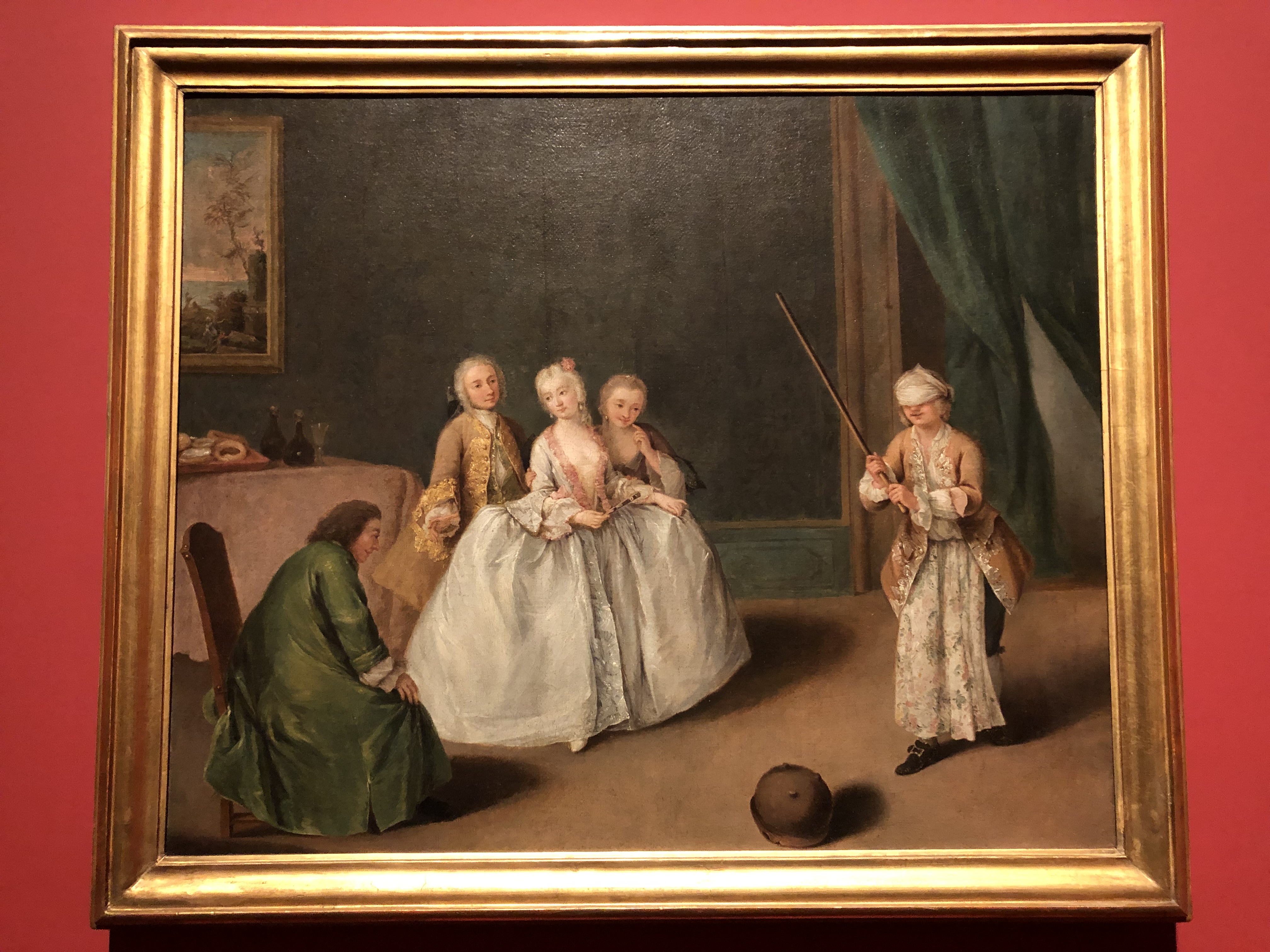
We’re so used to seeing people on their best behaviour in paintings that it makes a nice change to see some fun and energy and it makes you curious to know what happens next. Did the man with the blindfold manage to break the pot? And if so, what did he find?
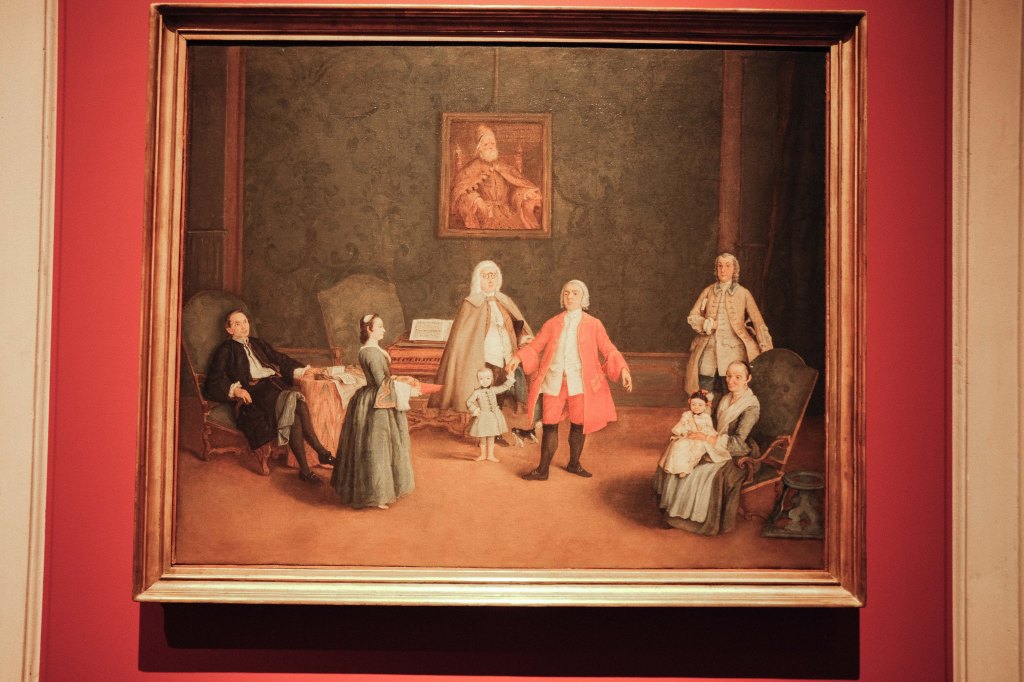
Portrait of a Family (The Tutors of the Venier family) comes next with a little boy at the centre of the painting with his tutors nearby. He’s ready to show off everything he’s learned- he’s got no choice, really. Expectations are high. Let’s hope he makes a good impression so that he can go away and enjoy some playtime, too!
VEDUTISM: detailed pictures of landscapes and urban views. This style started off in Northern Europe and arrived in Italy where it was taken up by famous artists like Canaletto.
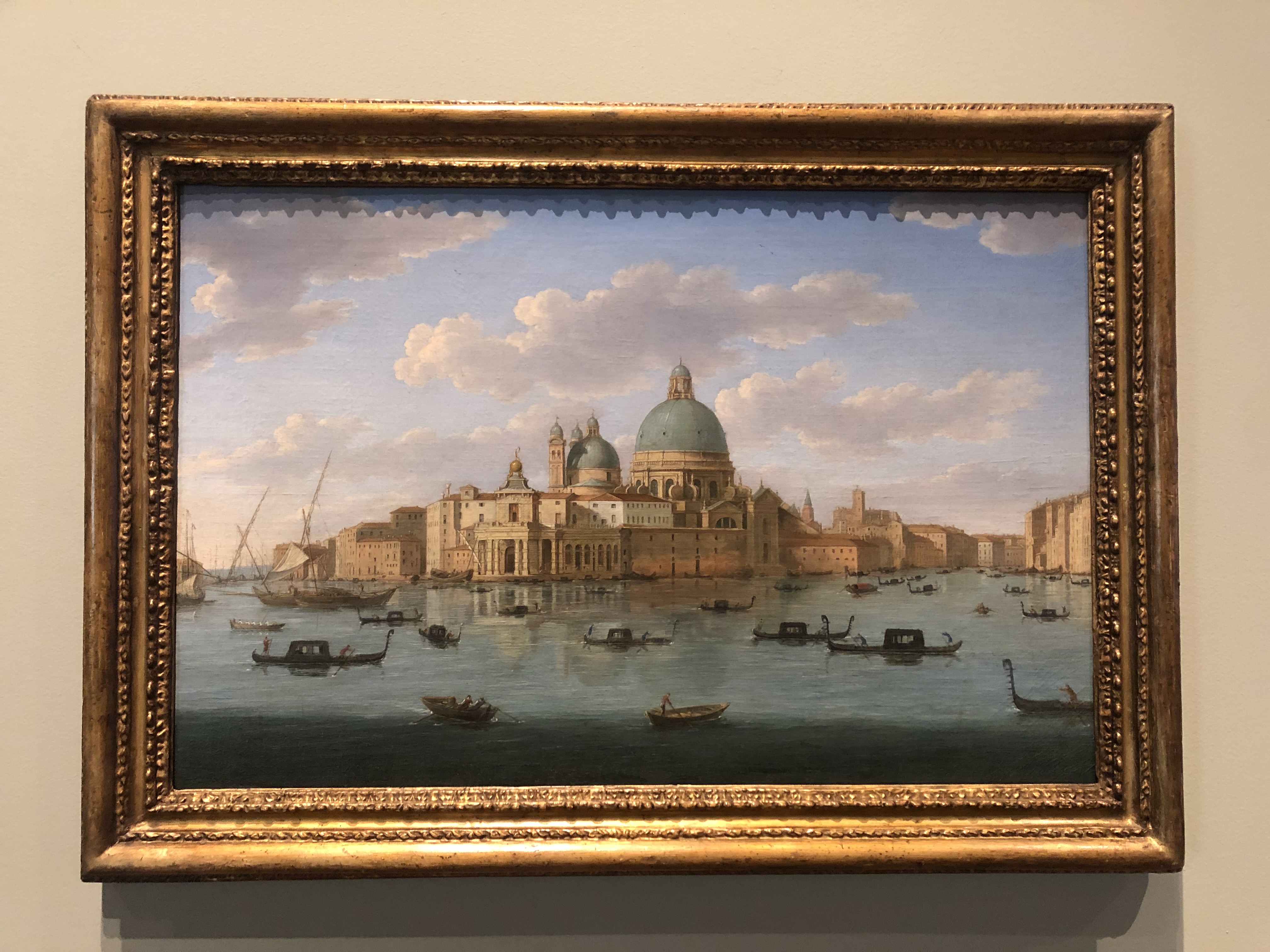
Before their time, these paintings have a photographic quality with great attention to details. This painting of Venice with those big cloudy skies and muted colours could be the Venice of today.
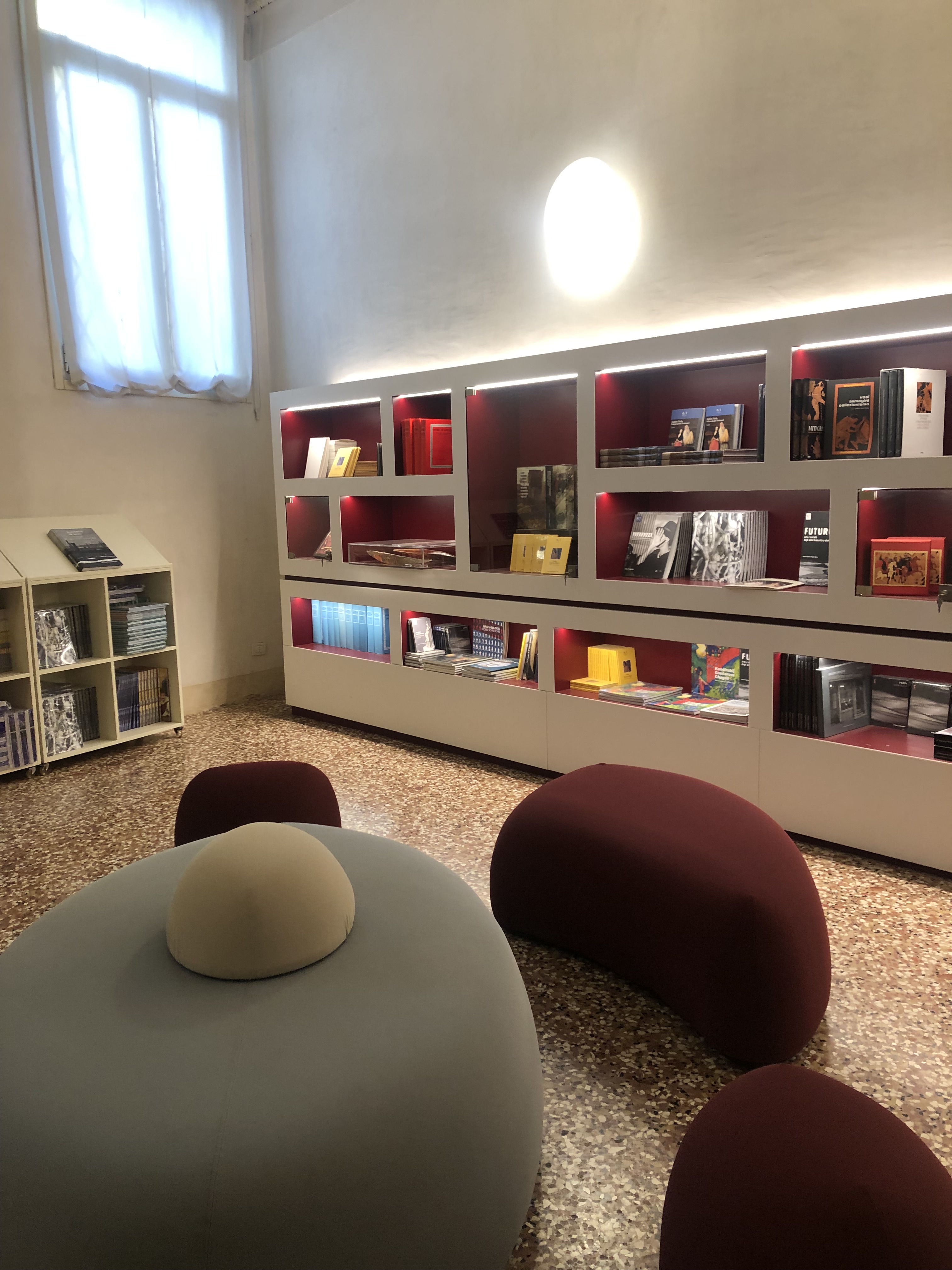
Take a rest after all that work. Downstairs you’ll find a cosy room with a coffee machine, books and soft round seating where you can collect your thoughts together before leaving the palazzo.



Leave a Reply