
The 15th August is a public holiday in many countries in Europe. In the tradition of the Roman Catholic Church, it is the feast day of the Assumption, when the soul of the Virgin Mary ascended to Heaven.
For many of us, the 15th August also marks the high point of the long, hot days of summer.
We’ve come to Aussois in France, a beautiful little Alpine village to join in two days and evenings of celebrations of the Feast of the Assumption.

Aussois is in the Savoie region of France, down in the south east corner and bordering with Italy, which means for us it’s around 4 hours and a half door to door by car.
This is the same village we’ve been coming to for years during the winter season when it cones into its own as a starting off point for skiing, walking and snowshoeing in the forest.
Not far away is the family home of Mr CA- born and bred in the Alps, he loves cheese, he loves outdoor sports and really unlike me, never feels the cold!.
Now we’re seeing the village of Aussois as we’ve rarely seen it before.
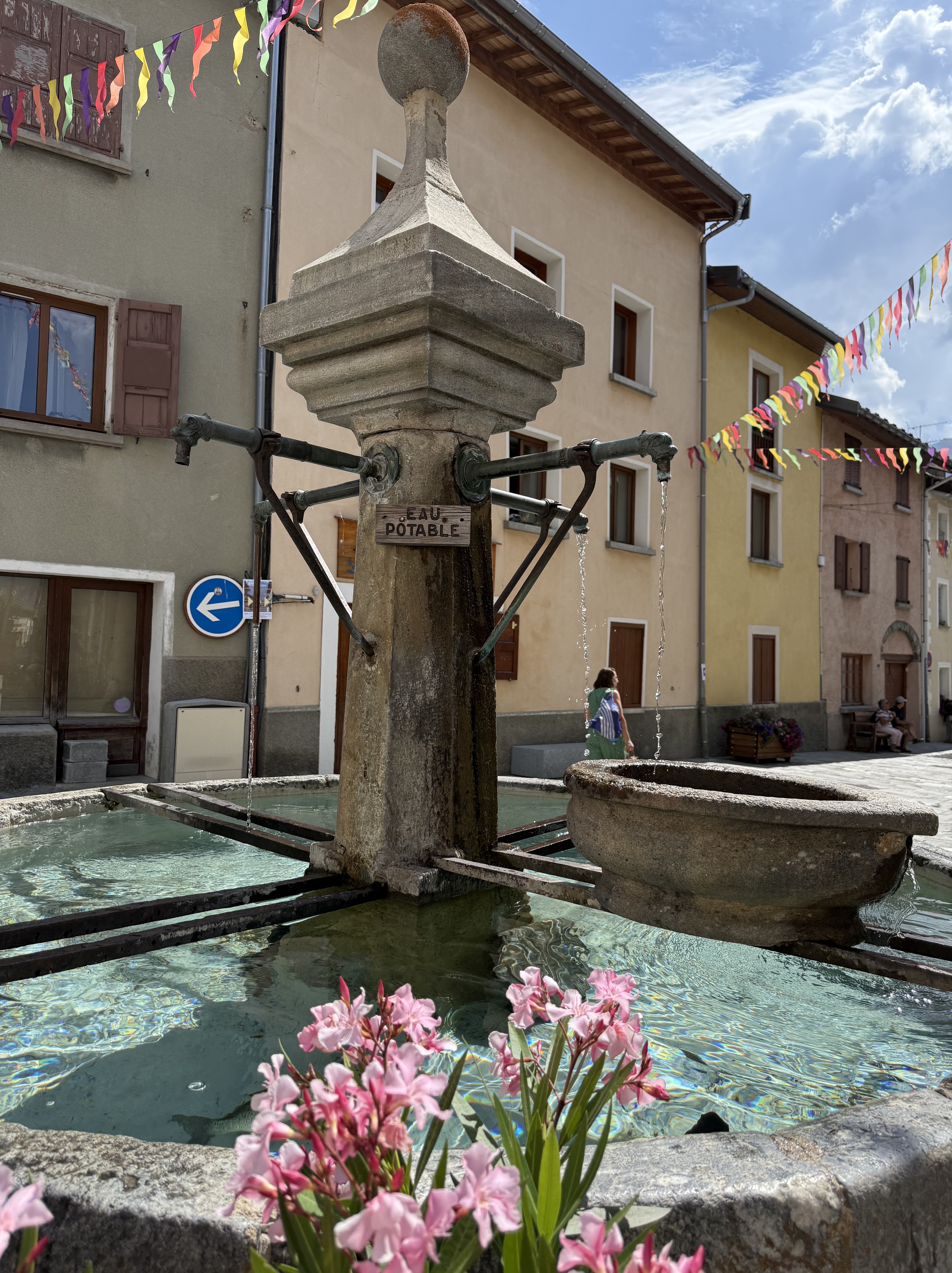
It’s hot and sunny. There is colourful bunting criss crossing from roof to roof. The village fountain runs with fresh sparkling water and there are two big trout swimming inside it.
Large wooden troughs of vibrant summer flowers decorate the streets. There are plenty of things planned for two days of celebrations. The streets are busy and everyone is in a good mood. We just need to freshen up and join the party, too.
Alpine Lodge
We checked in at our hotel, Alpina Lodge Vanoise, in the heart of the village, just by the church. We have memories of coming here one winter with our lovable and crazy American friends who adore Aussois.
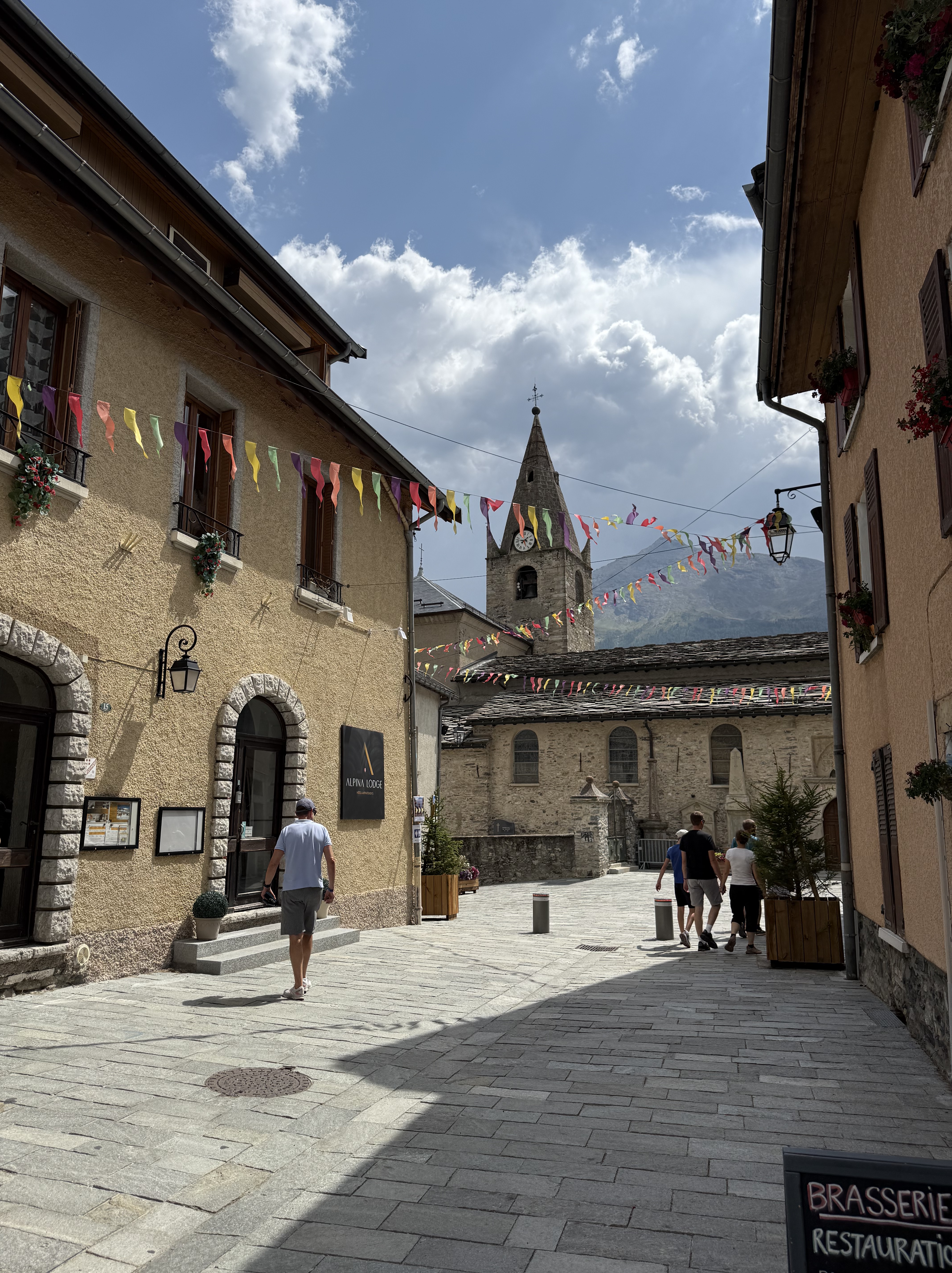
In those days, they would ski down every barren, steep and icy slope by day and then by night enjoy the après-ski lifestyle on the roof terrace of the hotel. This time round we’ve come to be with the locals and take part in the cultural life of the village.
L’Arche d’Oé Heritage Centre
Pass through an old wooden door and you’ll find yourself in an old house brought back to life with household items, furniture and photos donated by local villagers to show us how people from Aussois used to live.
Life was connected to the land and the seasons. During the summer, the cows went up to pasture along with the family’s chickens and two pigs. Those months were spent milking the cows and making the cheeses that would help feed the family during the winter months.
At the end of the summer, all the people and animals would return to the village. The pigs were killed and made into sausages and hams.
The Kitchen
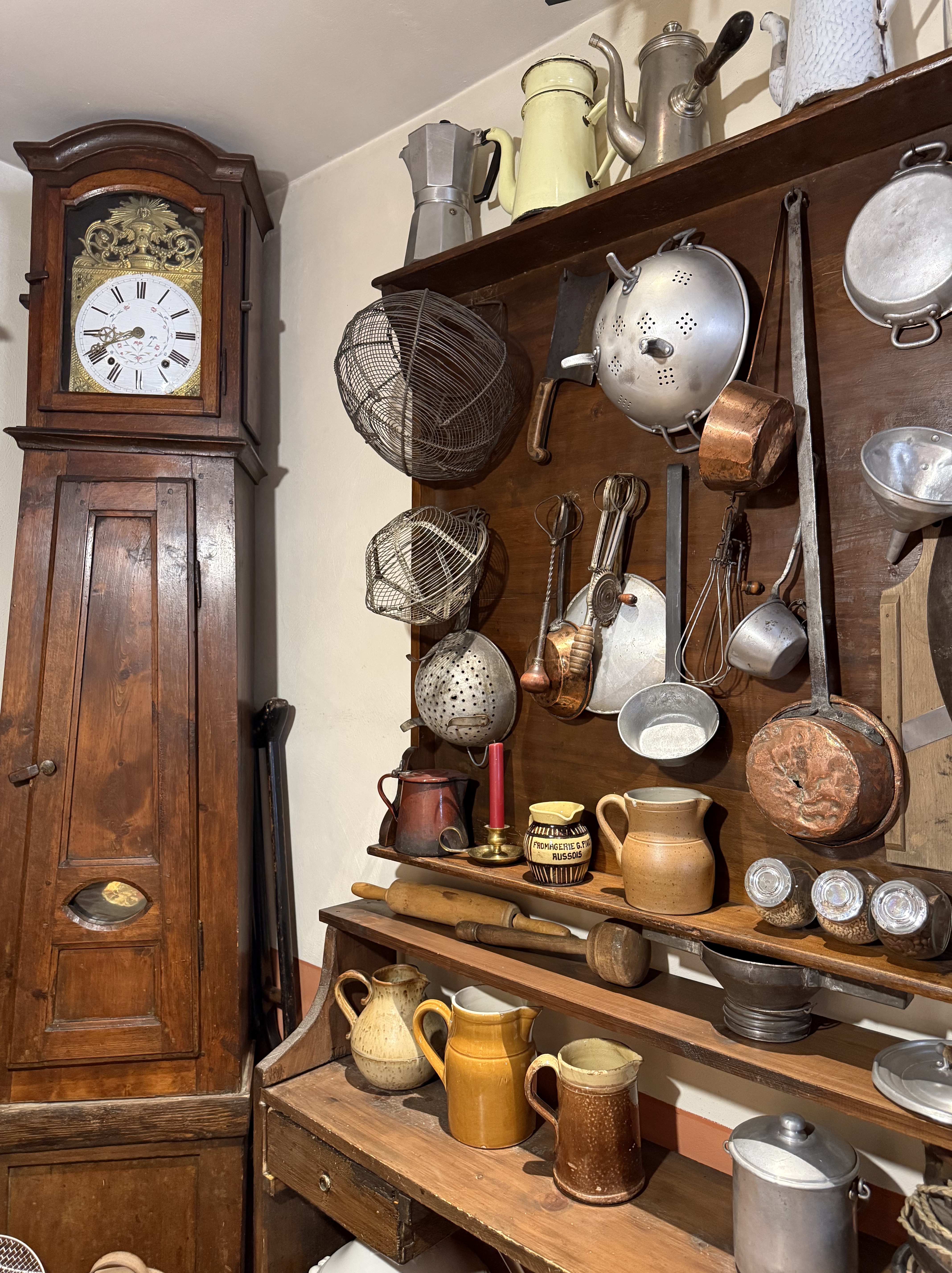
The colourful kitchen with all those tools to grind coffee beans, curdle the milk to make butter, wire baskets to spin the salad leaves…
A Room for the Animals
During the winter months all the animals were sheltered here: the cows, sheep, mules, chickens and rabbits. The families spent evenings down here to keep warm, playing cards, the women knitting and talking.
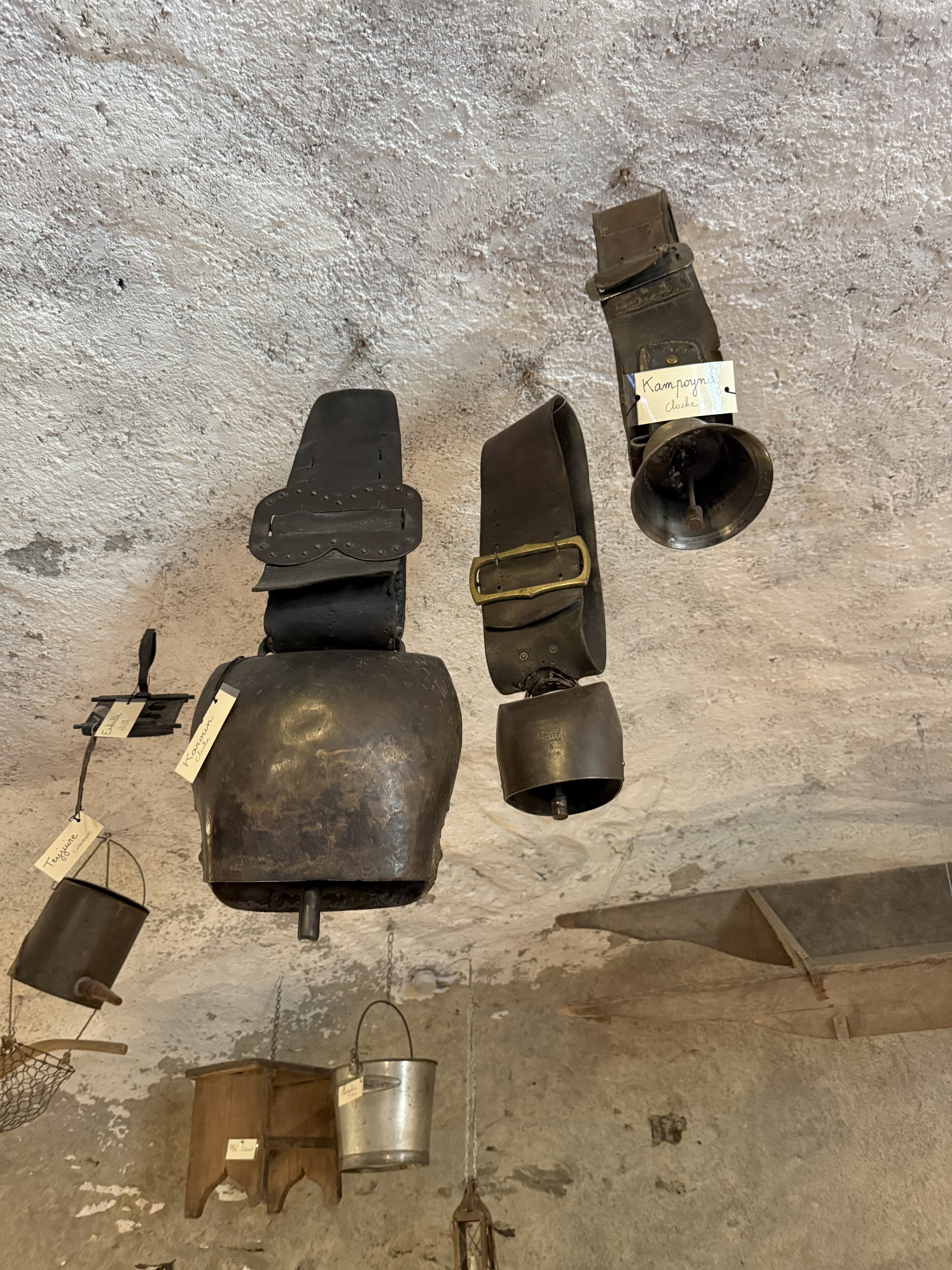
The Pantry
This dark and silent room stayed at 4° all year round. It was a place to store food and for the magic of food transformation to take place.
Here the family would store root vegetables like leeks and carrots. There was wine in barrels from the merchant.
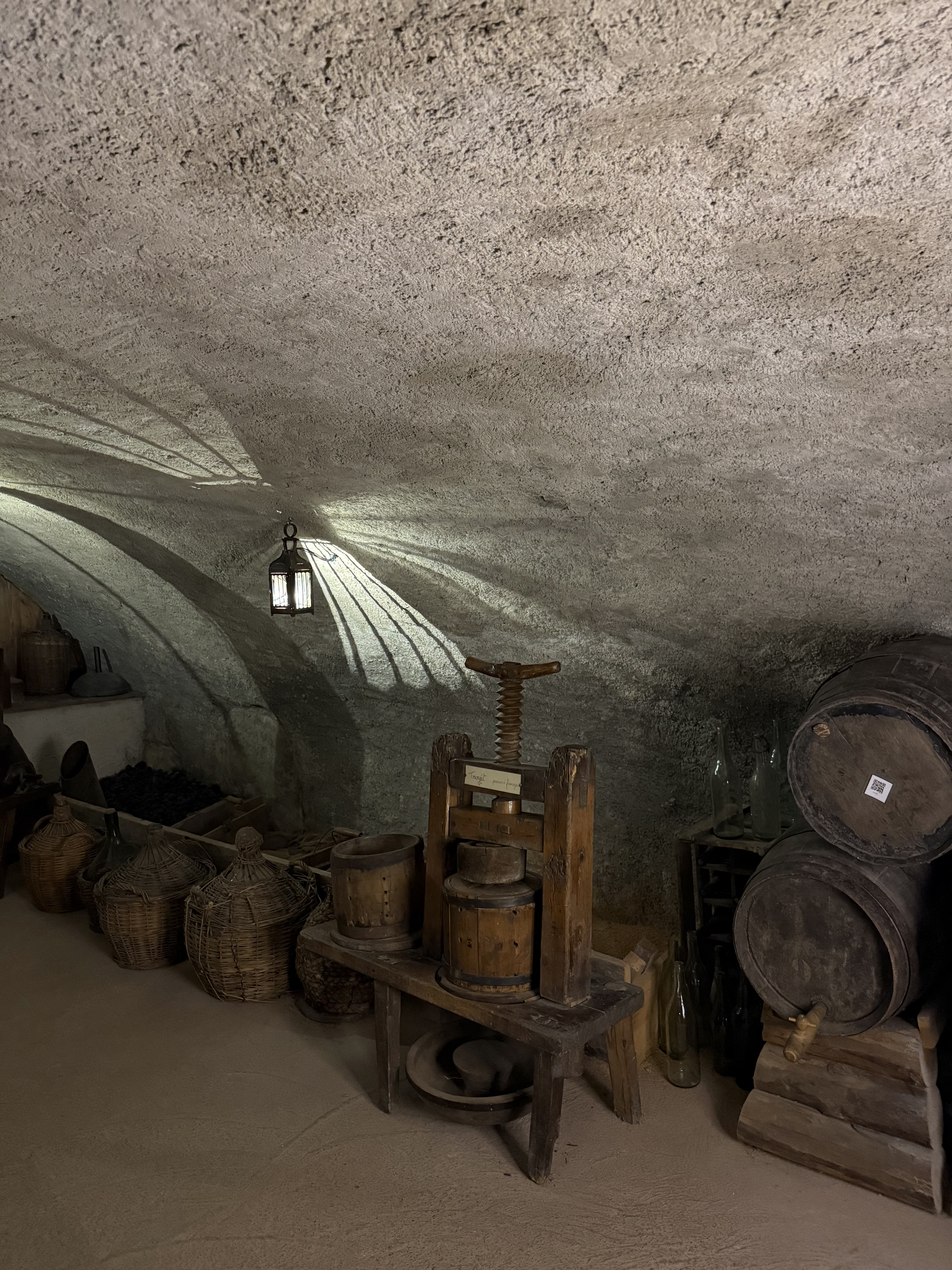
They would leave homemade sausages and hams here to cure. And the cheeses were salted and left at least three months to ripen.
Milk was left overnight for the cream to rise to the surface to be churned into butter the next day.
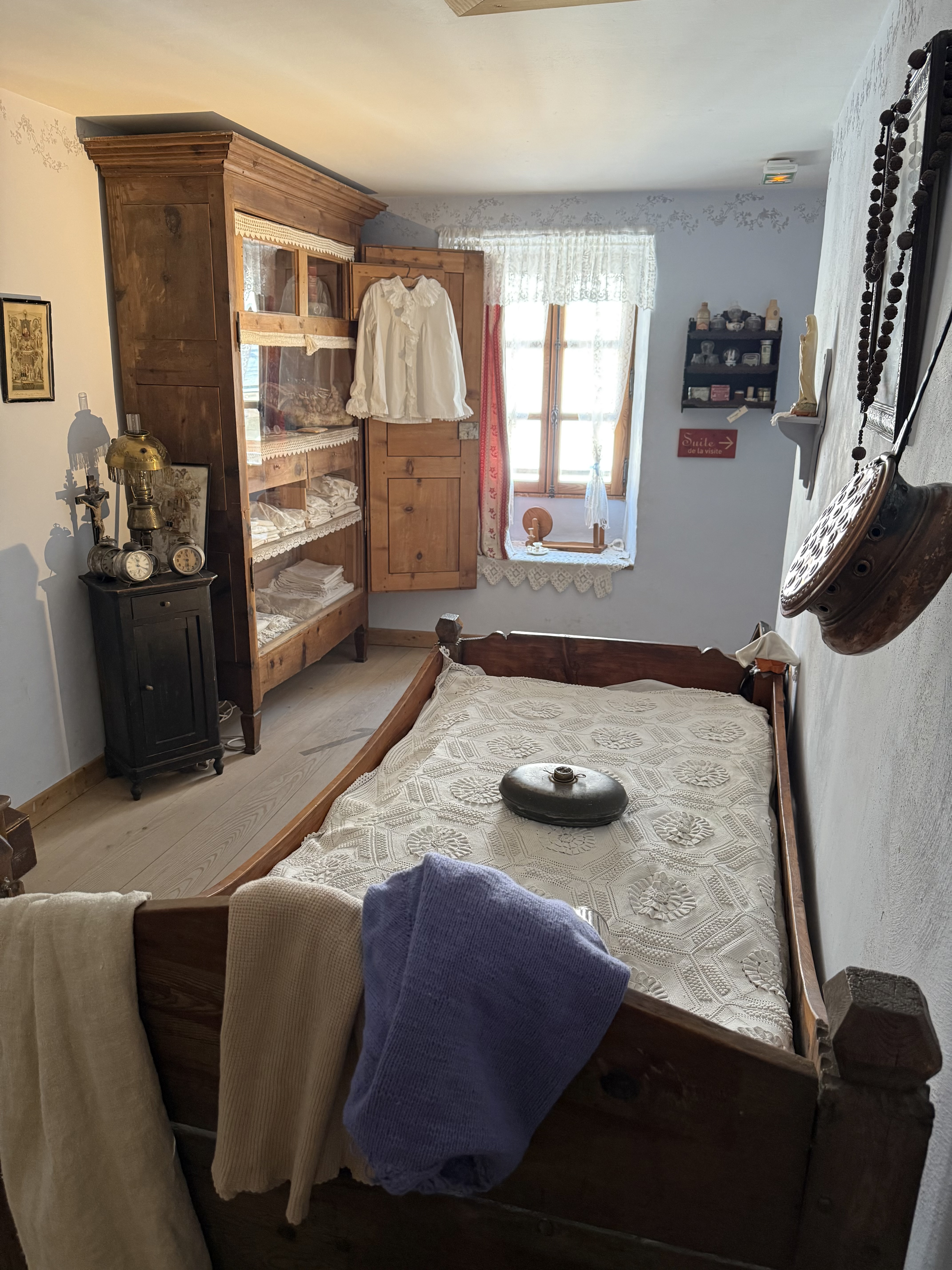
The Bedroom
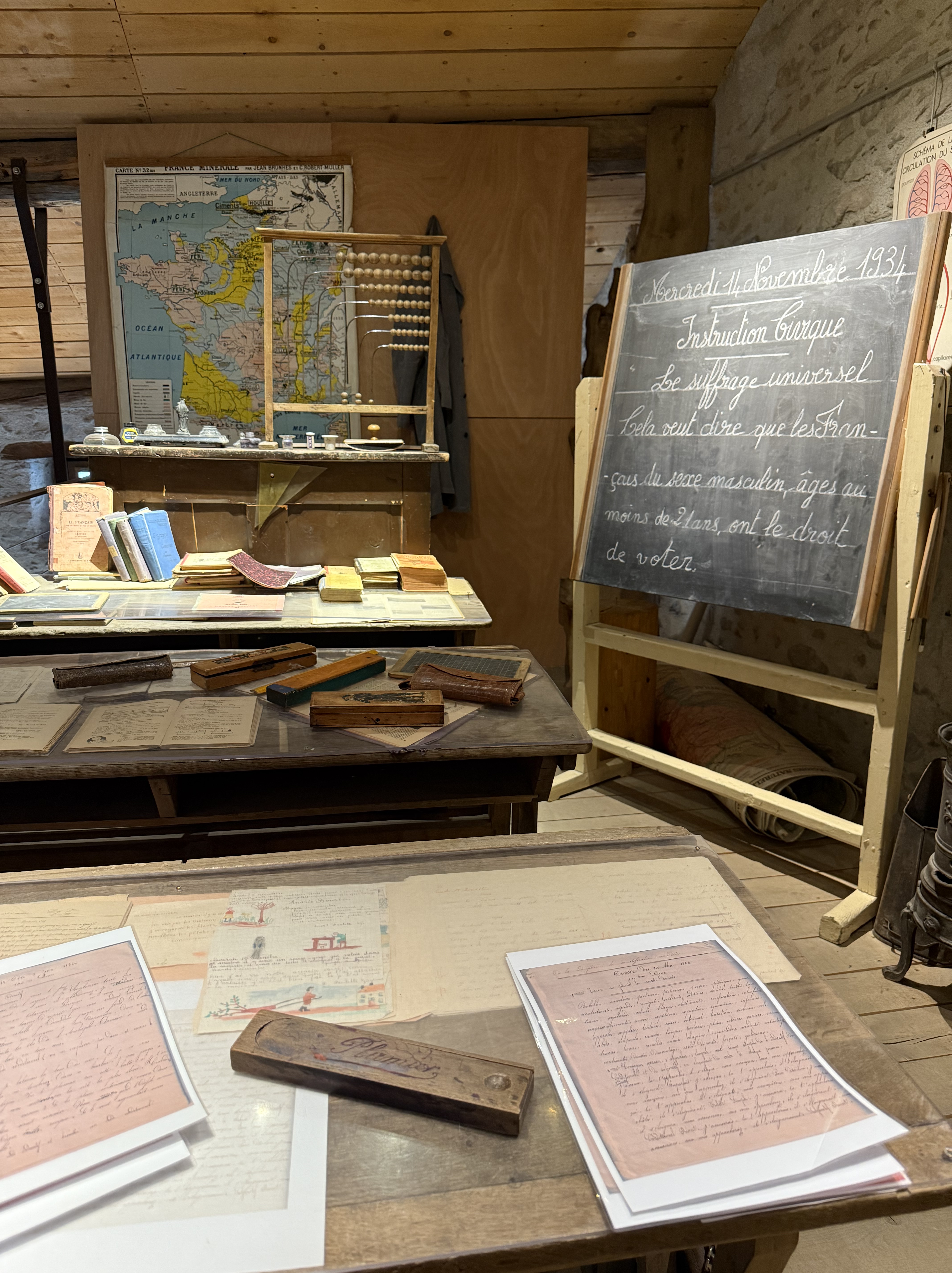
The School Room
A map on the wall, a poster of grammar rules, exercise books, even the blackboard- you can still find these in schools even today. We still learn to read and write with pencils and paper books.
As we were leaving at the end of our visit, the woman from the museum was so appreciative of my enthusiasm for the place that she actually gifted me a crystal quartz.
The Communal Bread Oven
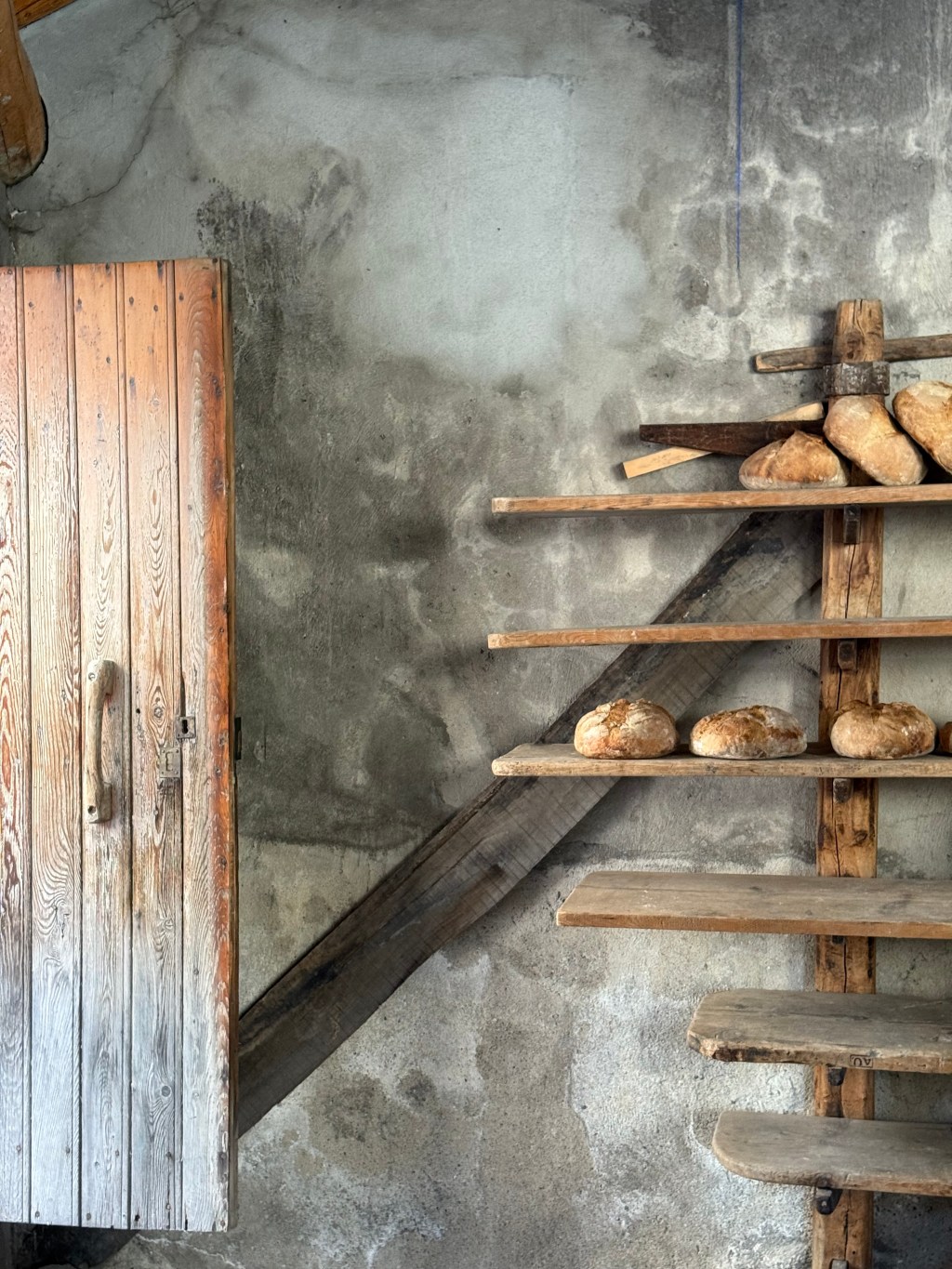
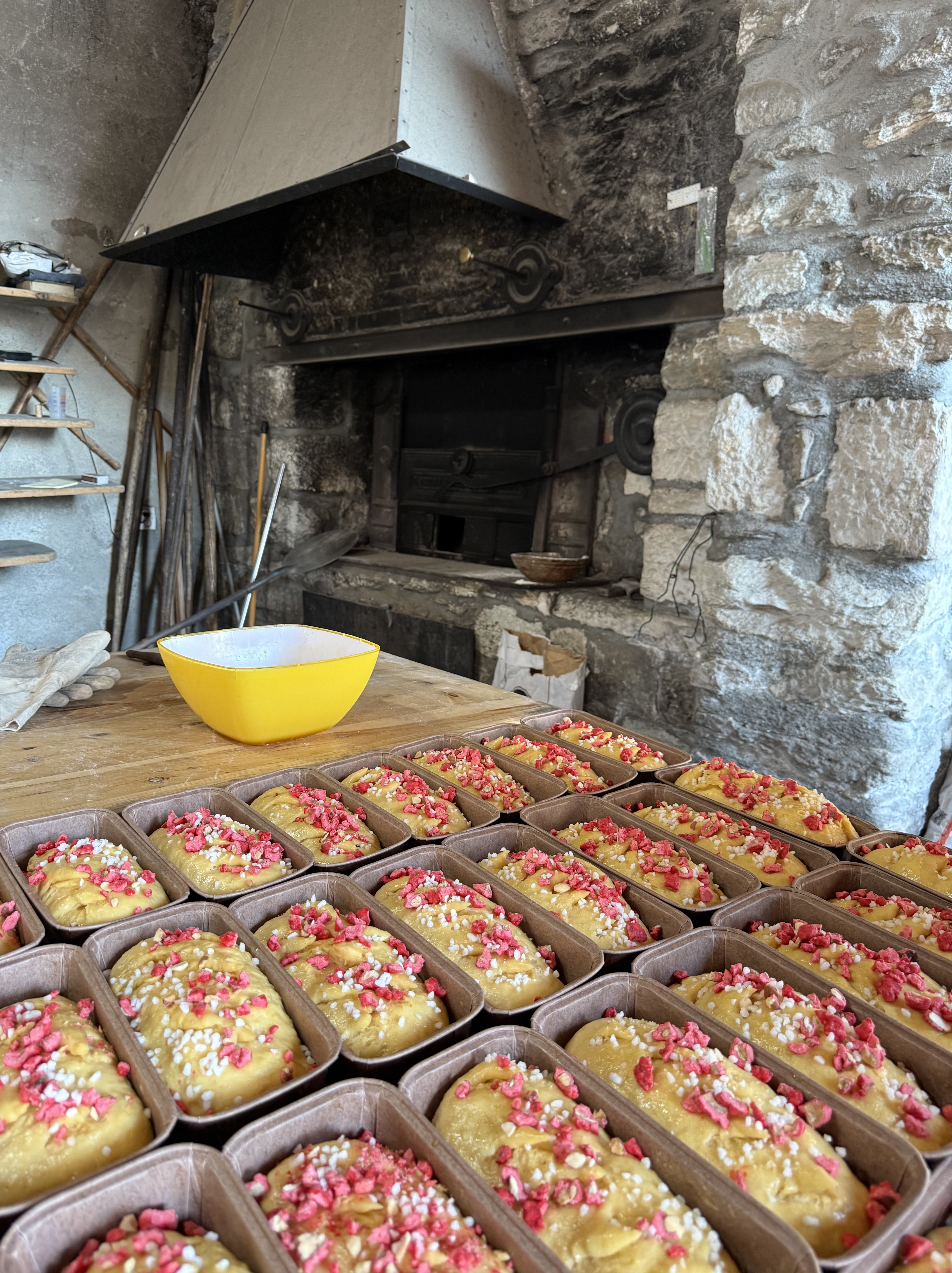
The one oven where all the villagers would come to bake their bread was open and working just for the festival.

Inside this old and atmospheric place were tins of brioches waiting to be baked.
The Church of The Assumption of our Lady
A typical sombre stone church from the outside, but inside, my friends, it’s a different story.
This church is decorated in the Alpine Baroque style: bold colours, gold leaf, colourful frescos and twisted columns.
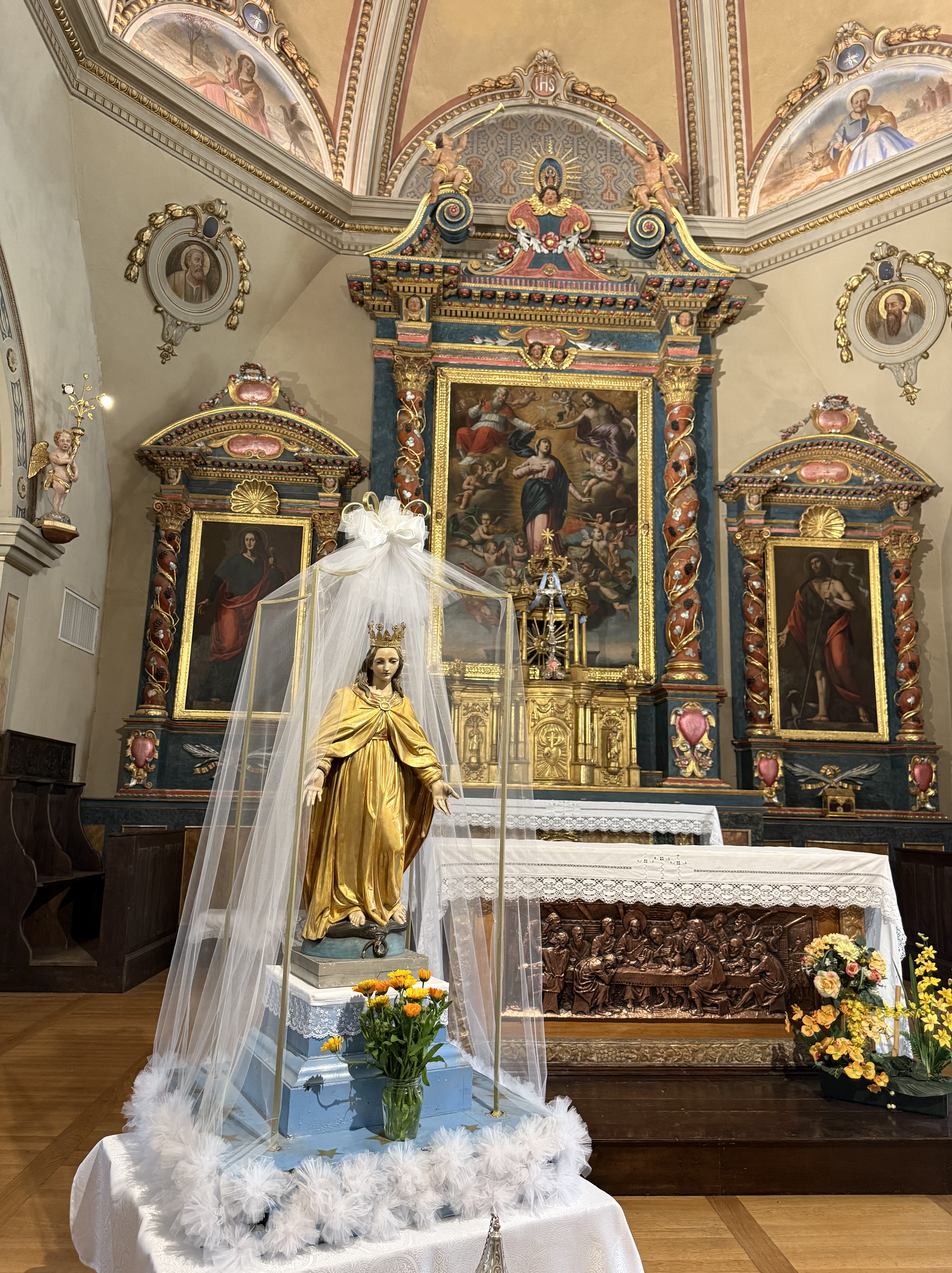
And for the festival of the 15th, the throne of Mary was on display until was carried outside for the celebratory mass in the main square.
Traditional Dinner
By the afternoon, the August intense heat had died down. It even started to feel chilly.
We walked from our hotel to the main square, passing the nice lady in the museum who waved and called out Coucou! as we went by.
Long trestle tables were set out in the square. There was music and a DJ. A buvette typical drink stall to buy local beer and wine.

Dinner was the same for everyone and was based on local products we know: diots sausages cooked in white wine, with polenta on the side; bread and Tomme de Savoie local cheese. To finish, a pavé aux myrtilles cake, a sort of shortbread sponge with blueberries inside.
Accompanied by music, laughter and big fat drops of rain.
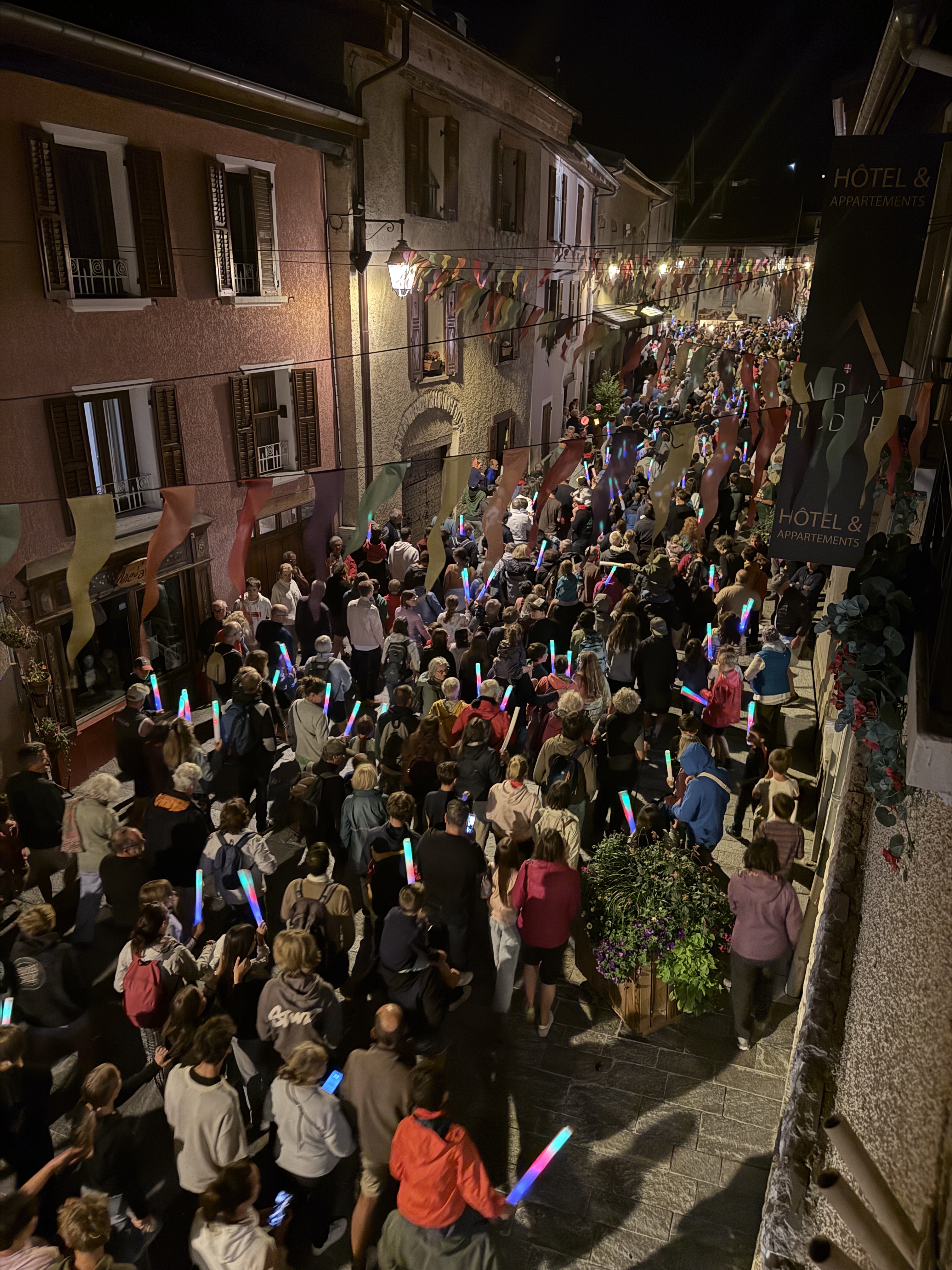
Later on that evening, once it was dark, a procession left the church, light sticks in hand, towards the fields to see the firework display. We watched from the rooftop terrace of the hotel as khuge fountains of colour lit up the black sky.
The Next Day
Morning mass
We were back in the village square where everyone was enjoying the party last night. Only this time, you could hear a pin drop during the service. All the generations were present and taking part.
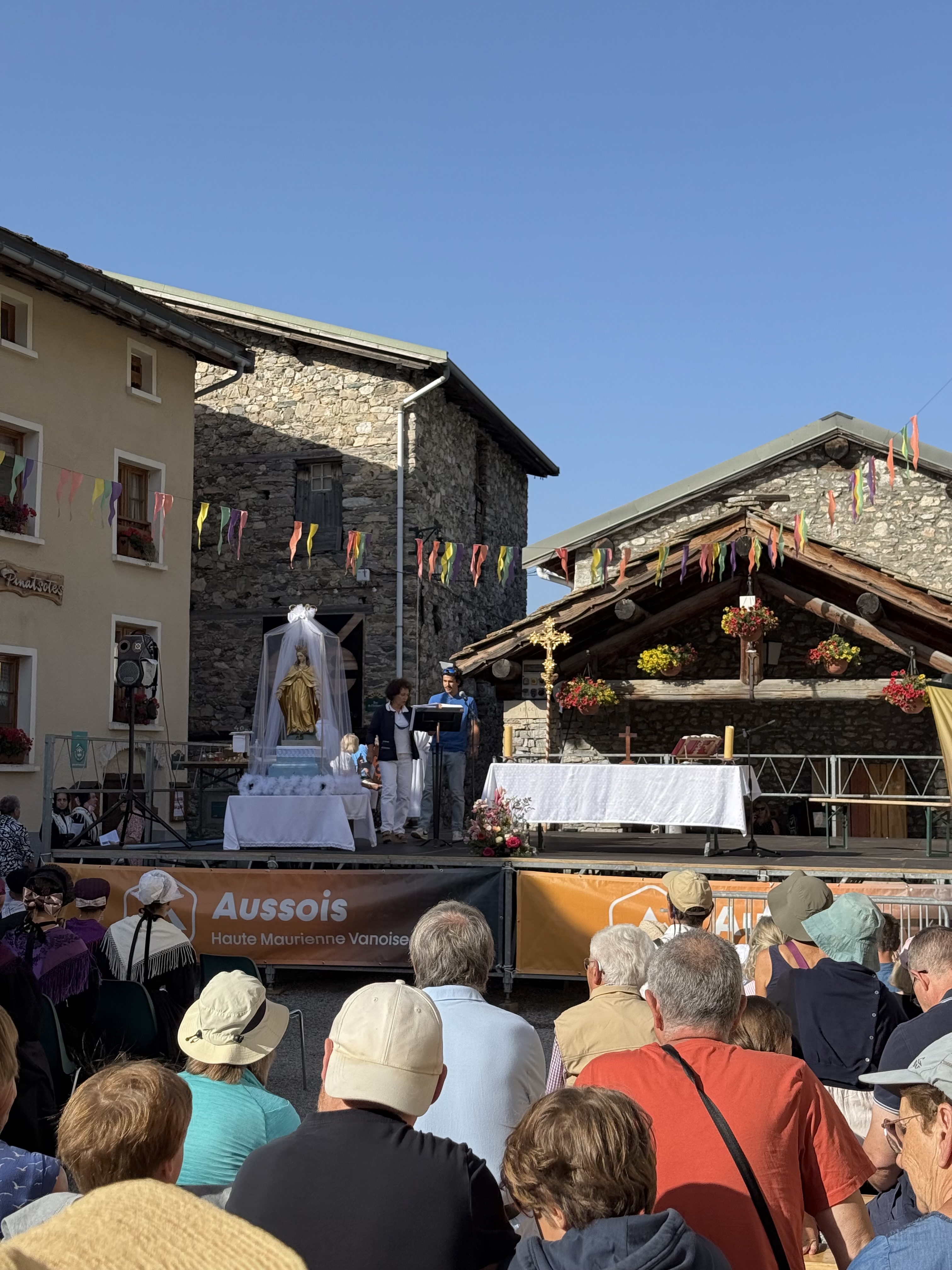
Many villagers were dressed up in the traditional costume of a feast day. For the women and girls: a dress made of long dark skirts and puffy sleeves; a pretty embroidered shawl; a bonnet tied at the neck with a large bow. To finish, jewellery like the gold cross of Savoie.
Walk to Fort Marie-Christine
From the church it’s a short walk up to another symbol of Aussois: the fort of Marie-Christine.
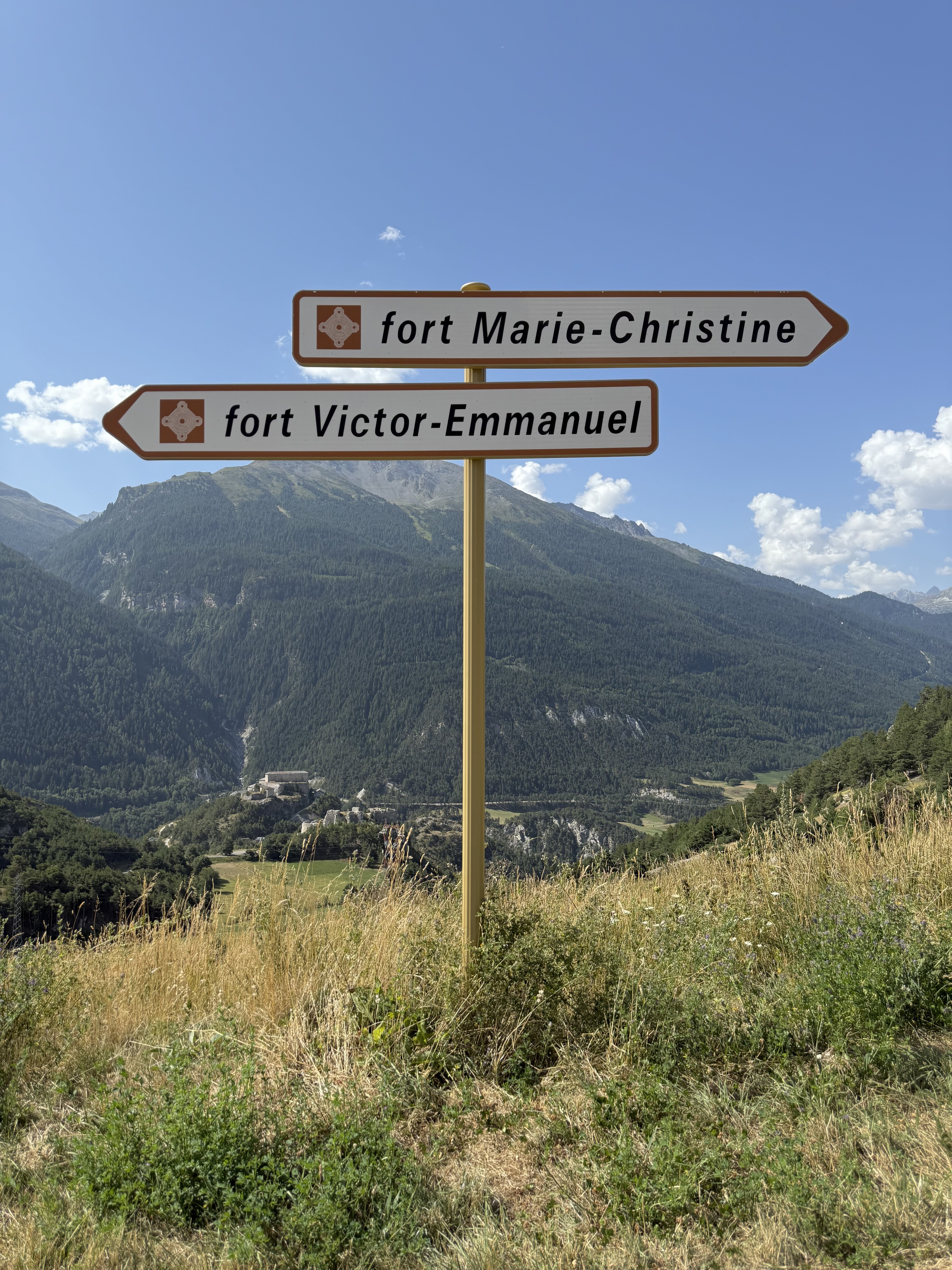
It was built 1830-1860 the House of Savoy was part of the Kingdom of Piedmont-Sardinia (both now regions of Italy).
At the time it could house a garrison of 150 men to keep look out and defend the valley from the French…!
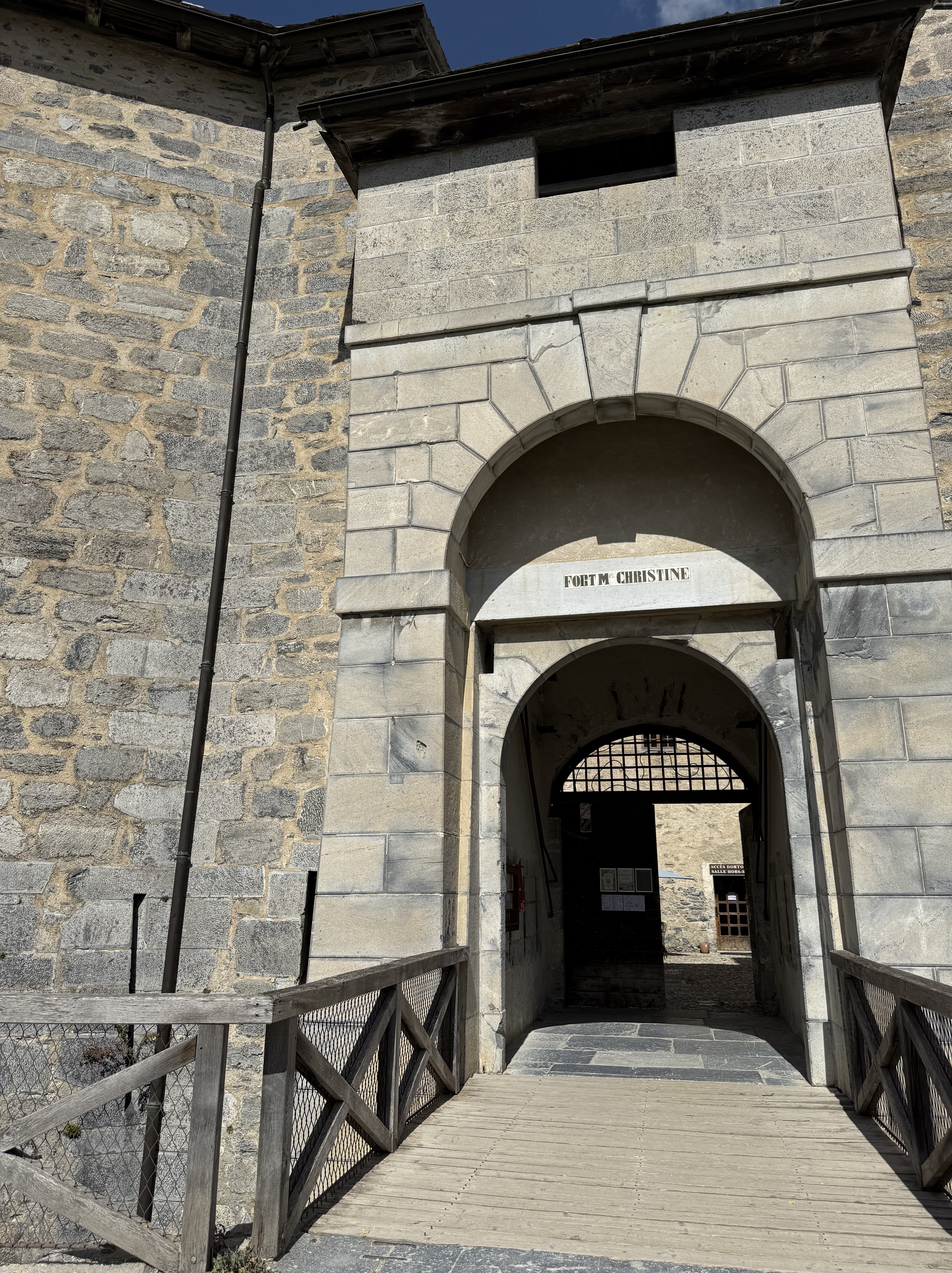
In 1860 the Savoy region became part of France. It’s divided into two departments: Haute-Savoie and Savoie, where we are today.
These days you can sleep inside in the dormitories at the top and there’s a great restaurant on the ground floor serving Savoyarde specialities.
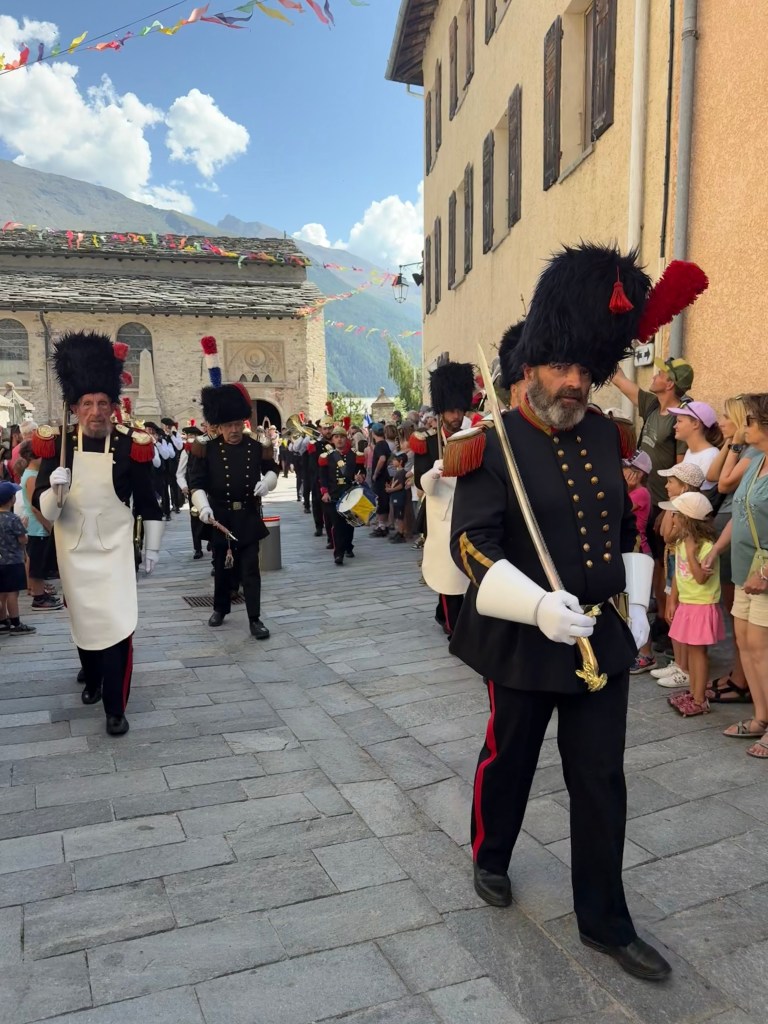
Procession of the Firefighters
In the past, the firefighters of Aussois were under the military. So their parade uniform included epaulettes, weapons, and for some even a long white apron.
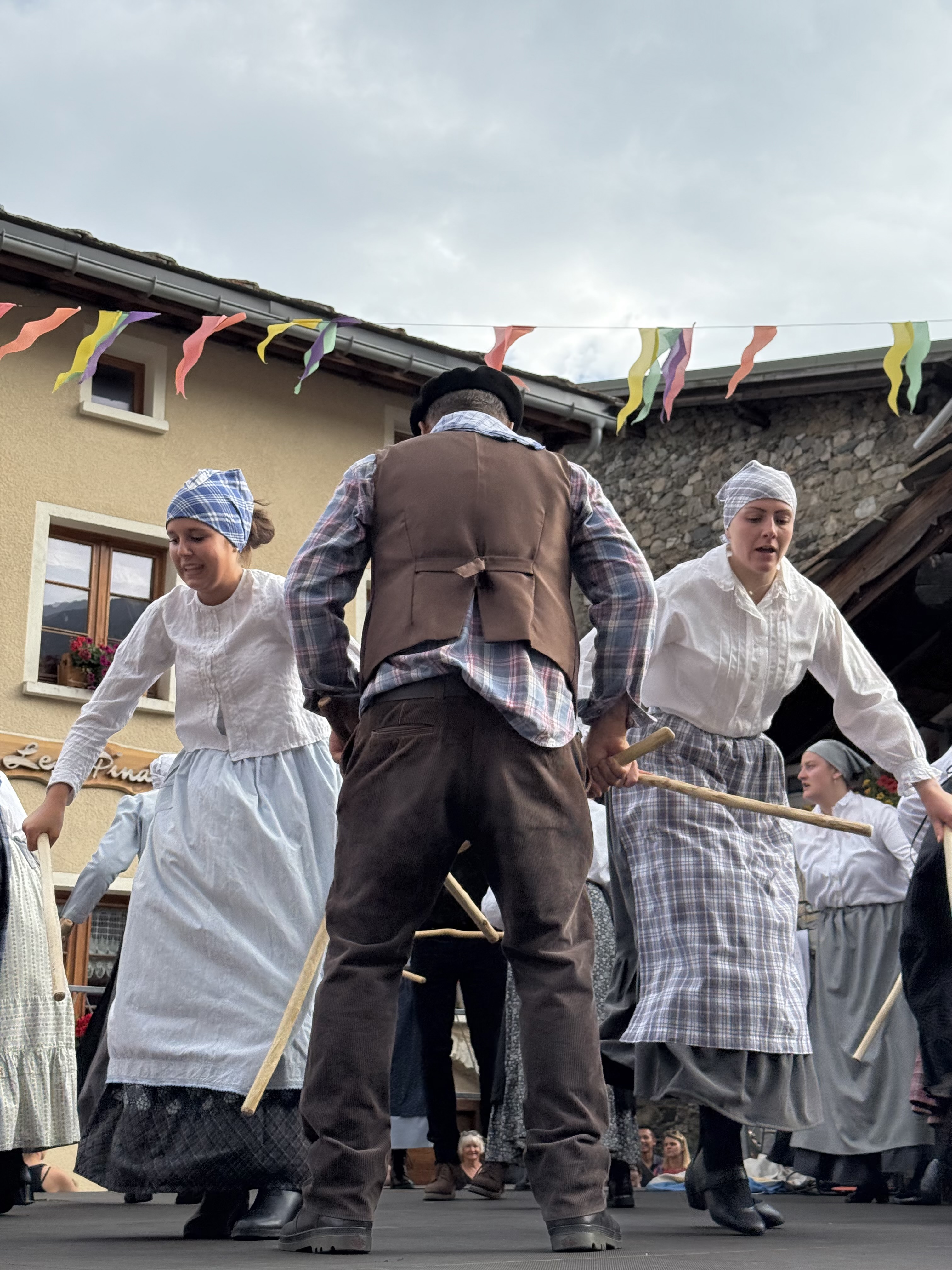
Folk Dancing
Once more back in the square and it was time for more fun. Dancing with energy and
Cheese Fondue at Fort Marie-Christine
Was it cold and cosy enough to eat hot melted cheese on 15th August? Yes, it was. So we anticipated the cooler season and tucked in, and reminisced about the good old times we’ve shared there with our friends.
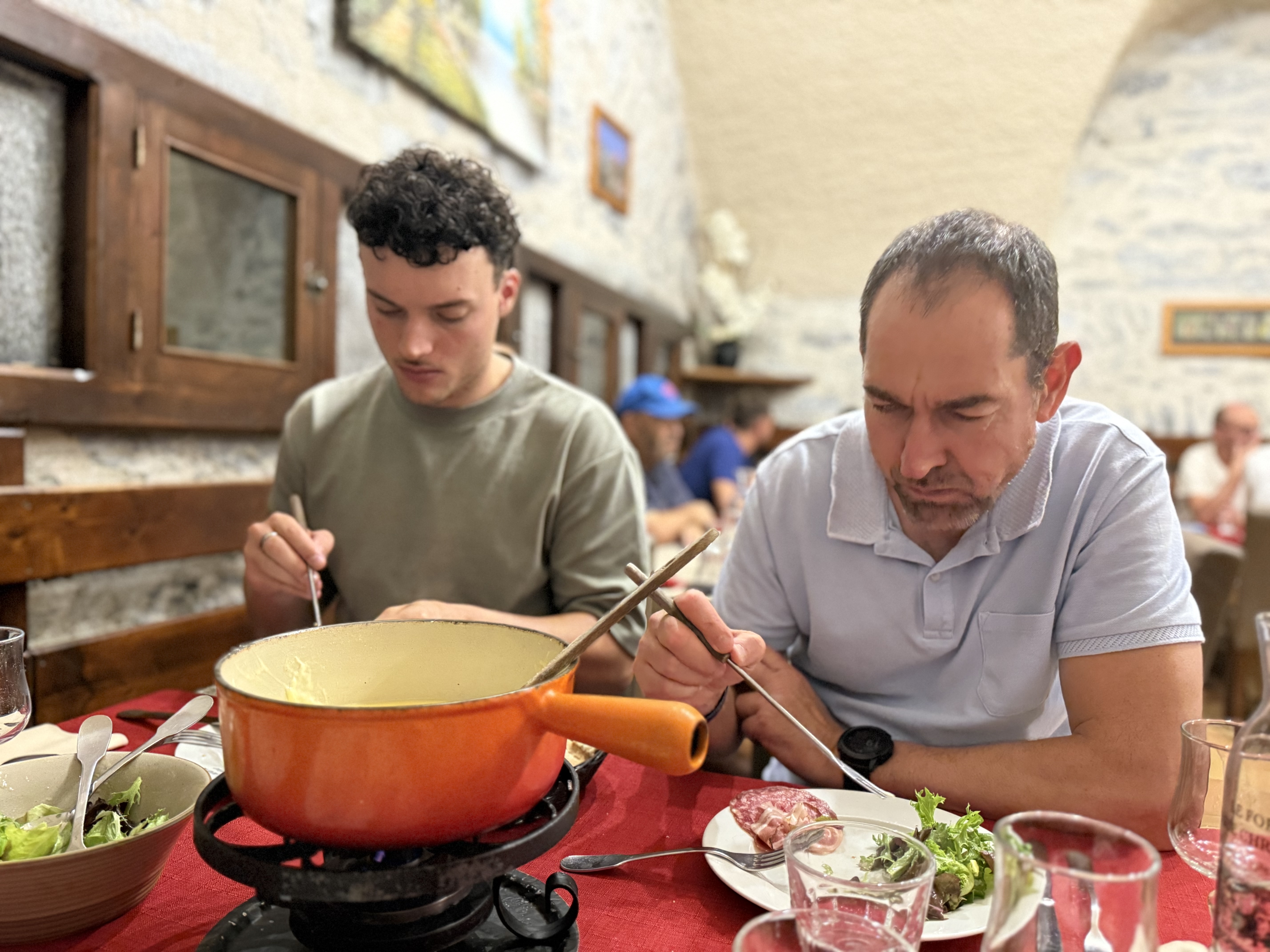
At the end of the meal, we walked back slowly to the hotel in the pitch black, barely seeing the way ahead of us. At times the sky lit up along the crest of the distant mountains by flashes of lightning from a summer storm. Then we were locked in the darkness once again, tuned in to the sounds of insects in the grassy pastures; looking for the first stars; breathing in that fresh mountain air
 casaalison
Leave a comment