
In our family we are all foodies. We get excited about visiting new places and trying tasty local food. We take photos of our plates, share bites and comments. What about you? Are you a foodie too?
We were ready to take on the Malaysian Peninsula. We already knew that it’s considered a melting pot of Malay, Chinese and Indian cuisines.
But we also found the influence of neighbouring SE Asian countries like Thailand and Indonesia. And more distant cuisines like Pakistani, Middle Eastern and Afro-Caribbean.
If you’re curious to know how we got on, keep on reading!
Here’s what we had:
Breakfast
Roti Canai
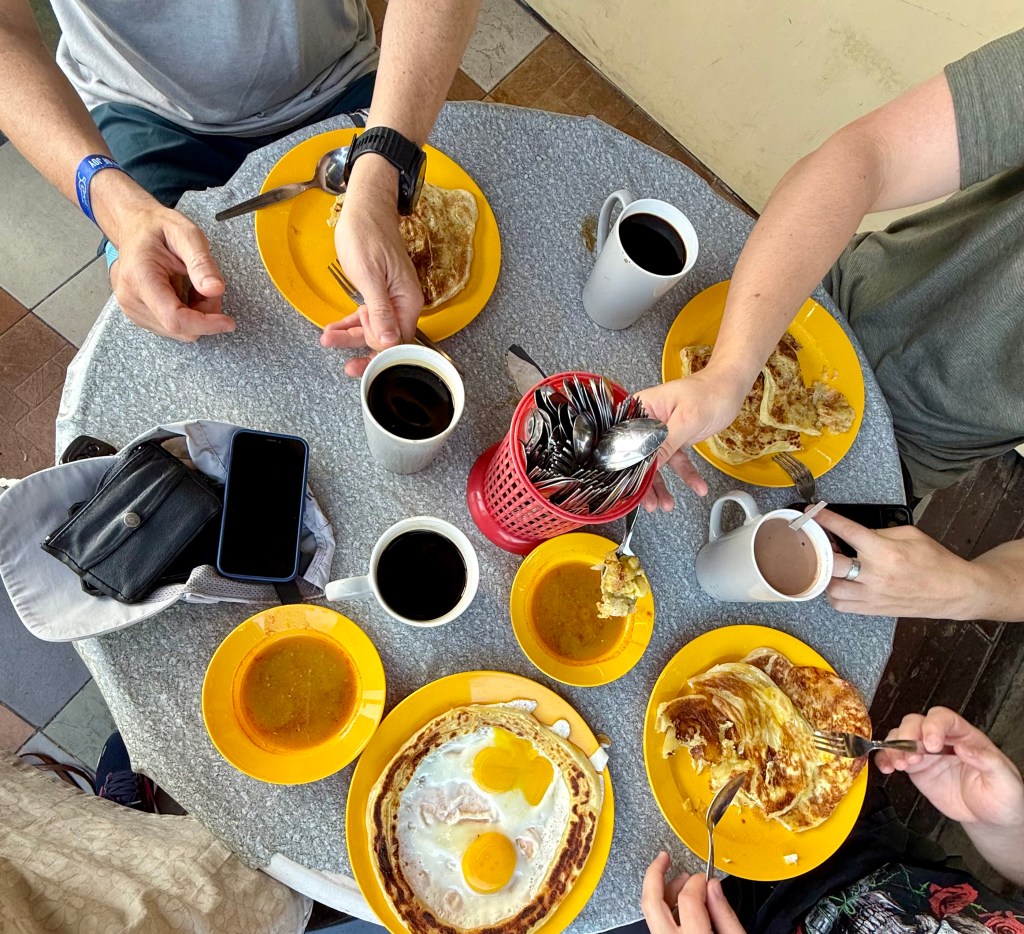
We had our first ones along the beach road of Penang Island.
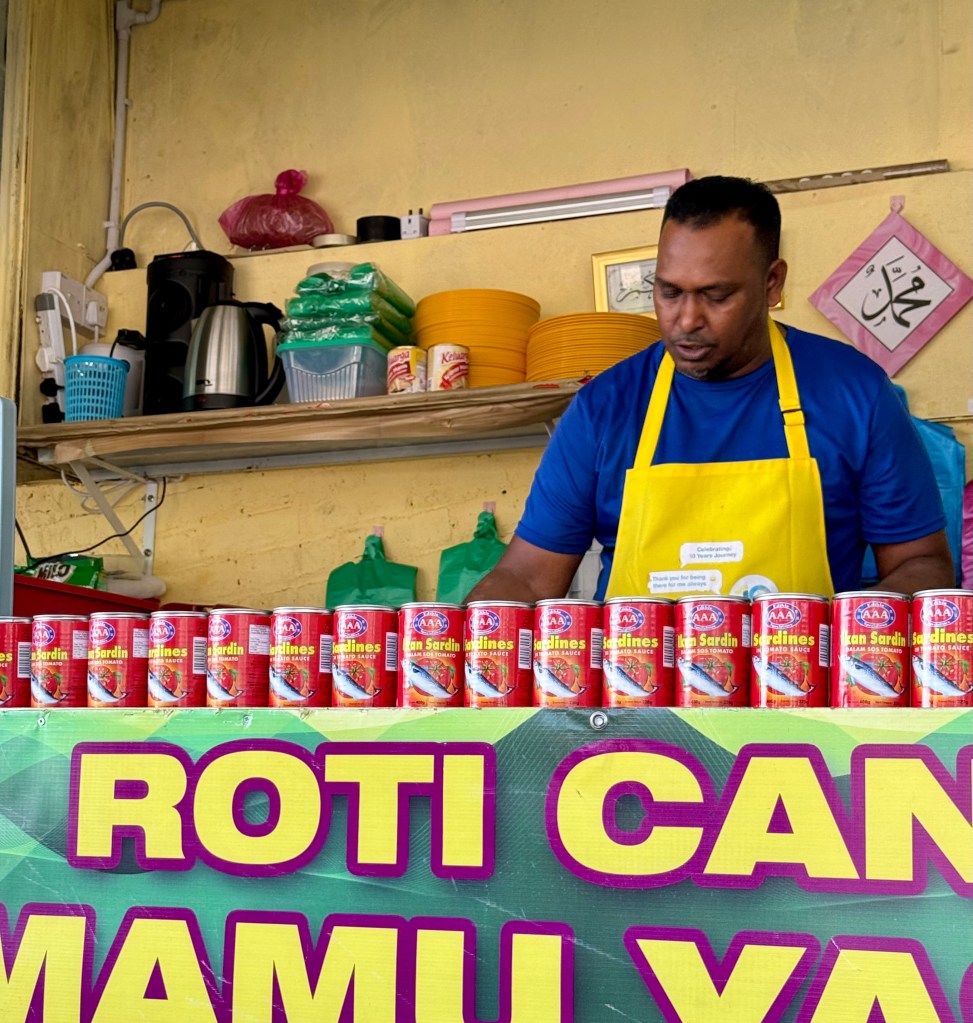
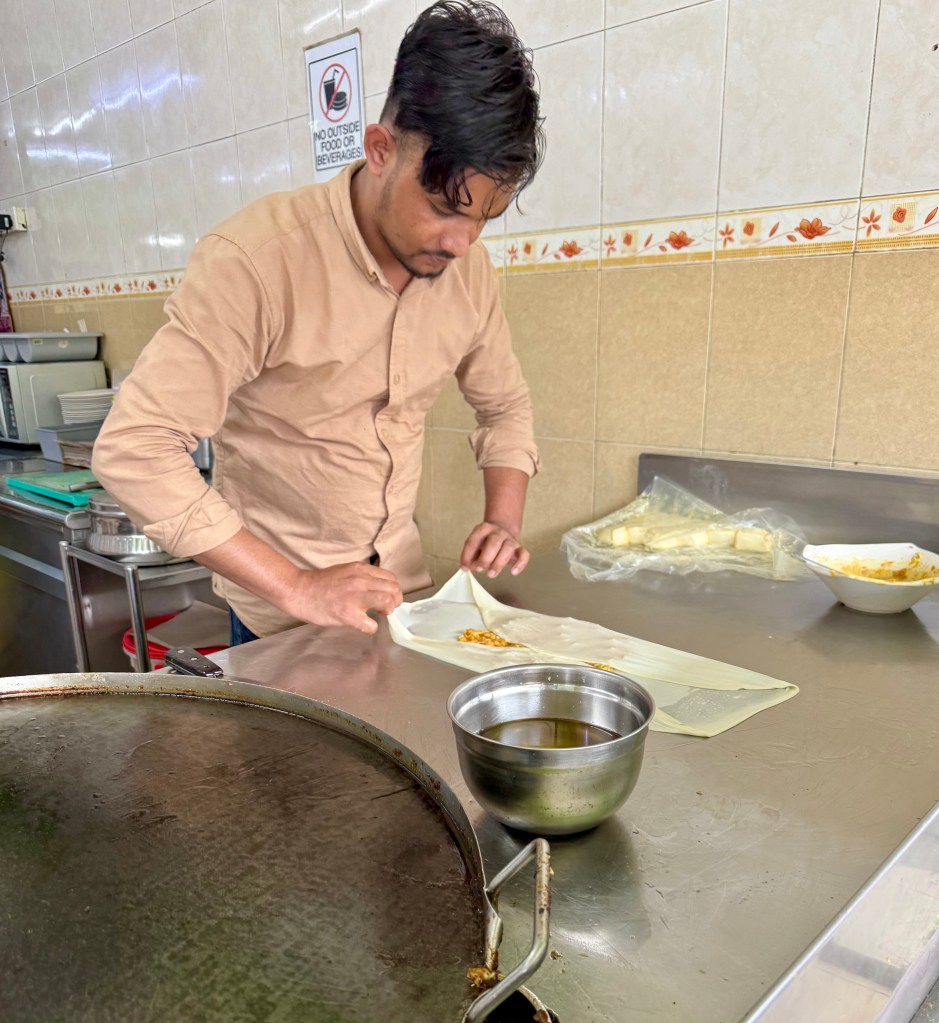
The happy and chirpy chef here is definitely a morning person. He seemed only too pleased to cook us some pancakes to order. Some with banana slices and another with fried eggs. Mugs of instant coffee and then we went on our way.
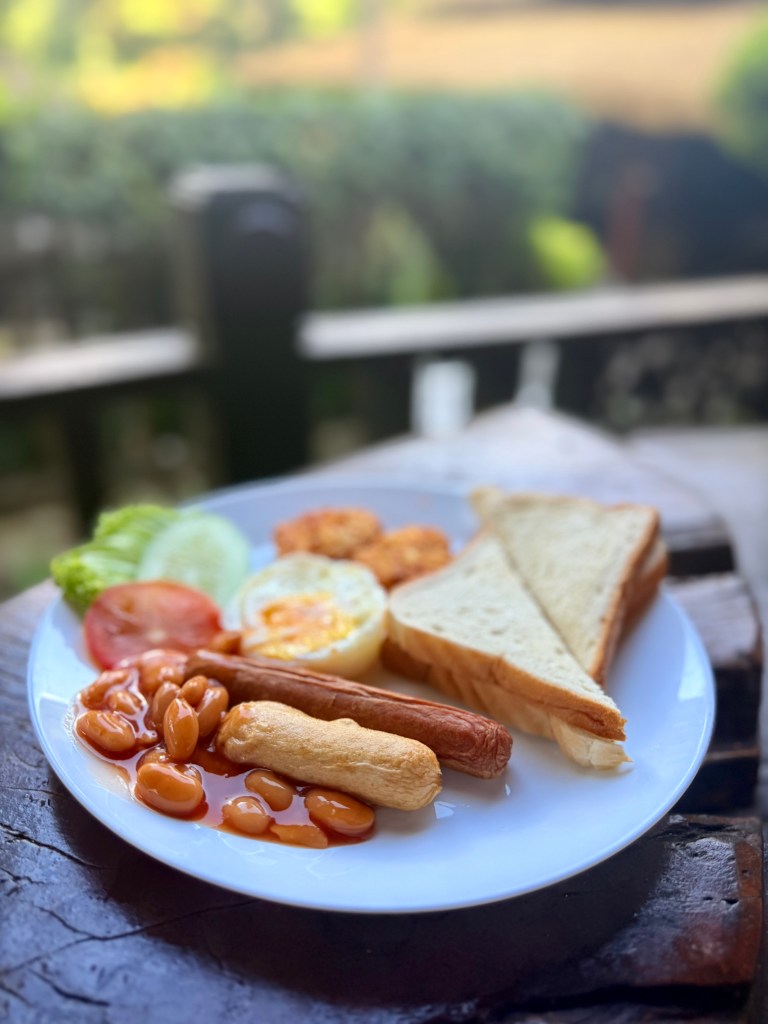
English Breakfast
At FIG TREE HILL we ate a halal English breakfast, so pork sausage alternatives and no bacon. Considering we were quite deep inside the forest at this point, (we’d travelled for ten minutes down a stony dirt track and damaged the car to get there)- we were more than impressed by what we had.

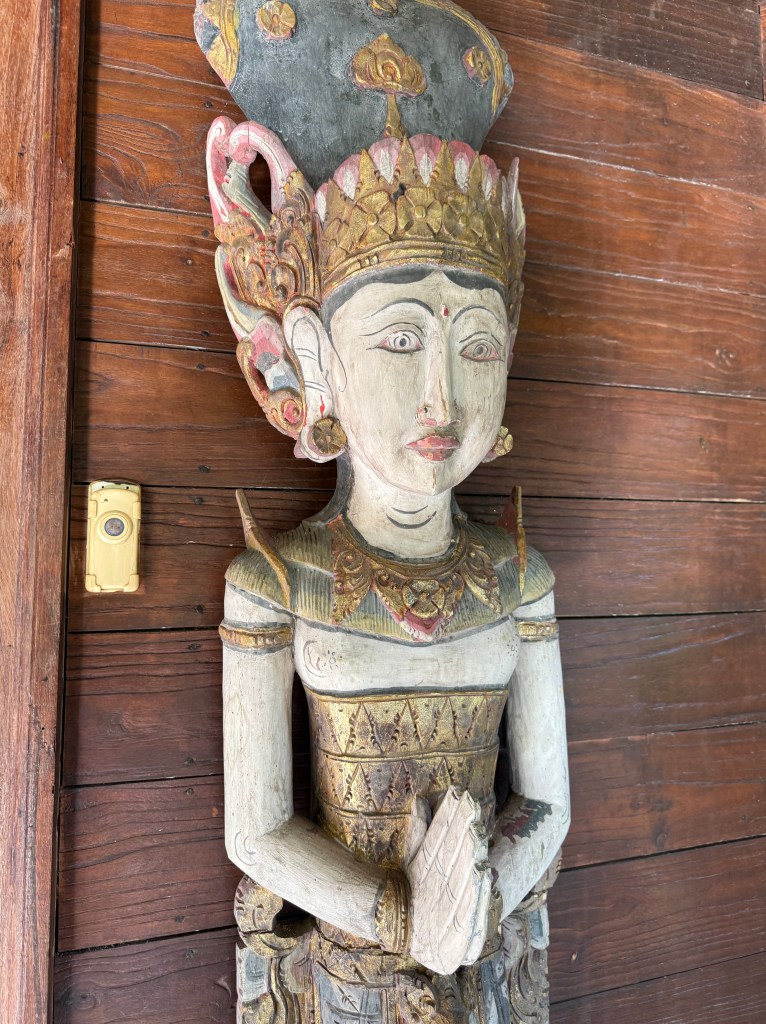
Malay Breakfast: Noodles and Pancakes
The local staff in our hotel in the Cameron Highlands were so kind and friendly that it would have felt disrespectful if we’d just chosen a European breakfast of cereals or something, so we went with the noodles.
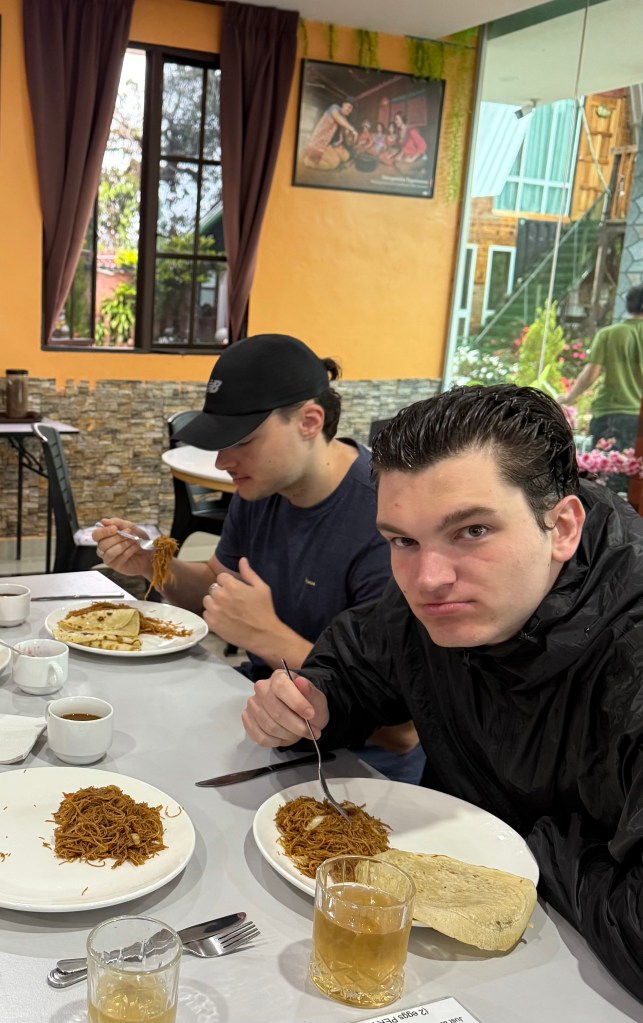
Glum faces, maybe, but it was early in the morning…
Lunch
Nasi Lemak
This is the typical Malay dish. Rice cooked in coconut milk and pandan leaves- a local aromatic plant. We tried it at NASI DAGANG PAK MALAU on the Langkawi islands.
The dish we tried was served with a bowl of chicken curry; along with picked red onion and strips of steamed carrots and cucumber on the side. It was light and full of clean flavours.

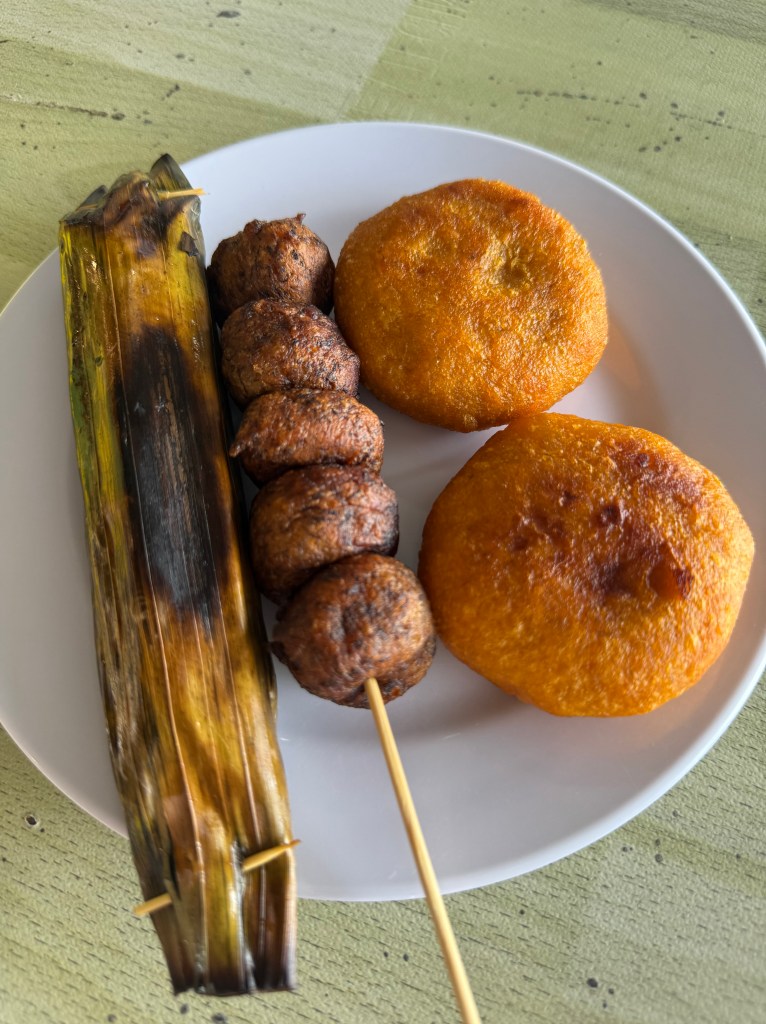
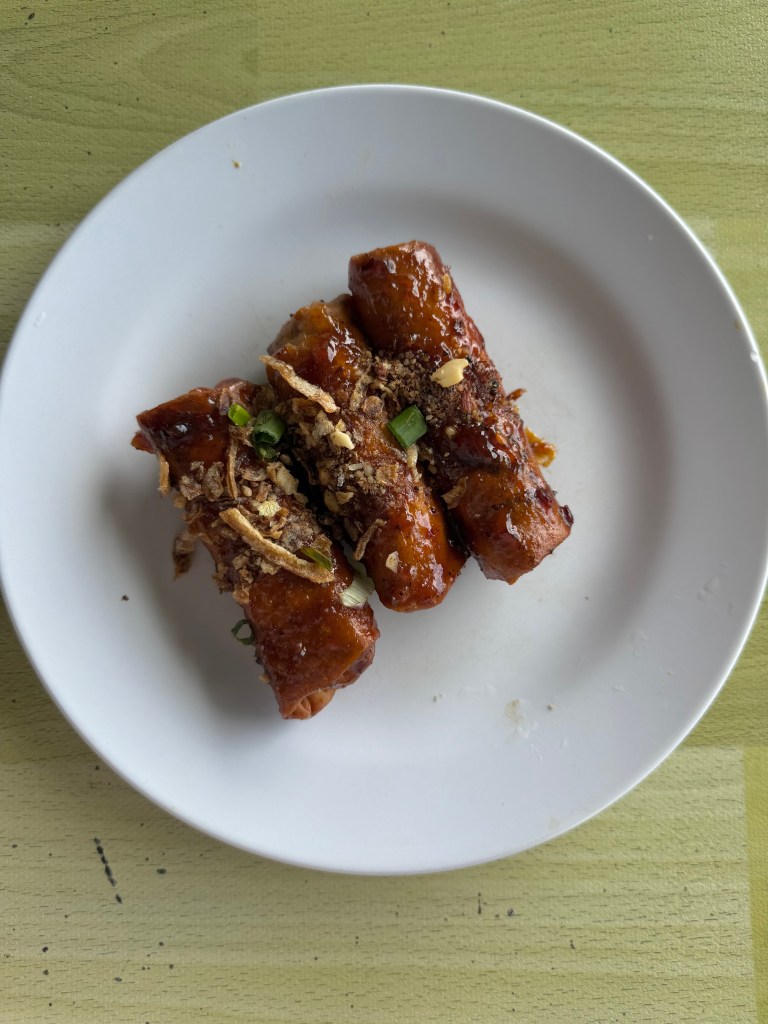
Middle Eastern Food
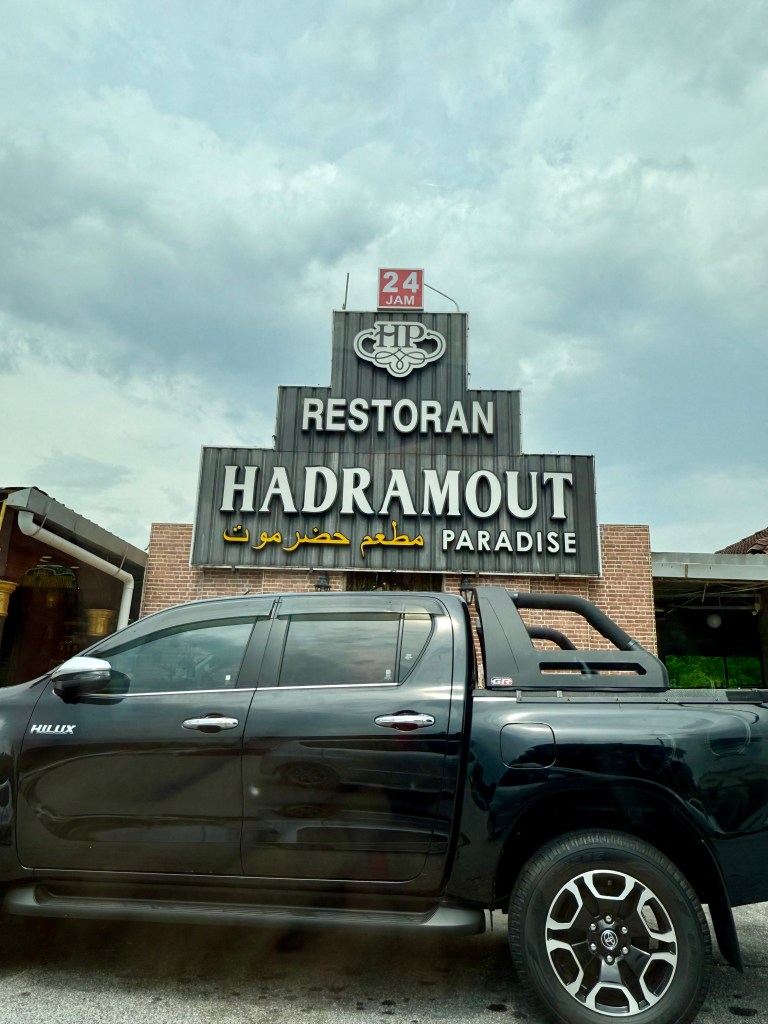
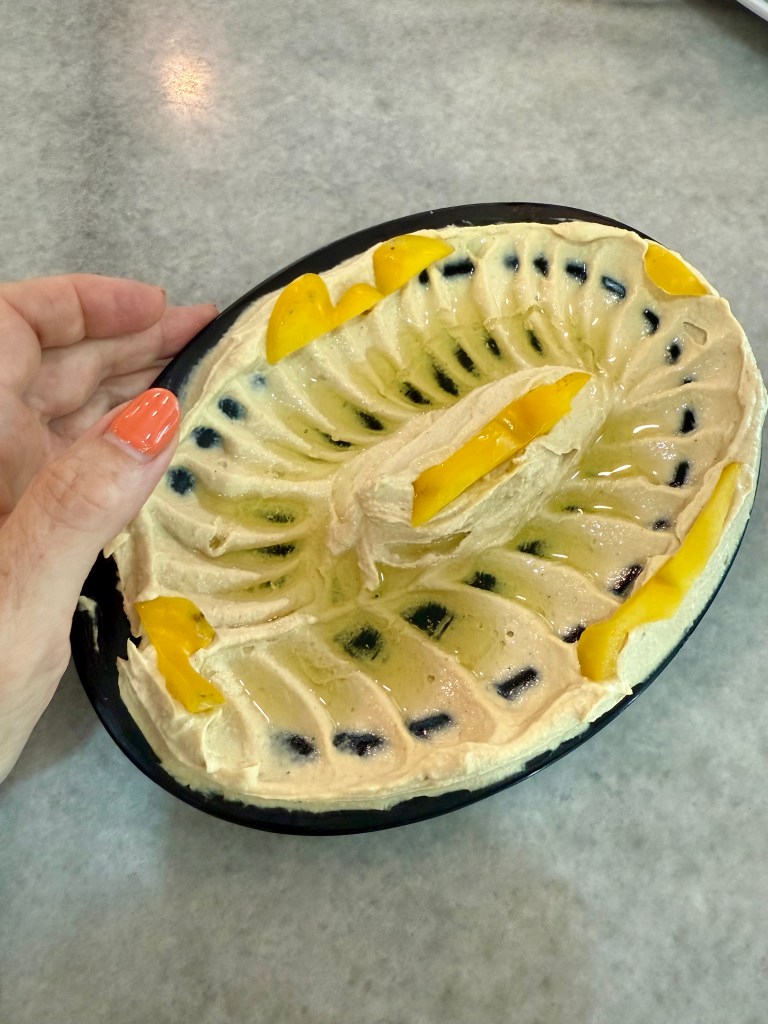
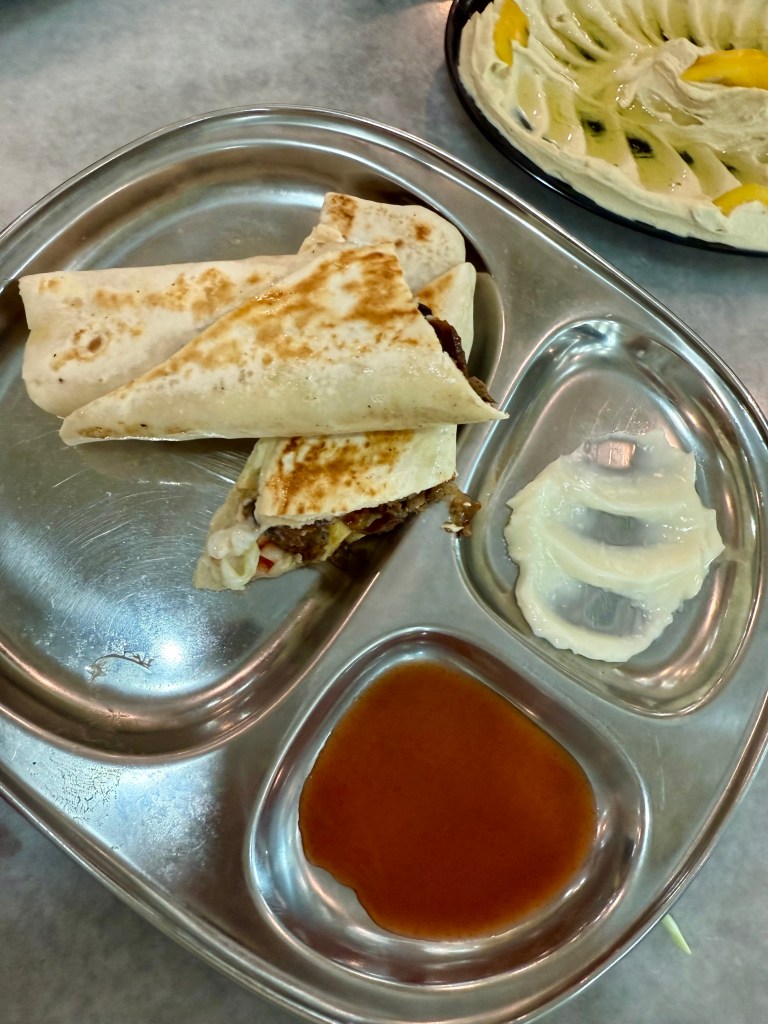
We stopped at the town of Ipoh to break up our 8-hour drive from Penang to the Taman Negara national park and had lunch at Hadramout Paradise.
At this Yemenite restaurant the boys feasted on steamed and roasted lamb and shawarma: strips of tender lamb or chicken in a wrap, served with garlic paste and a spicy sauce.
Mee Goreng (Stir-Fried Noodles)
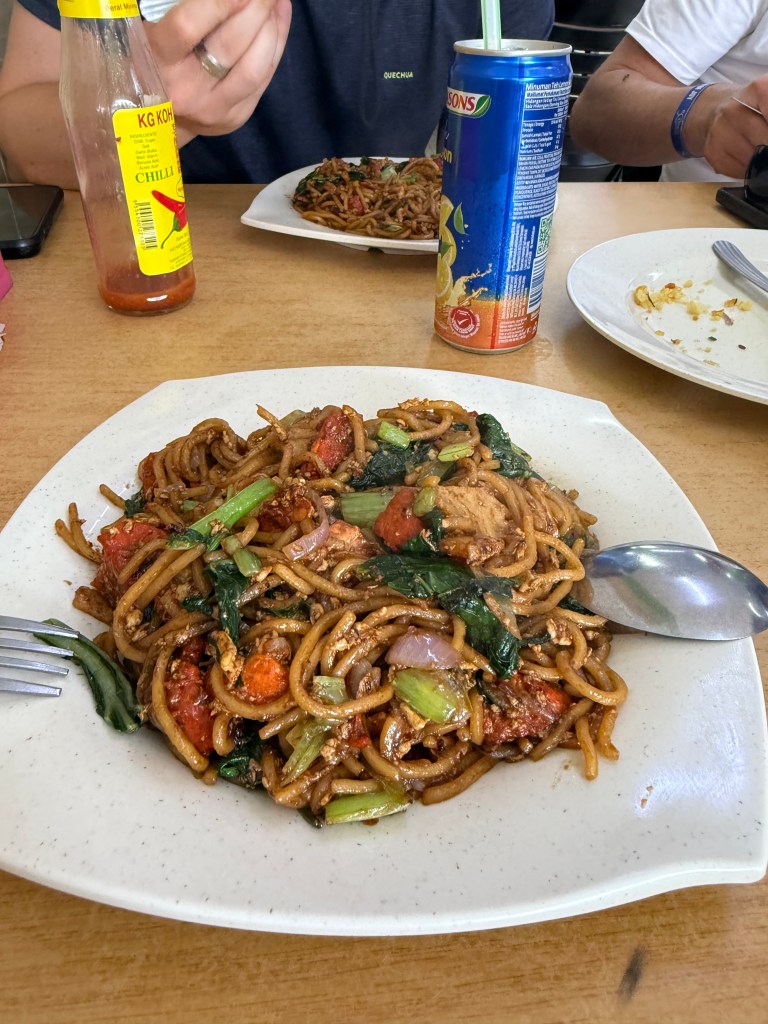
This is a plate of noodles stir-fried with small slices of vegetables, meat and prawns.
We were on the endless road from Cameron Highlands to the national park. We we were hungry and found ourselves with very few options. We found a restoran for locals located in a grubby and dusty street.
It turned out to be clean and served some of the best noodles of our trip.
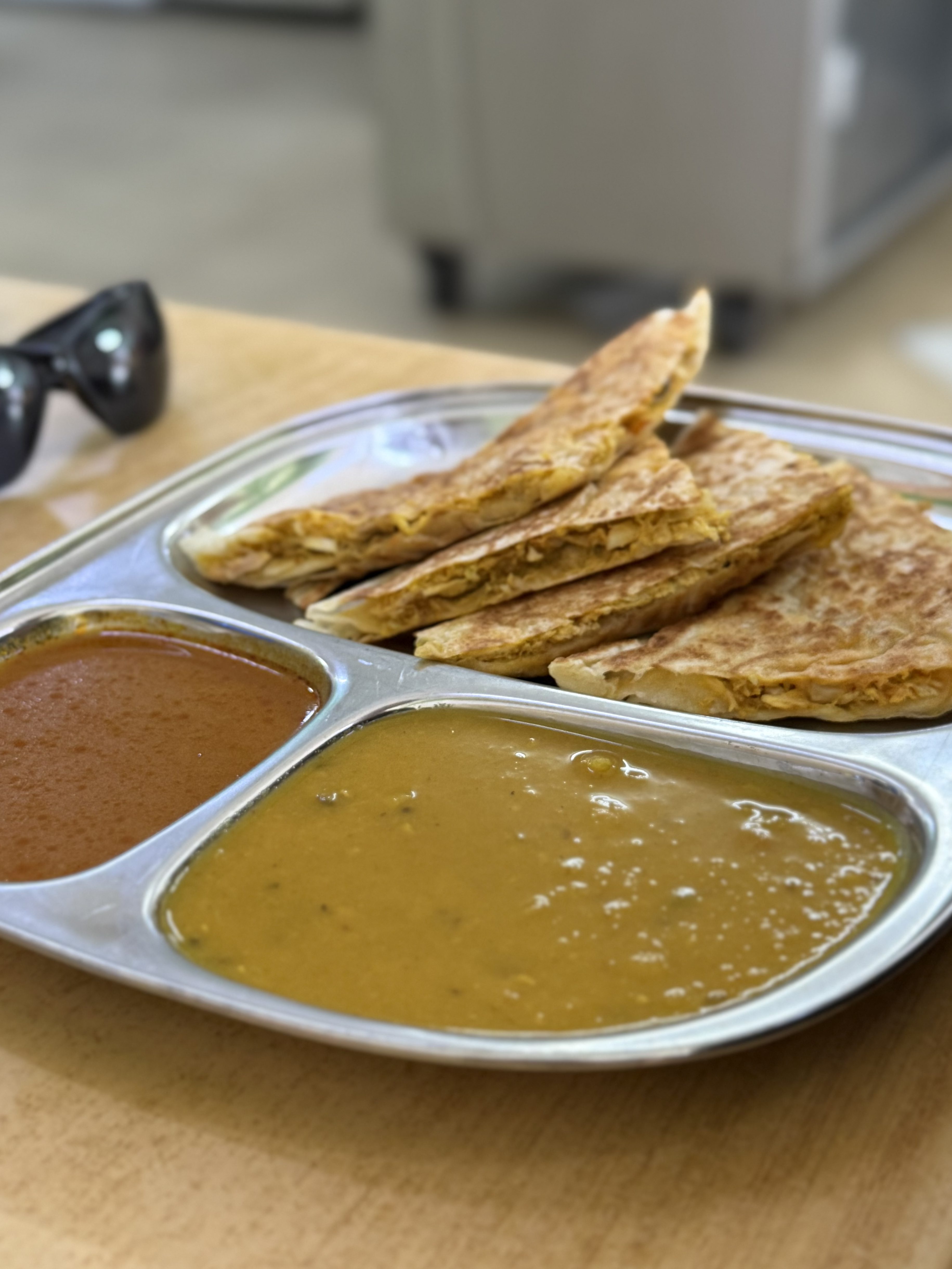
The chef-waiter also prepared Murtabak, meat-filled pancakes.
Ayam Goreng (Crispy Fried Chicken)
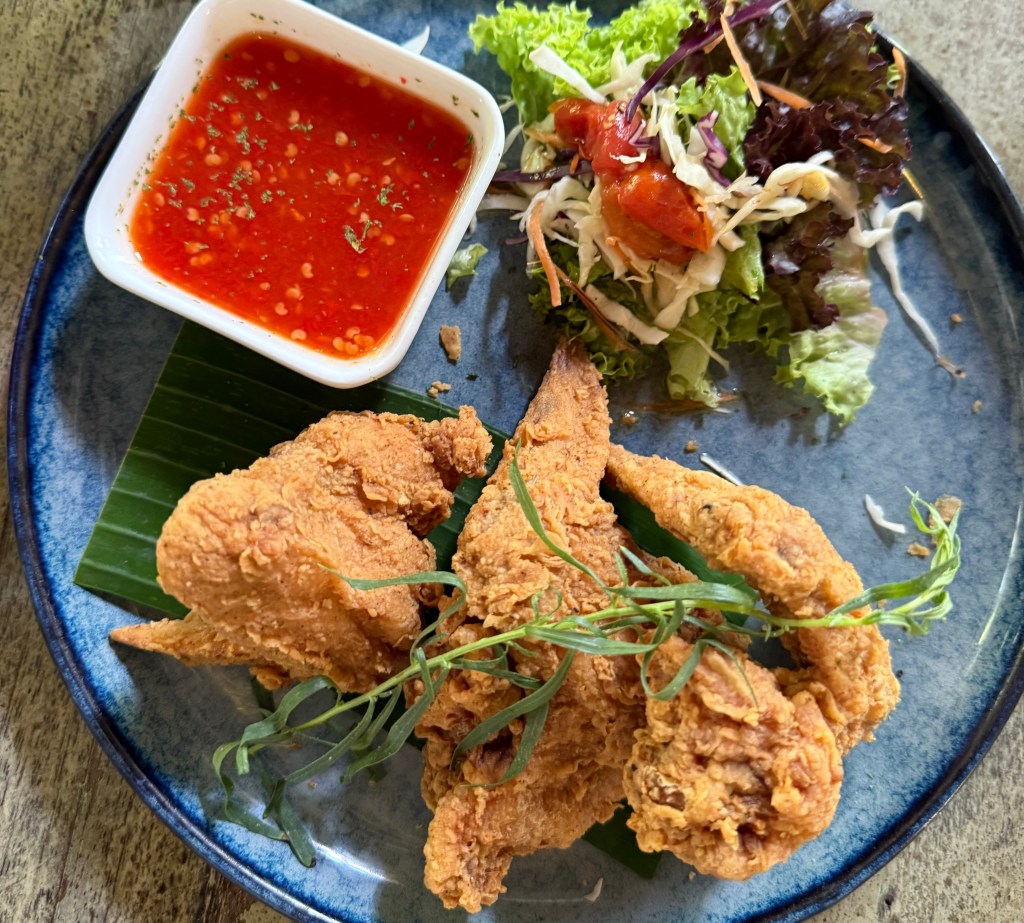
You can’t say you’ve done fried chicken justice until you’ve tried this dish. Lighter tasting than you would expect, crunchy and dry.
Dinner
Afro-Caribbean Cuisine
At JOLOKO in Kuala Lumpur.
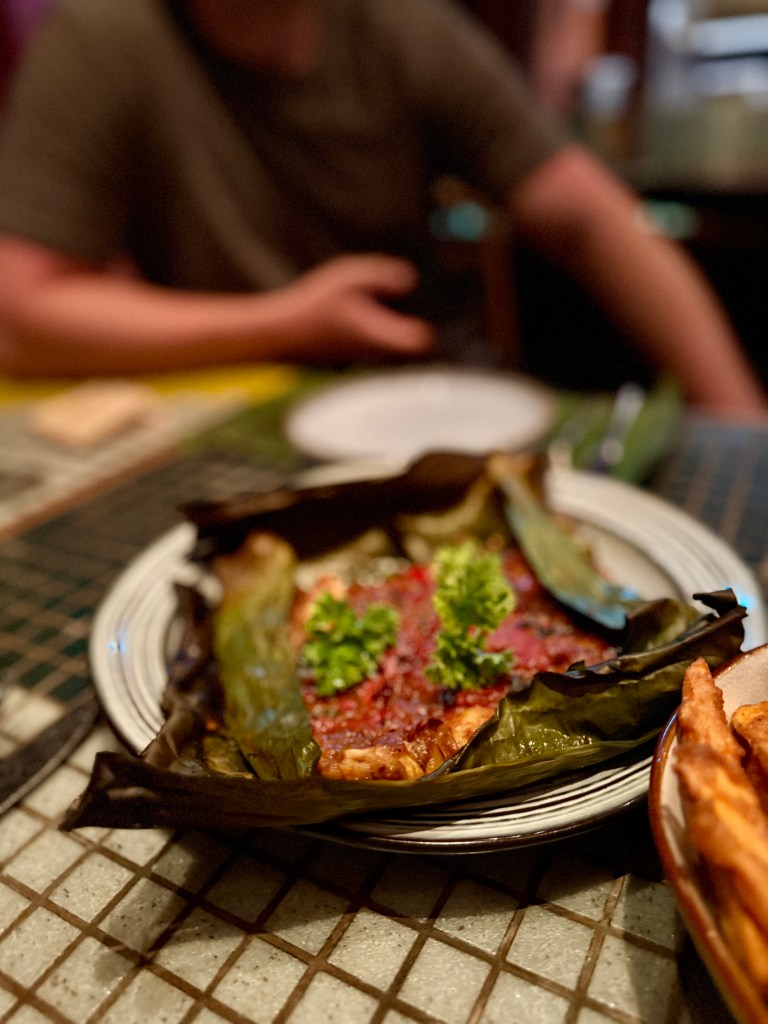
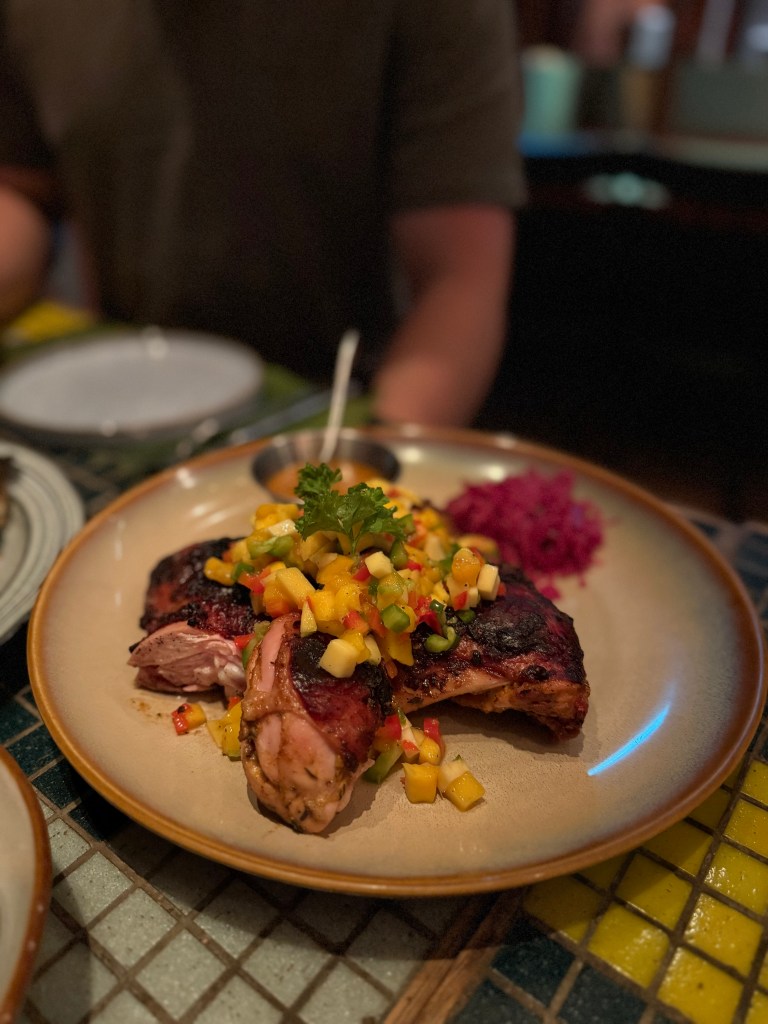
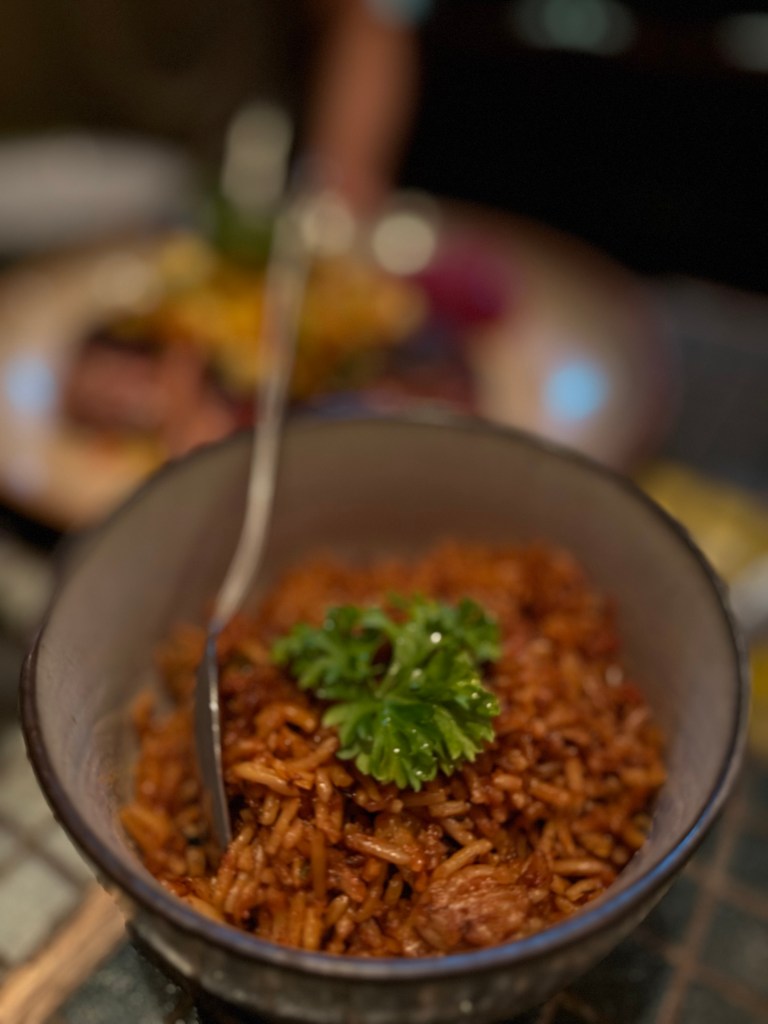
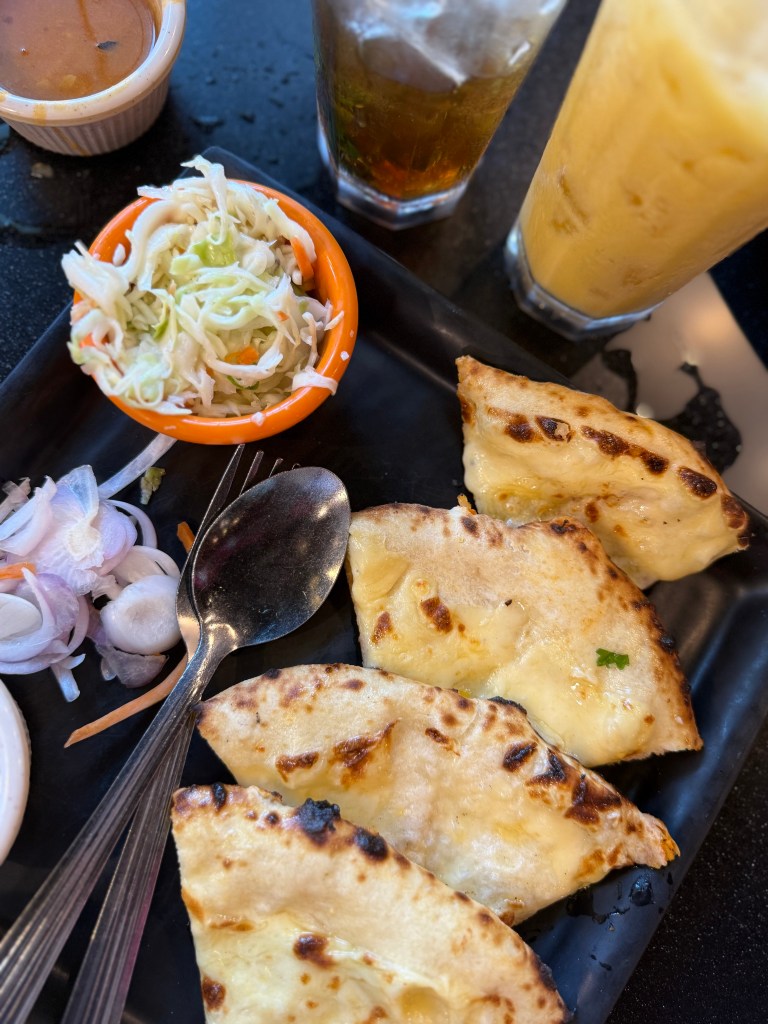
Indian Cuisine
Indian food reminds us of being in England. When we went back in the summer when the boys were small, my parents would order a takeaway as a treat. And that’s how my boys got a liking for spicy food.
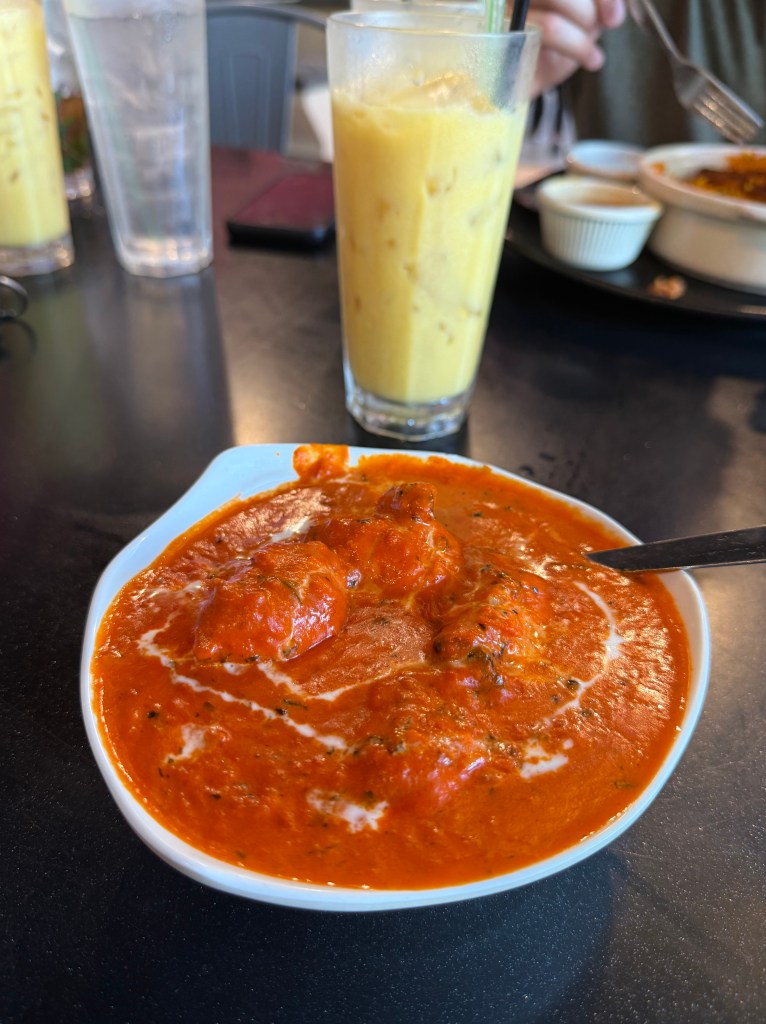
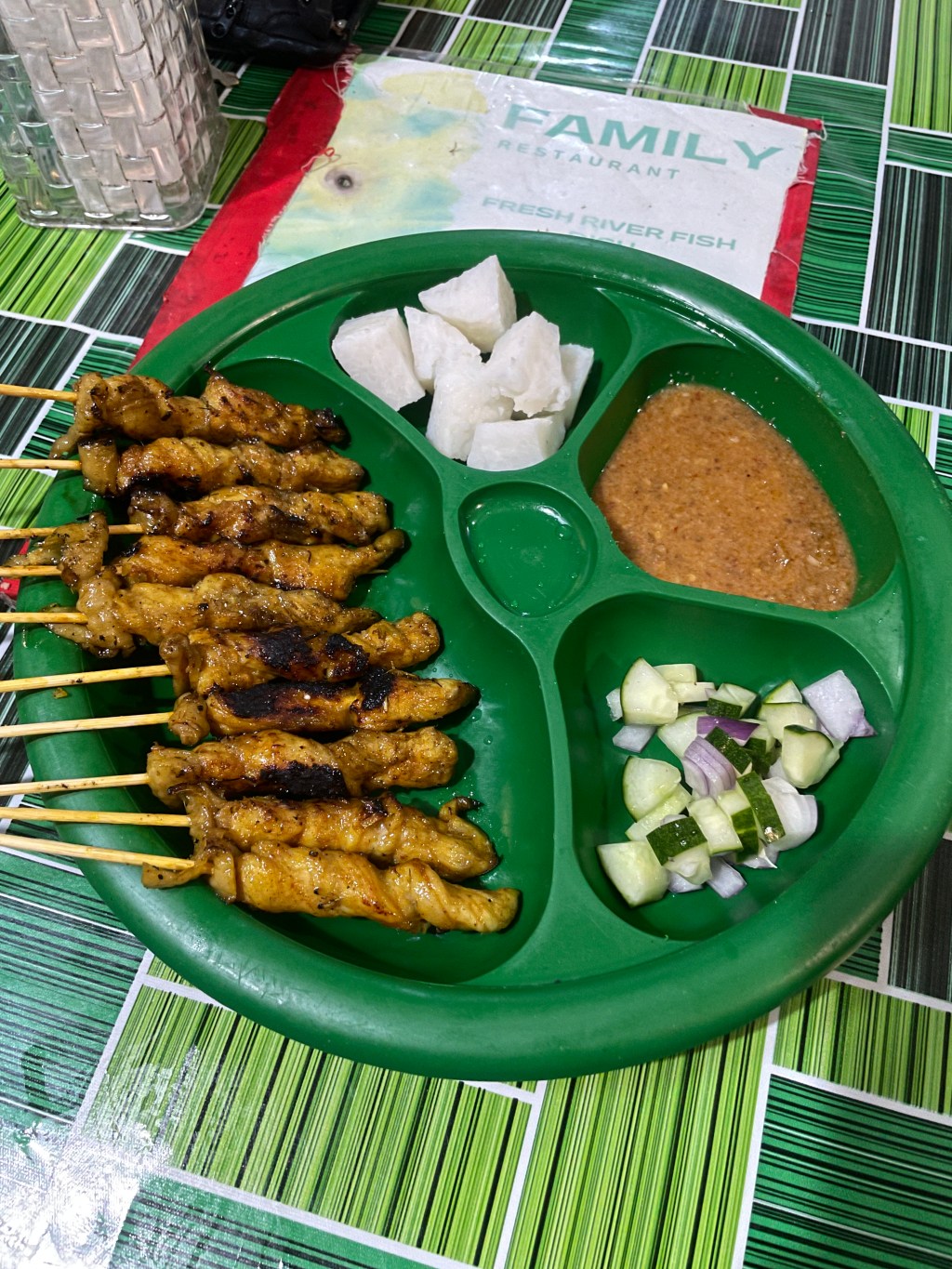
Indonesian Chicken Skewers with Satay Sauce
These make a good sharing starter before the rest of your meal. Satay sauce is an Indonesian sauce made with peanuts, coconut milk and enough spices to be tasty without being too hot.
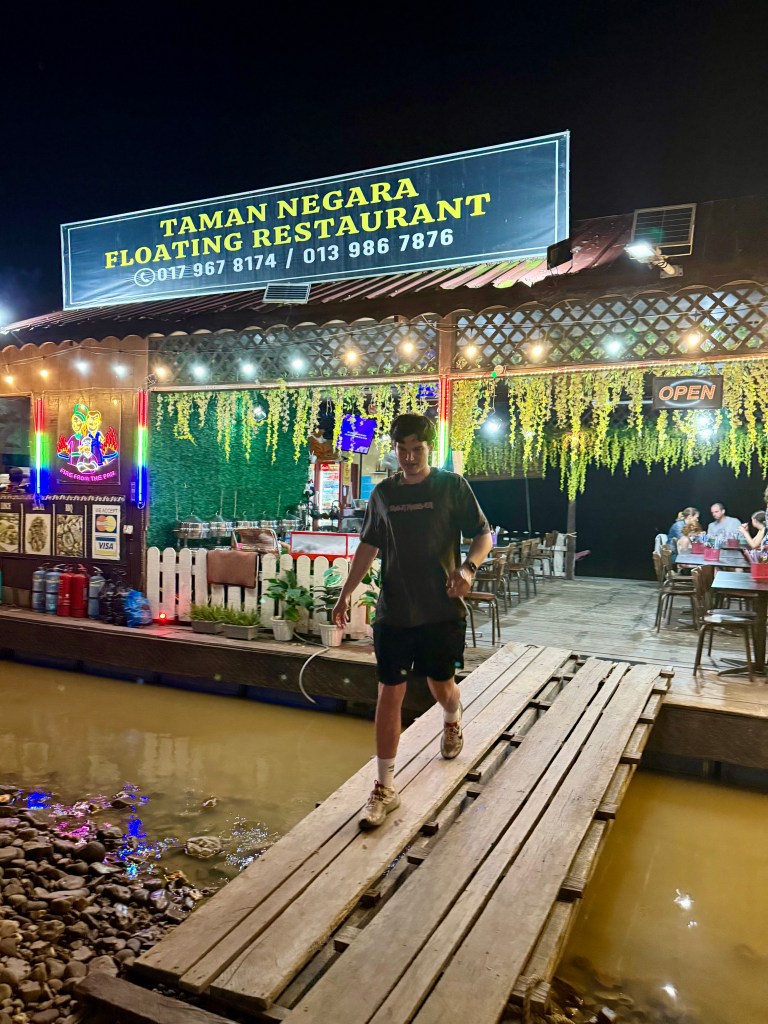
The best ones were cooked for us by a teenager on a floating restaurant on the big muddy river in the Taman Negara national park.

We finished eating around 9pm and were the last ones to leave. They’d closed the place early as they were preparing a birthday party for a grandson on the river bank.
Grandpa was at the till when we came to pay. We wanted to pay by card but the machine wasn’t working. Grandpa’s solution was to have his grandson (not the cook, another one) take Mr CasaAlison on his scooter (no helmet, in the dark) up to the ATM to get some cash.
After we’d paid, these lovely people invited us to the birthday party.
Drinks: Fresh Juices and Iced Teas and Coffee
In many of the rooms and apartments where we stayed, alcohol was forbidden and in most cafés and restaurants wasn’t even on the menu.
Instead there’s a wide selection of refreshing and colourful fresh juices like watermelon, pineapple and mango.
Or iced teas: green tea, peach blossom and jasmine flower.
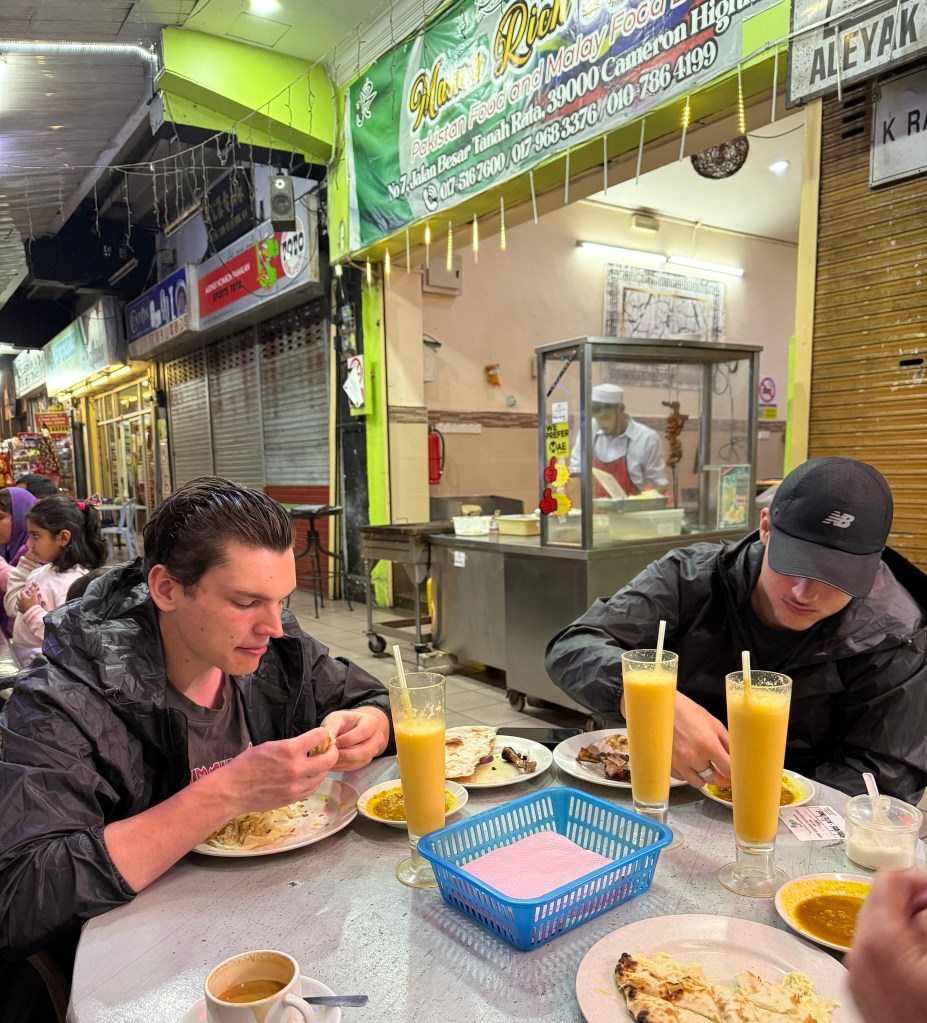
The Indian drink mango lassi was a favourite drink everywhere. It’s made with mango pulp, yoghurt and some sugar.
Sugarcane Juice
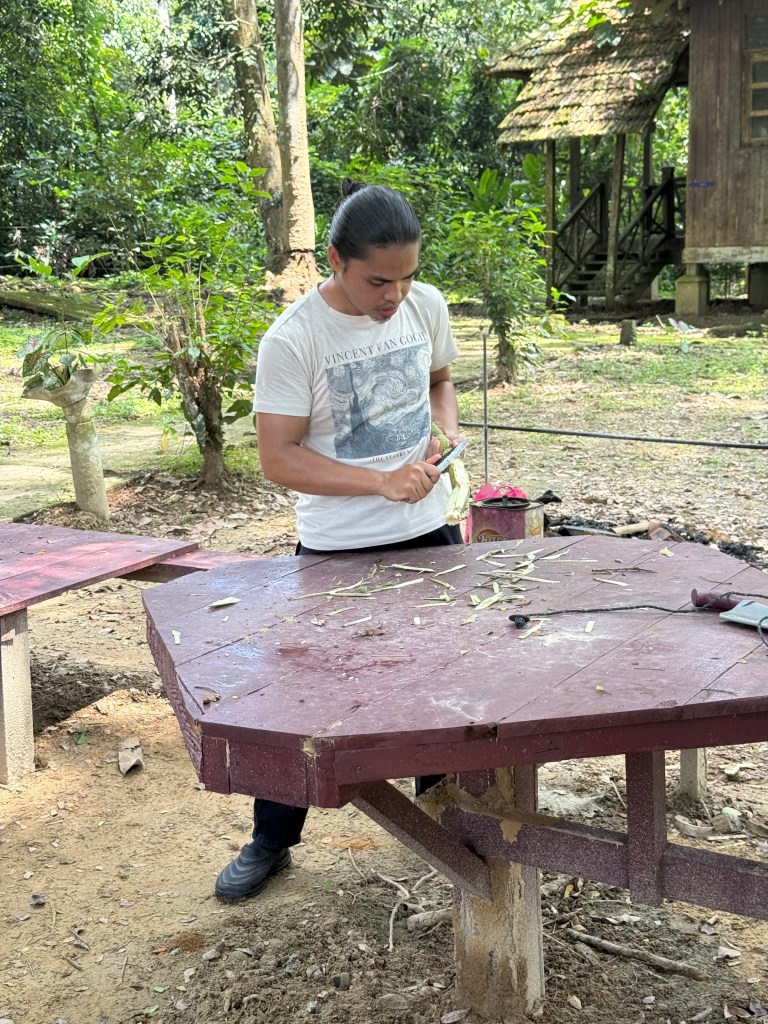
Our local guide prepared us a sugarcane taken direct from the rainforest. You cut off the hard part on the outside and then you can suck out the juice inside the sugarcane.
Teh Tarik (Tarik Tea)
Malaysia has a small production of tea.
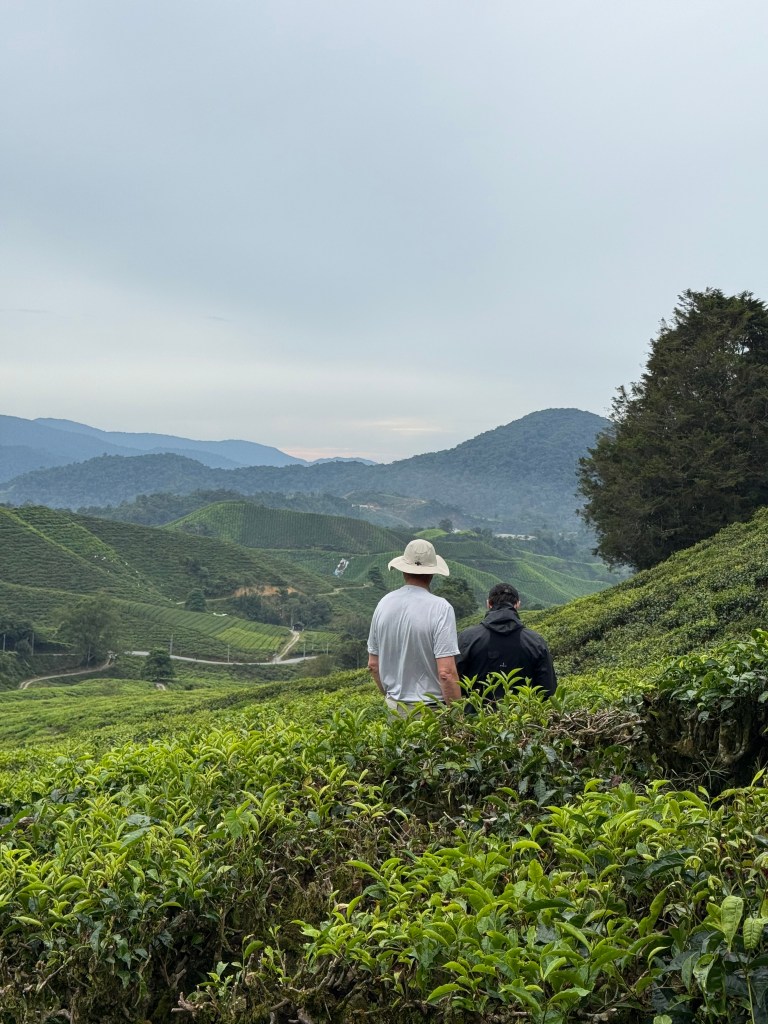
We visited the BOH company tea plantation in the Cameron Highlands. and bought some sachets to make instant Tarik tea.
It’s made with black tea and sweetened condensed milk. You can find this everywhere. You can drink it hot or cold. This was one of those things that tasted good in loco. Once back at home in Italy, well, it just didn’t taste the same.
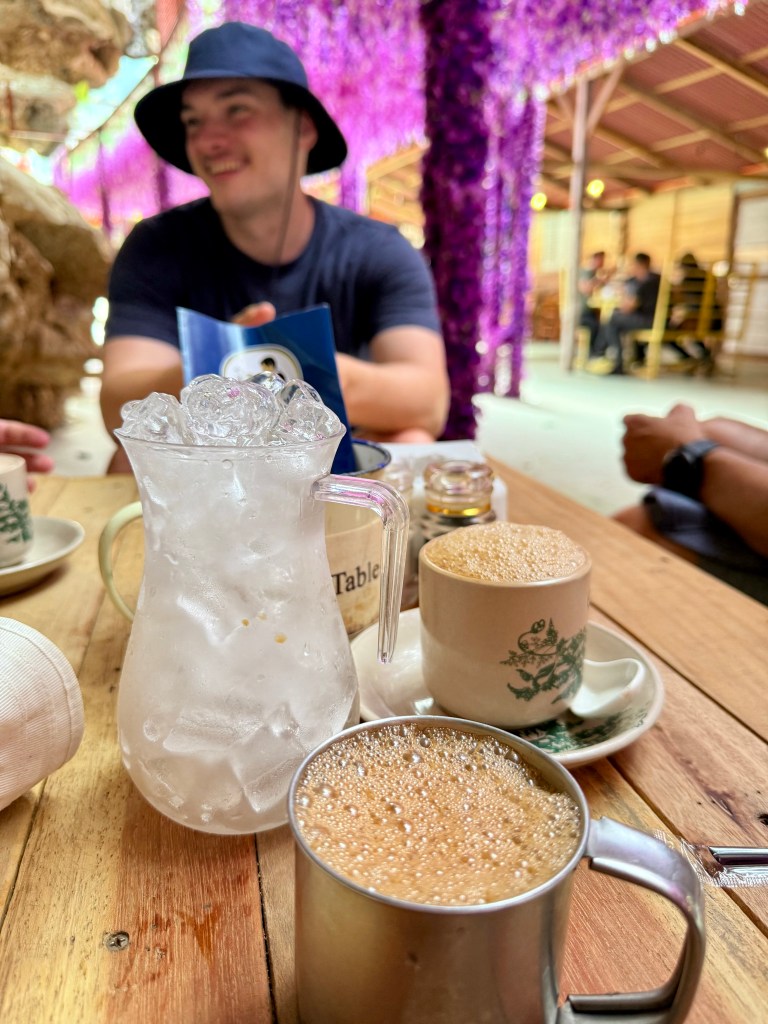
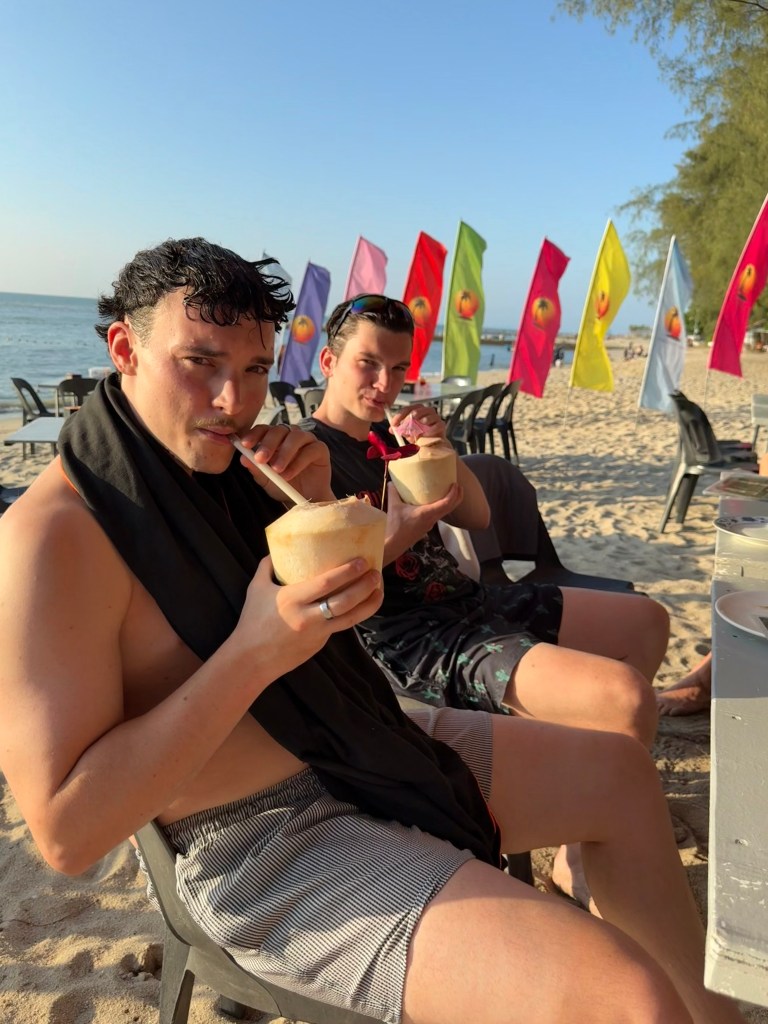
Coconut Drink
There is no other drink that epitomises the tropical holiday vibe than this one. Ice, coconut mil/cream and water. Served inside its own sustainable container, too.
The Infamous Durian
This yellow fruit has such a bad reputation for being a real stink bomb once its opened that you are not allowed to bring it on public transport.
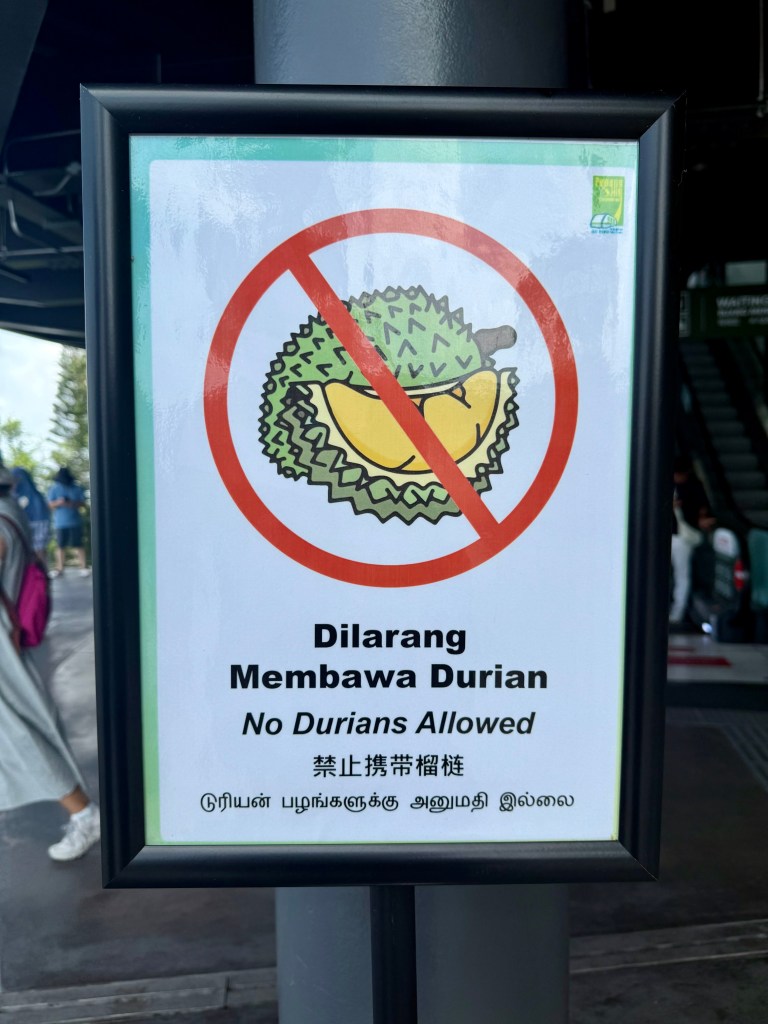
No joke. Makes you wonder why people eat it, then. But they do. In the state of Penang where there are many durian farms, you will pass many stalls piled high with this massive fruit. There are festivals dedicated to this fruit. We passed one in Kuala Lumpur and got a whiff of vomit and garlic, was one way of describing it. So we didn’t have the courage to try it. We’re not so adventurous after all.
But those who love it, say it has the texture of custard and a combined taste of caramel, vanilla and garlic.

 casaalison
Leave a comment