
The real story of how the phoenix rose from the ashes.
Fenice means phoenix, the bird from Greek mythology which would die in its old age by setting light to the nest, to be reborn from the ashes of that fire as a new, young and vibrant phoenix. And this would happen again and again, making the phoenix a powerful symbol of renewal.
La Fenice Theatre in Venice has also had its nest destroyed by fire, not once but twice and has literally come back to life.
It’s famous for this reason and also because it’s one of the top theatres to go to for opera and classical music, and it just happens to be located in one of the most beautiful cities in the world- Venice.
Today’s trip to Venice was a chance to listen to the history of the theatre and to take a look inside this beautifully decorated opera house.
We went with a group called coincidentally La Fenice Blu, which translates to The Blue Phoenix. This group is headed by Francesca and Arianna who created this group for kindred spirits who like learning about the art, culture and history of Italy, and in particular the Veneto region.
We all met up outside the theatre. We were lucky to have a Ca’ Foscari graduate with us, who knew her way around the labyrinthine narrow streets to bring us to the right place.

The facade is made of sober light grey Corinthian columns and in the middle you have the plaque with the name of the theatre and the golden image of the phoenix above.
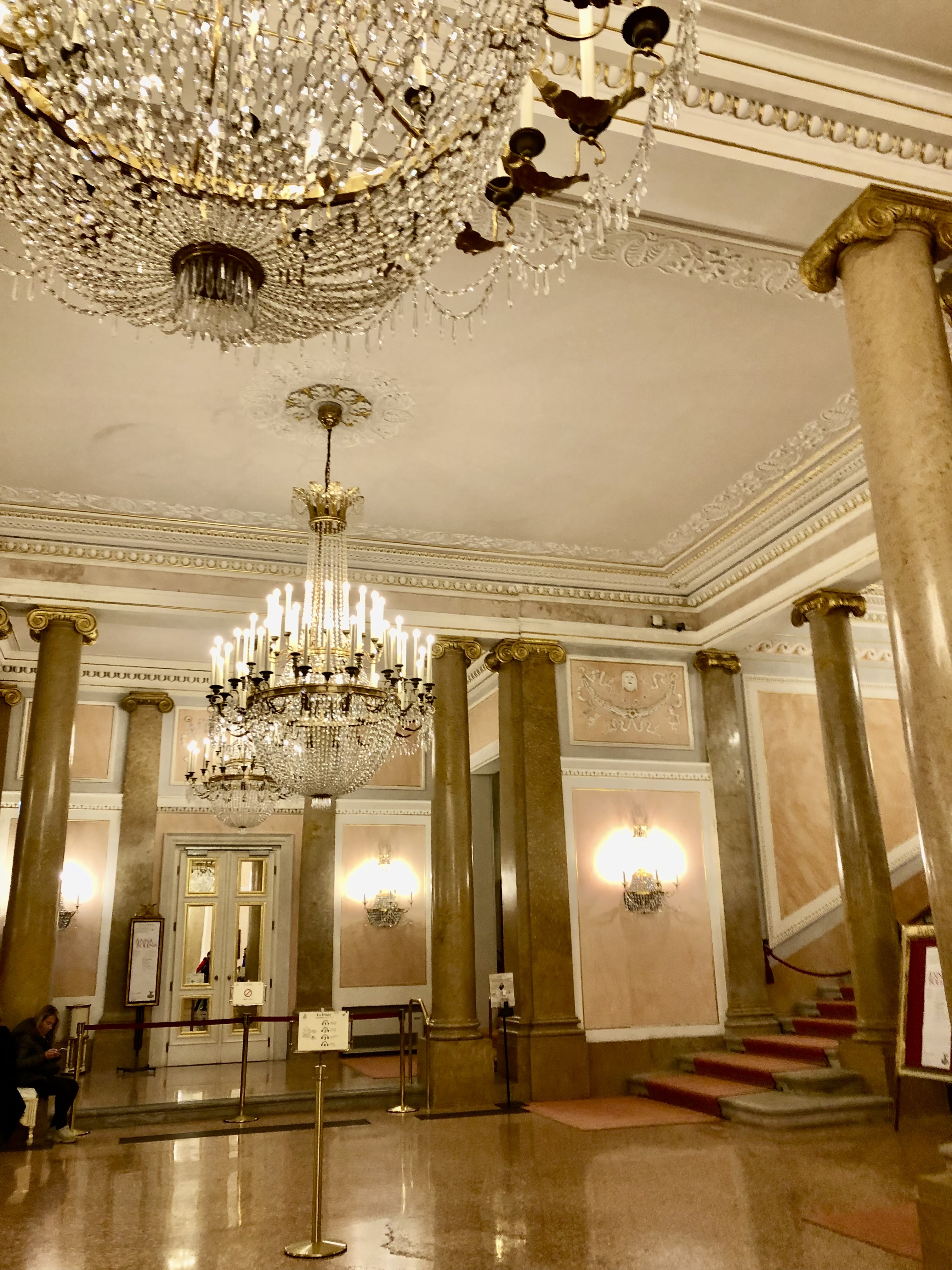
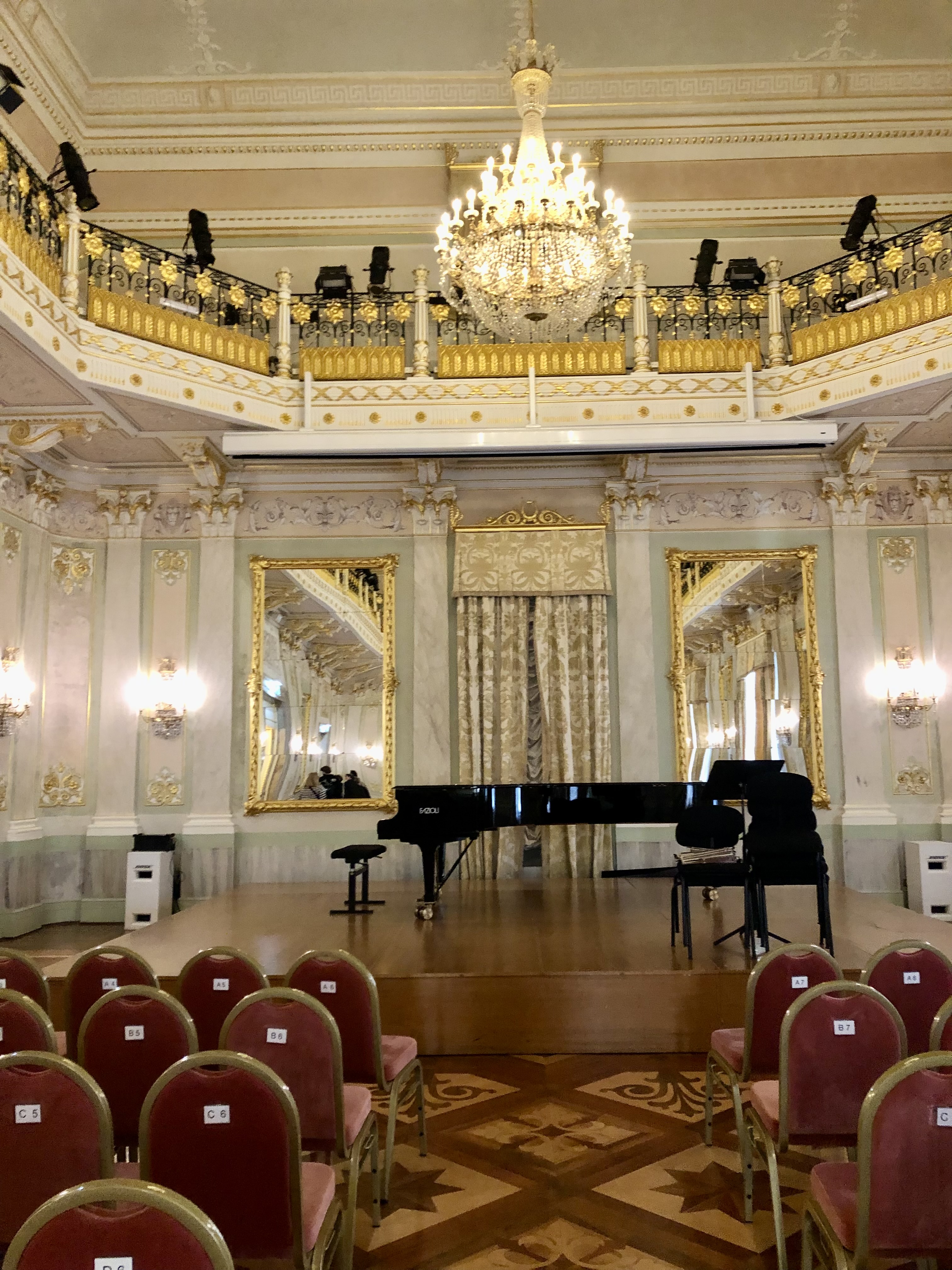
In contrast, the interior is all pastel colours, with touches of gold and sparkling lights.
The History of the Theatre
La Fenice opera house was completed in 1792, commissioned by the Noble Association of Box-Holders. It soon became famous for the quality of its productions as well as the beauty of its interiors.
On 13 December 1836 the theatre was damaged by fire caused by a heater. It took days to put out the fire which was still smouldering 18 days later. It was restored and opened again in December 1837.
On 29 January 1996, another fire almost completely destroyed it, again. This time it was due to arson.
On December 14, 2003, it reopened to the public again, built com’era, dov’era, as it was, where it was- to borrow a phrase first used on 14th July 1902 following the collapse of the bell tower in St Mark’s Square in Venice, which was completely rebuilt in the same style and in the same place.
Homage to Maria Callas
The American-Greek opera singer was just a young girl of 24 when she first came to sing in Italy in 1947.
She made her debut at La Fenice in the Wagnerian opera ‘Tristan and Isolde’ and performed over a course of seven years at the theatre.
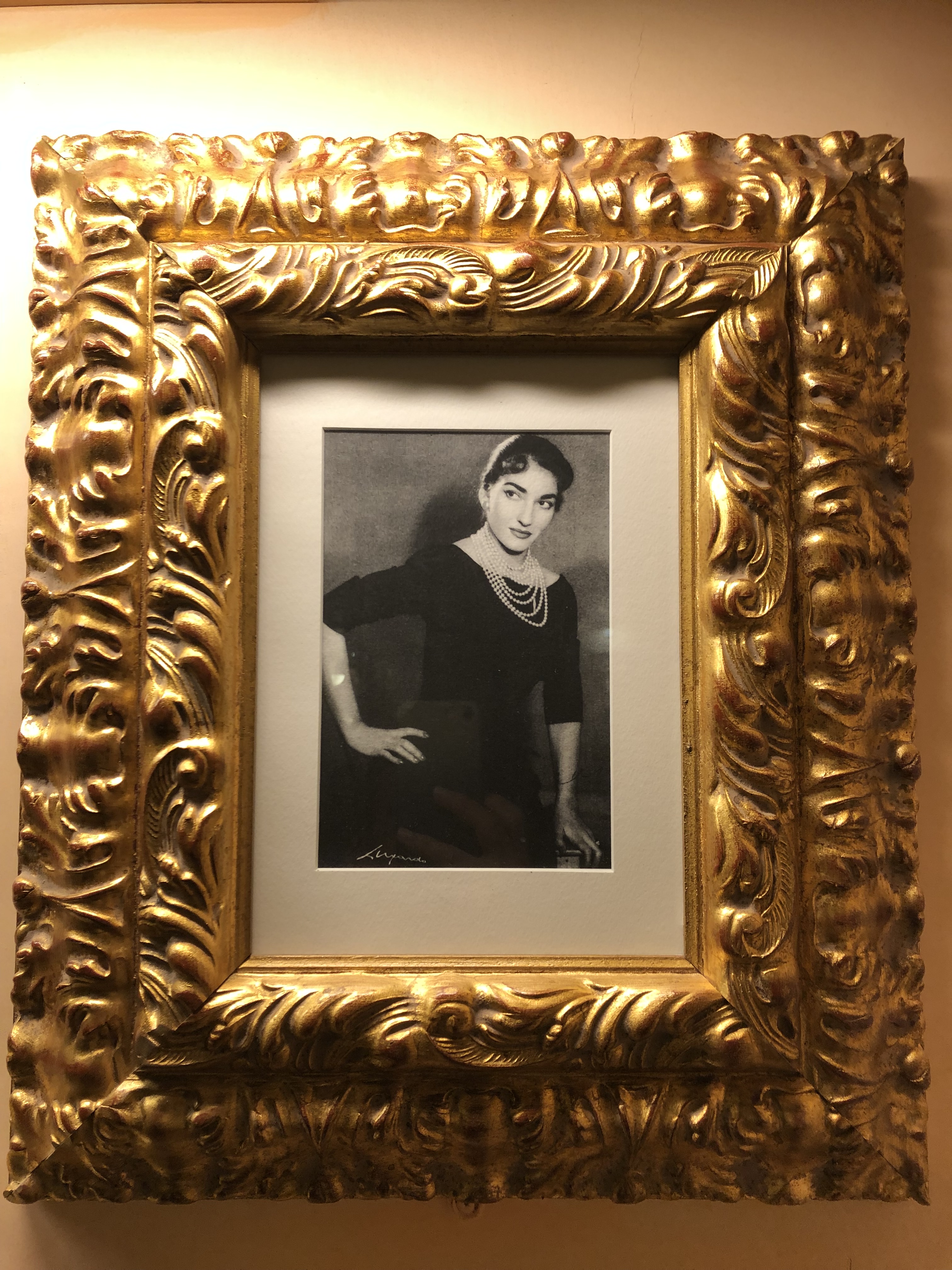
In this photo, she looks like the perfect diva with her sculpted face and heavy eye makeup and strings of pearls decorating a little black dress.
The Auditorium
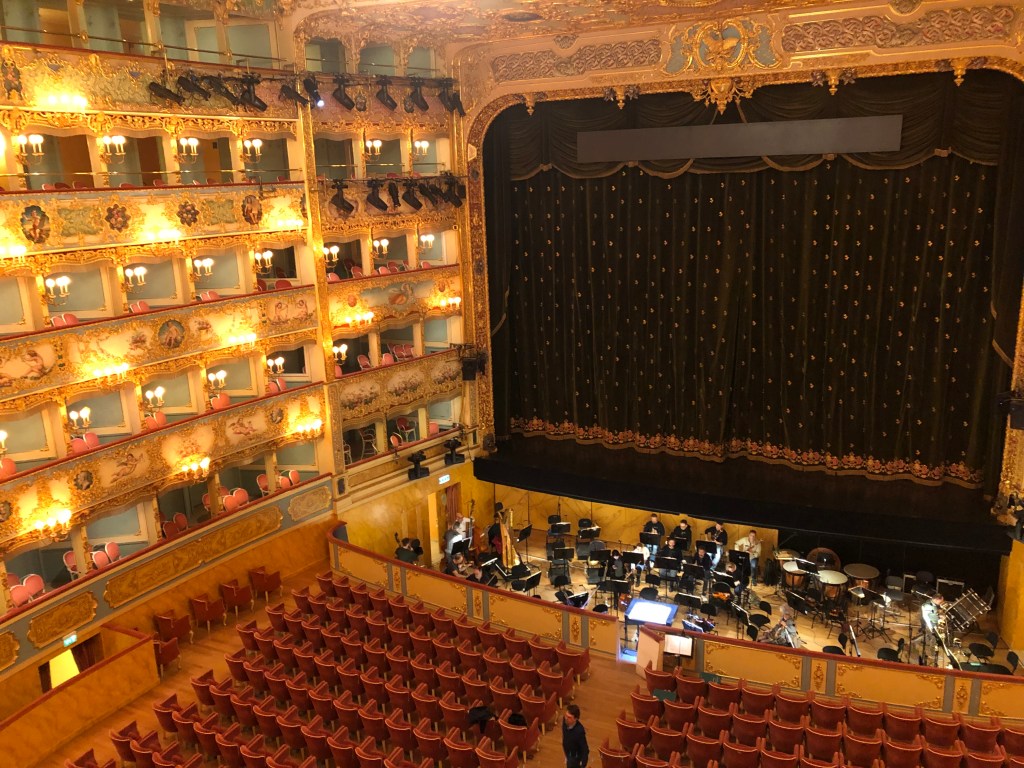
This is a Rococo delight and was so faithfully restored since the 1996 fire that you feel you’re stepping into the past when you enter. The restorers used similar materials to the originals, like papier-mâché, wood and plaster to make the many decorative elements.
Even the wonderful chandelier is a copy of the original which surprisingly was made in Liverpool, England.
We were lucky to be present in the theatre when the orchestra and some singers were rehearsing. We watched and listened, as quiet as mice, so as not to disturb them. The singers, in their everyday clothes of jeans, trainers and a black t-shirt were even more compelling to listen to without the distraction of fancy costumes.
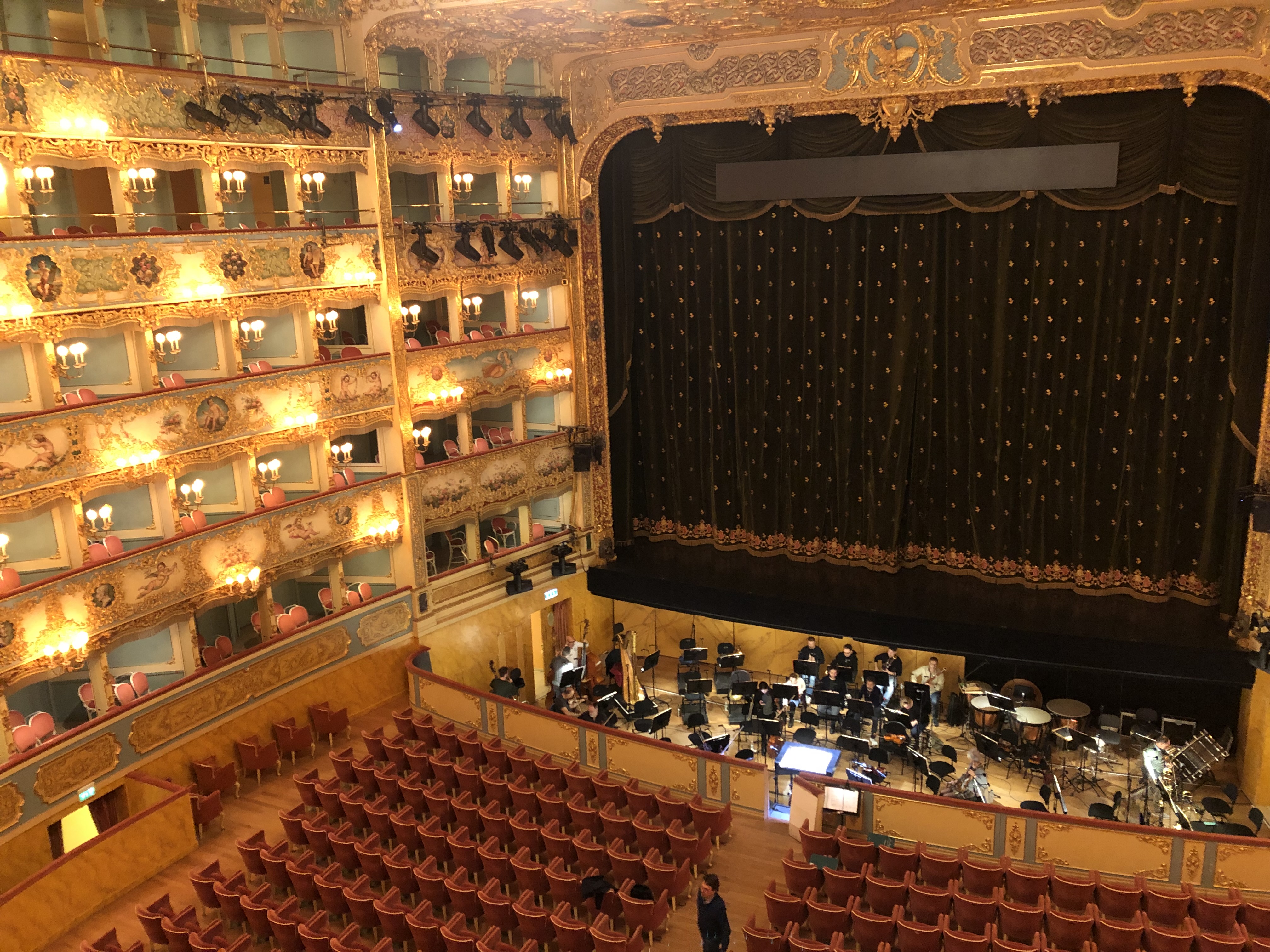
Behind the orchestra pit are doors which lead through to the canal behind the theatre. This is used to transport stage scenery to and from the storage at Marghera outside of Venice. This is the only way for large pieces of scenery to arrive inside the theatre which is closed all around with buildings and the typical narrow canals and streets of Venice.
And where’s the best place to sit?
The stalls if you want to be close to the stage and the music.
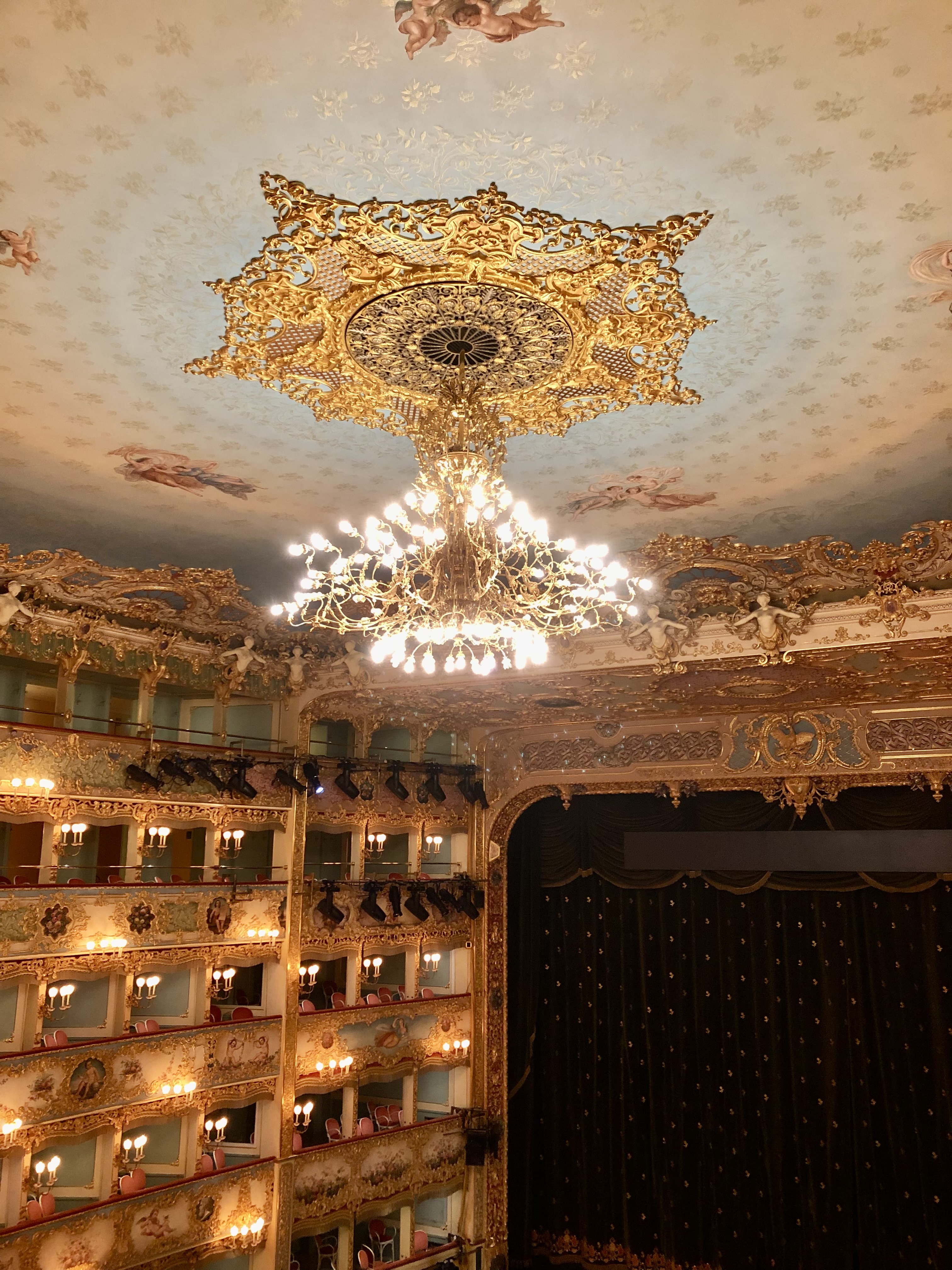
In the middle of the dress circle if you want to appreciate the complete view of the stage and the orchestra and don’t mind missing out on details; otherwise a side view might be better.
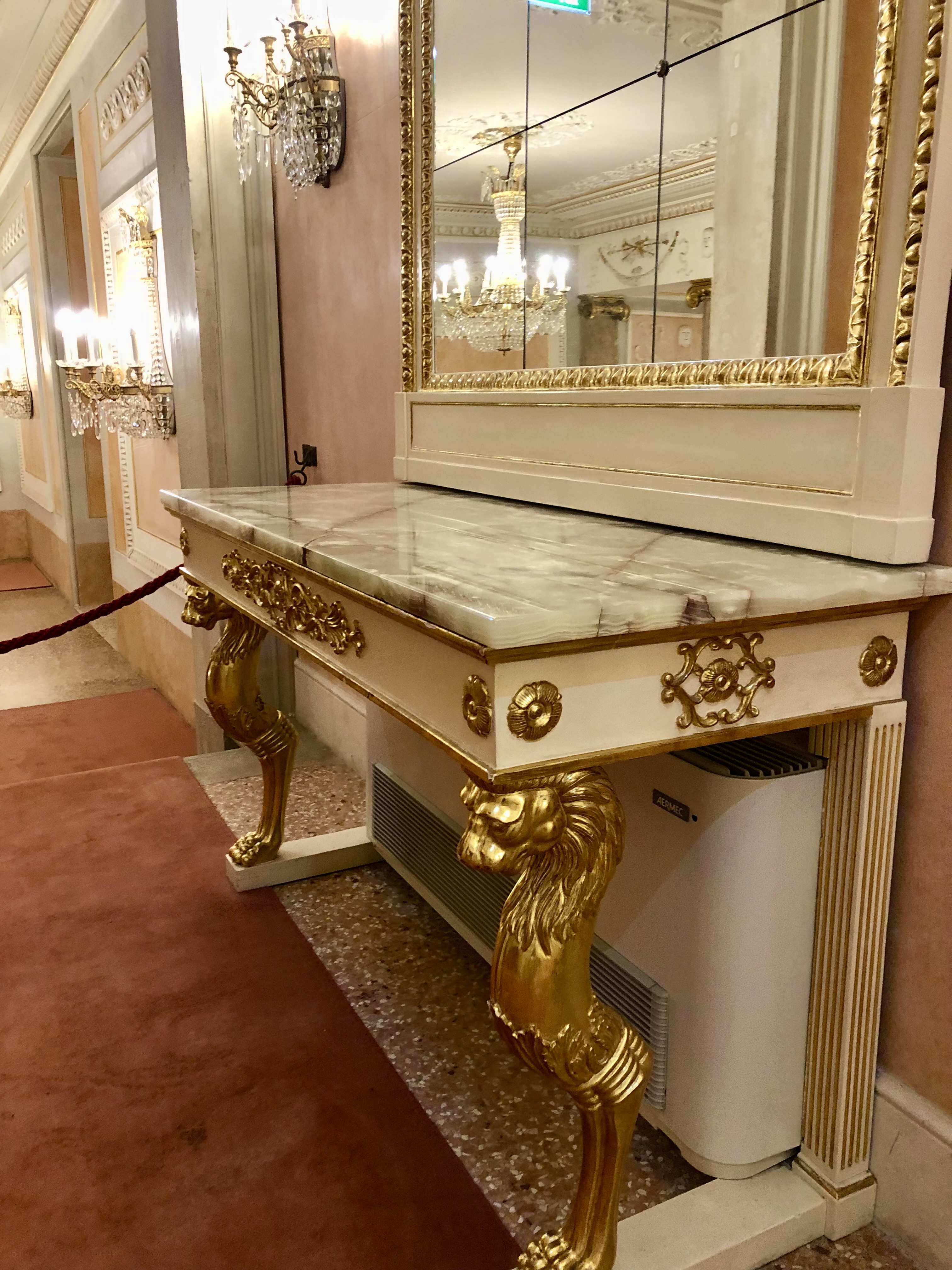
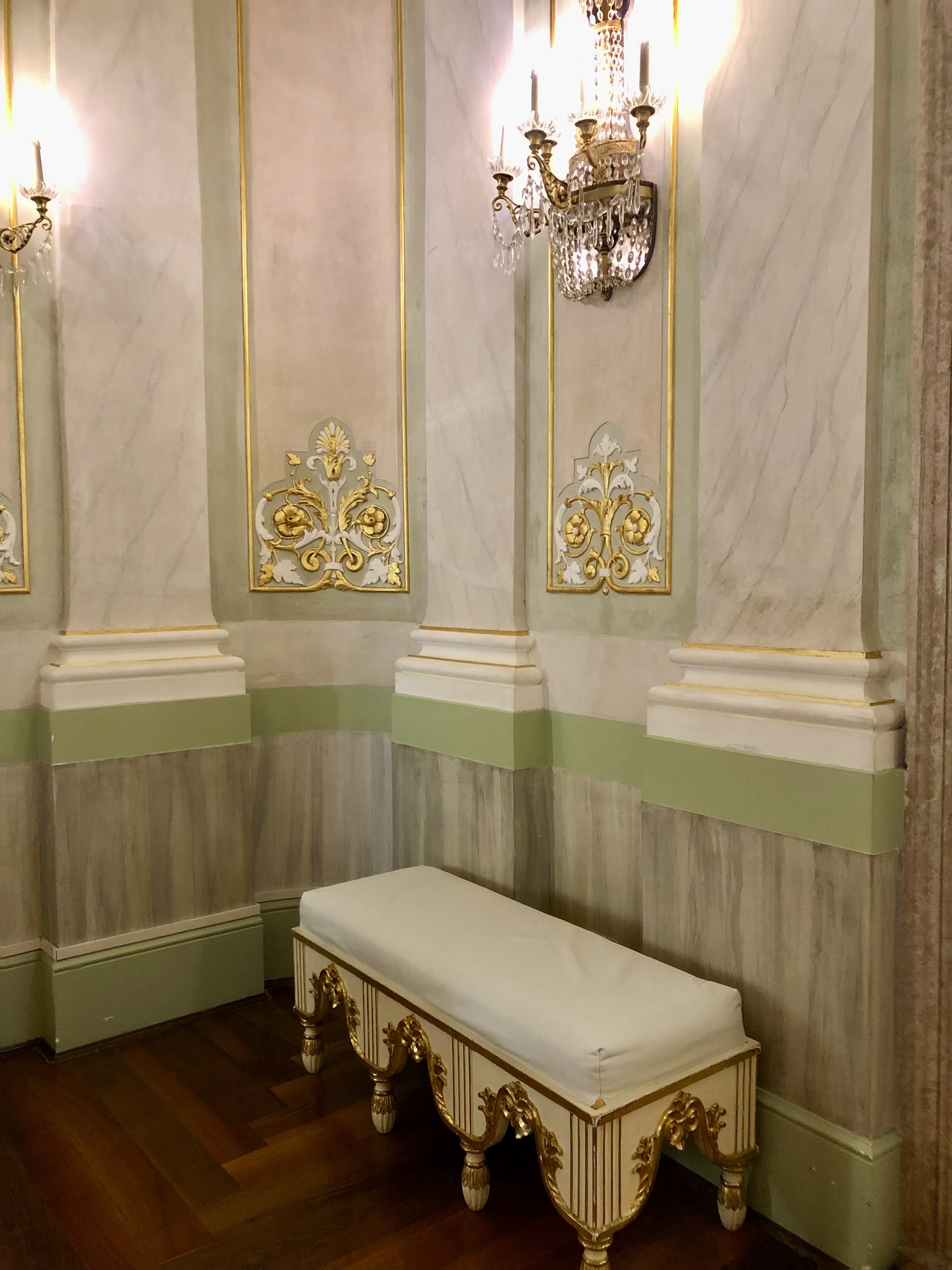
All in all, this theatre is enchanting and if you’re lucky enough to be able to get tickets see a performance, it will be a wonderful experience!
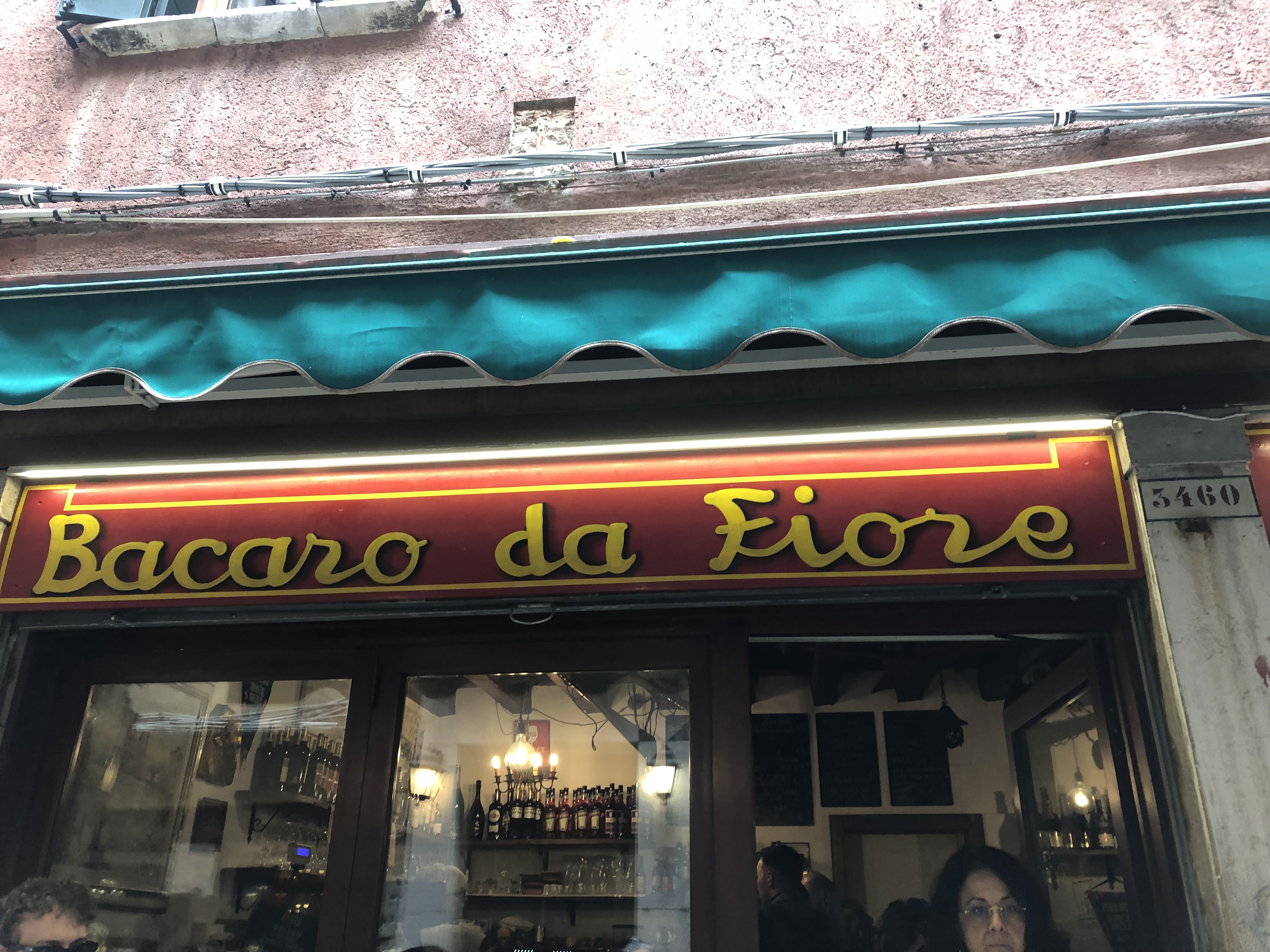
Bacaro da Fiore
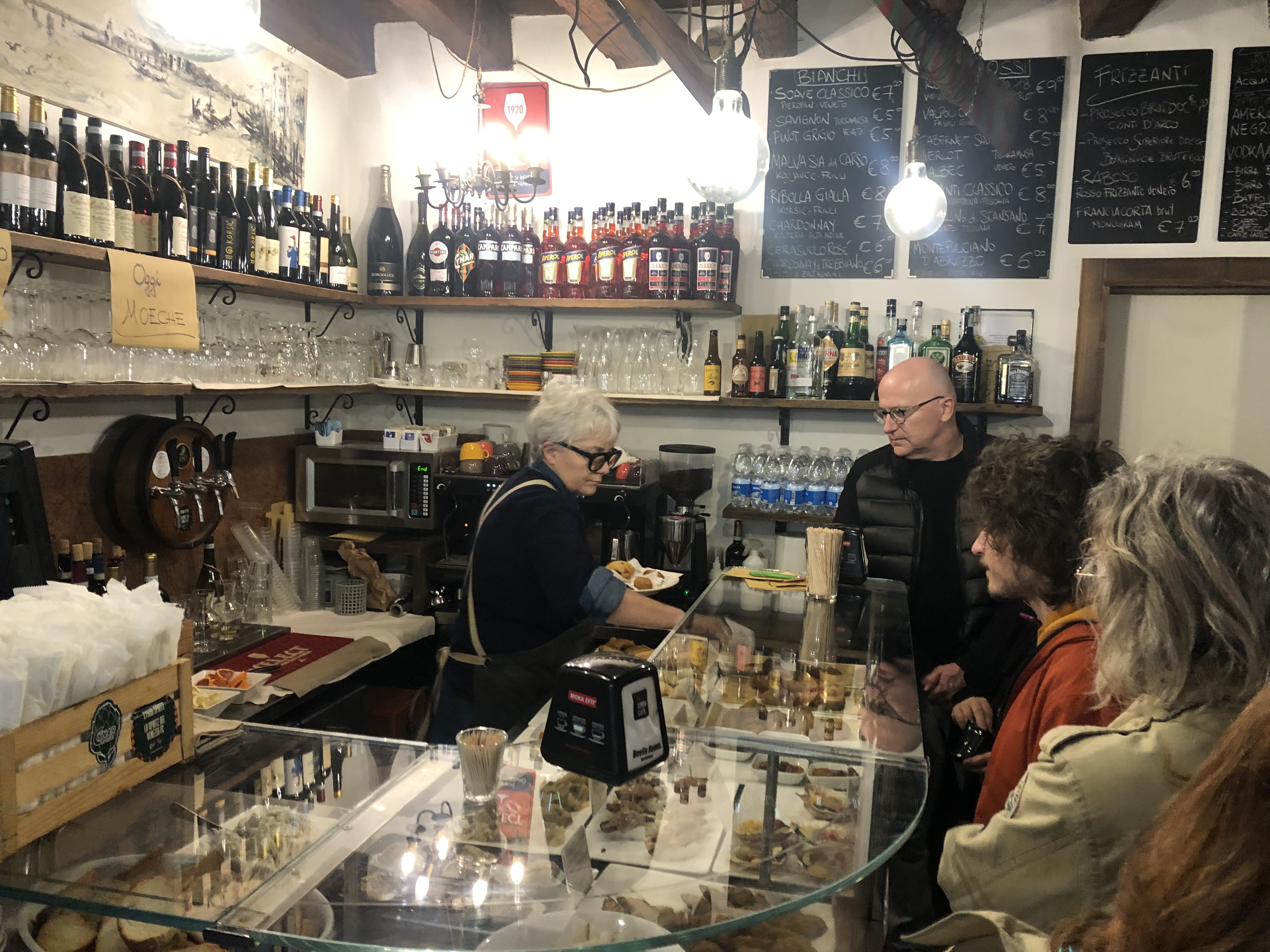
Francesca had arranged for us to visit this typical Venetian bar: quite small, wooden stools and tables and a tempting selection of local cicchetti (tapas).
Inside there was one woman serving us, in the flow and multi-tasking as she passed from putting food on plates, uncorking a bottle of Prosecco with a pop, to taking payments and all non-stop.
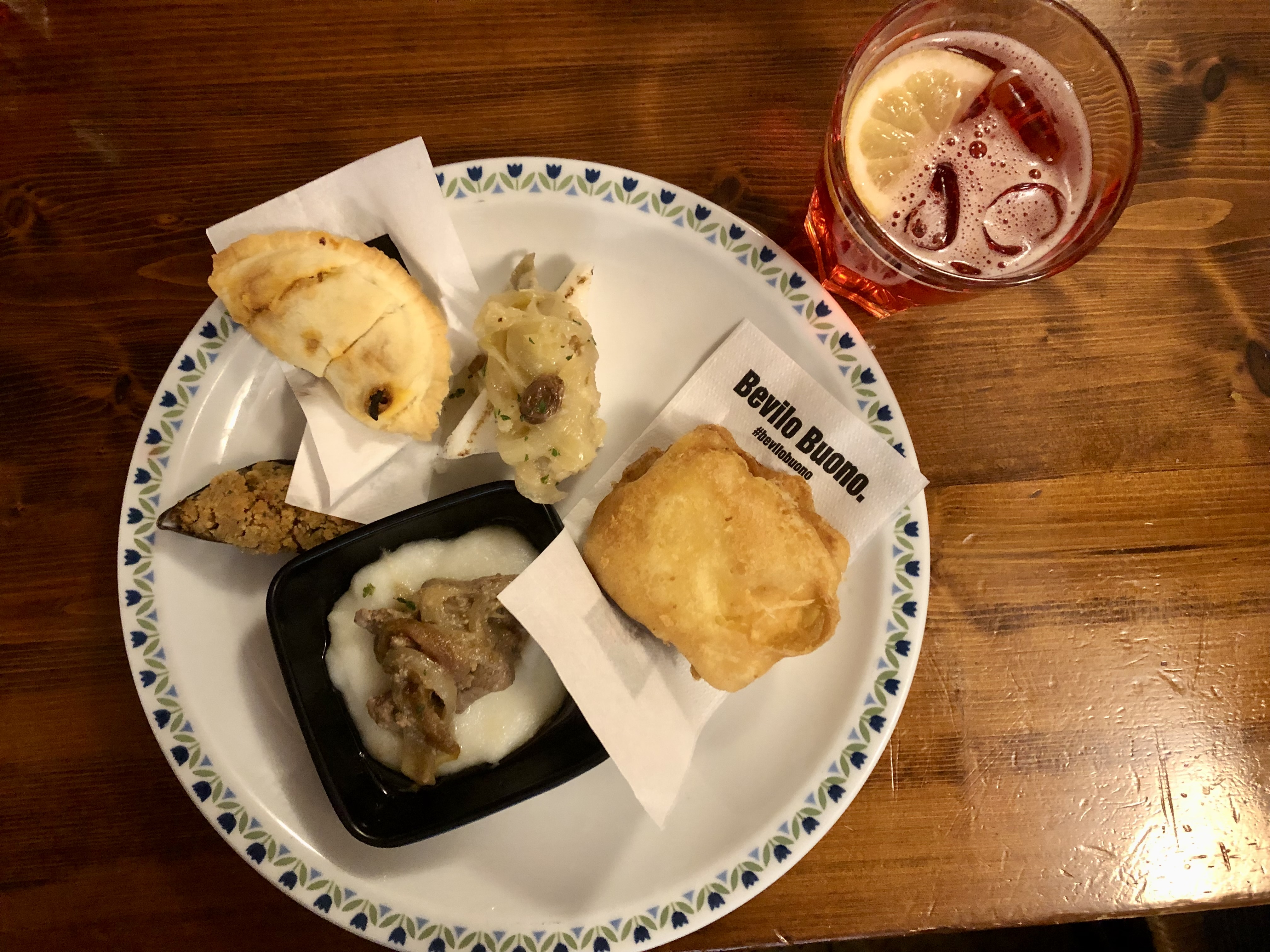
We chose:
fegato alla veneziana (liver with onions) one of Mr CA’s favourites, and one
of the few things I refuse to eat as the idea, taste and texture of this offal
sends shivers down my spine!
cozza gratinata (mussel with breadcrumbs)
sarde in saor fried sardines marinated with onions
mozzarella in carrozza best described as a fried mozzarella sandwich, this
is typical of the south of Italy.
Spritz Select our recent discovery. ‘Select’ is a local product which gives a
not too sweet, not too bitter taste to your Sprtiz. Try it and you’ll see what I
mean!



 casaalison
Leave a comment