
Vicenza is small and compact. Most visitors go directly to the main square and hang around there for a while but there are many beautiful little side streets to wander down that contain unexpected treasures and are worth knowing about.
This tour will cover the main places to see as well as those tucked away places to stop at for a break. There is nothing worse than being too tired when visiting a city, when your brain is frazzled with information overload and you really don’t care about who did what, where and when anymore, but would love to just sit down and have a coffee.
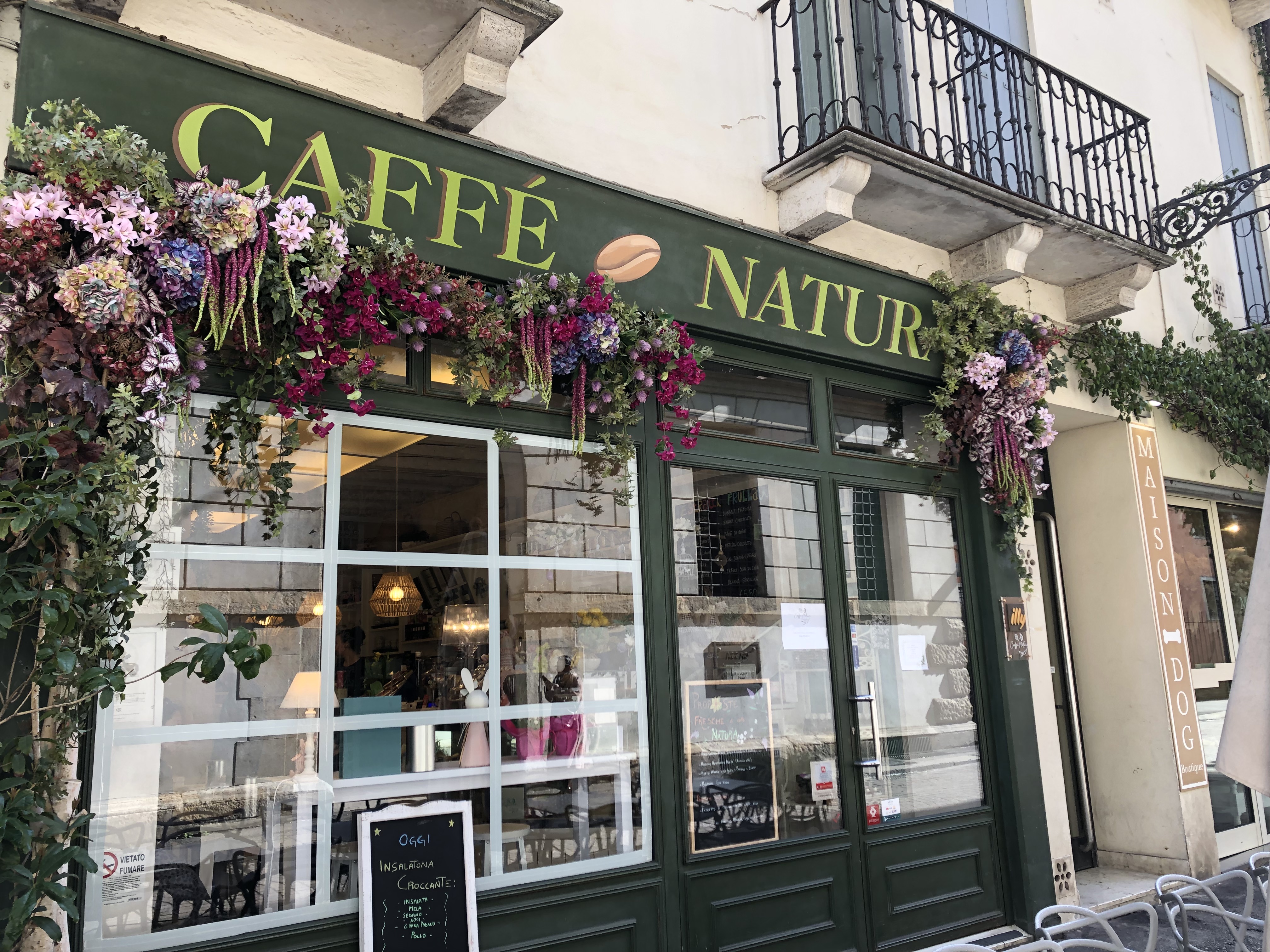
Start: NATURA café in Via Cesare Battisti.
Besides making good coffee, they also make healthy options like centrifughe fresh juices here. There’s seating inside outside near the spider plants while inside it’s nice and light and airy.
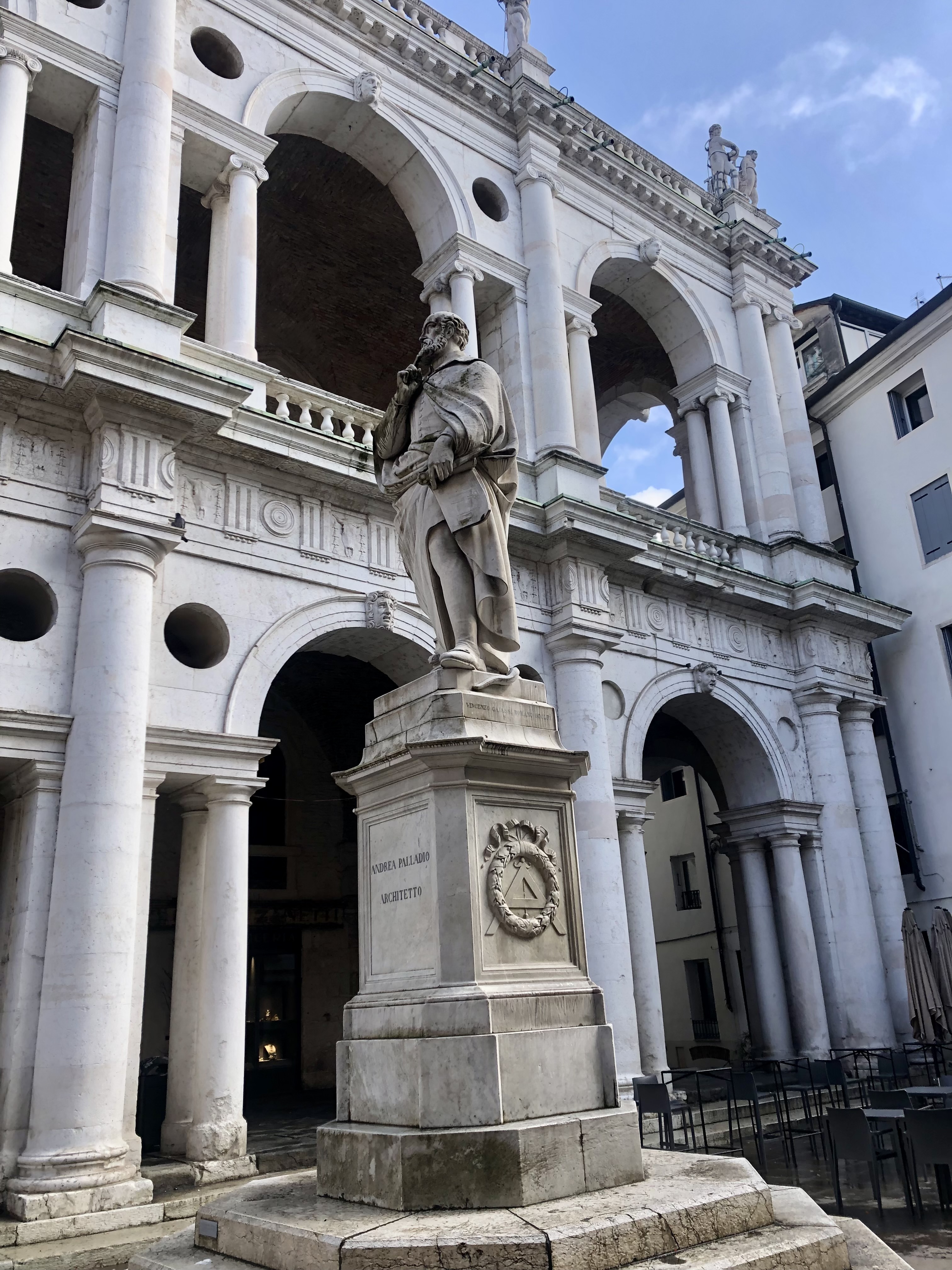
Piazzetta Palladio
Our first stop is this square dedicated to the star architect of Vicenza: Andrea Palladio. Born in 1508, he went on to transform the city from a medieval town to the Renaissance city that we still get to see today.
In his life he wrote four very practical books on architecture which had an impact on architectural styles worldwide- just think of country estates in the English countryside or the White House in the US.
The statue of Palladio shows him in full thinking pose with hand to chin while the other hand is holding a rolled up drawing. It shows him as a man of learning and doing. It’s not an imposing statue,
it blends in with the city: the steps underneath the statue are a playground for children who run up the steps and jump off with screams of delight, while other people sit on the steps to finish an ice cream or wait for a friend.
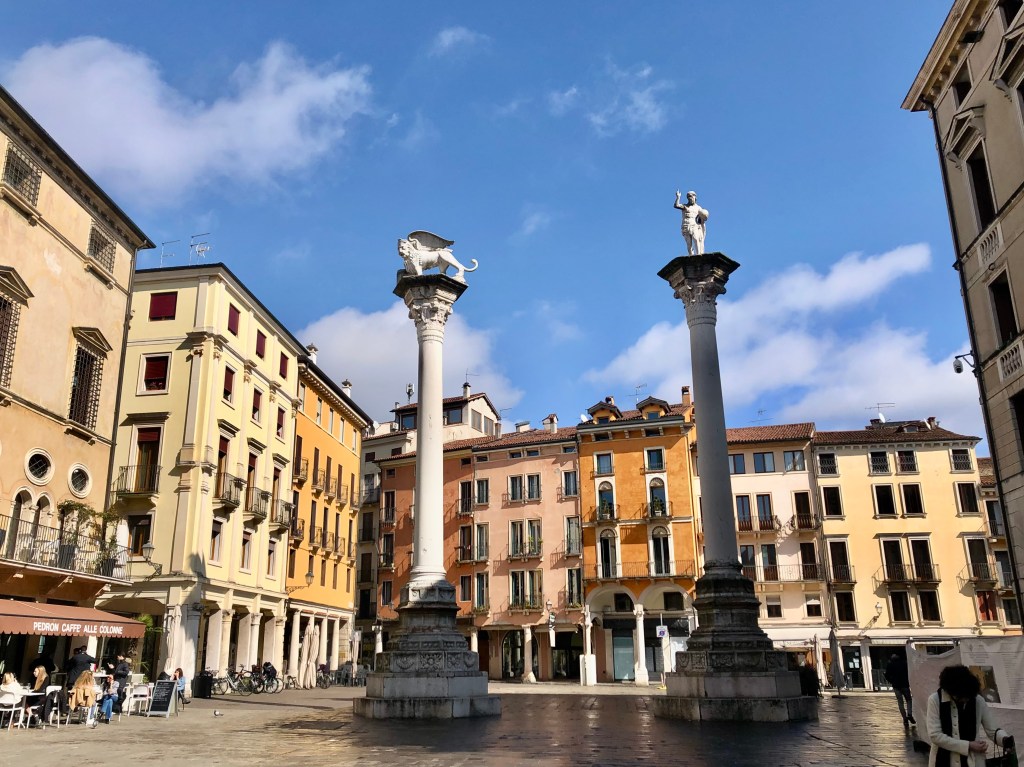
Piazza dei Signori
The main square in Vicenza. This place is criss-crossed by locals walking the dog and children running around.
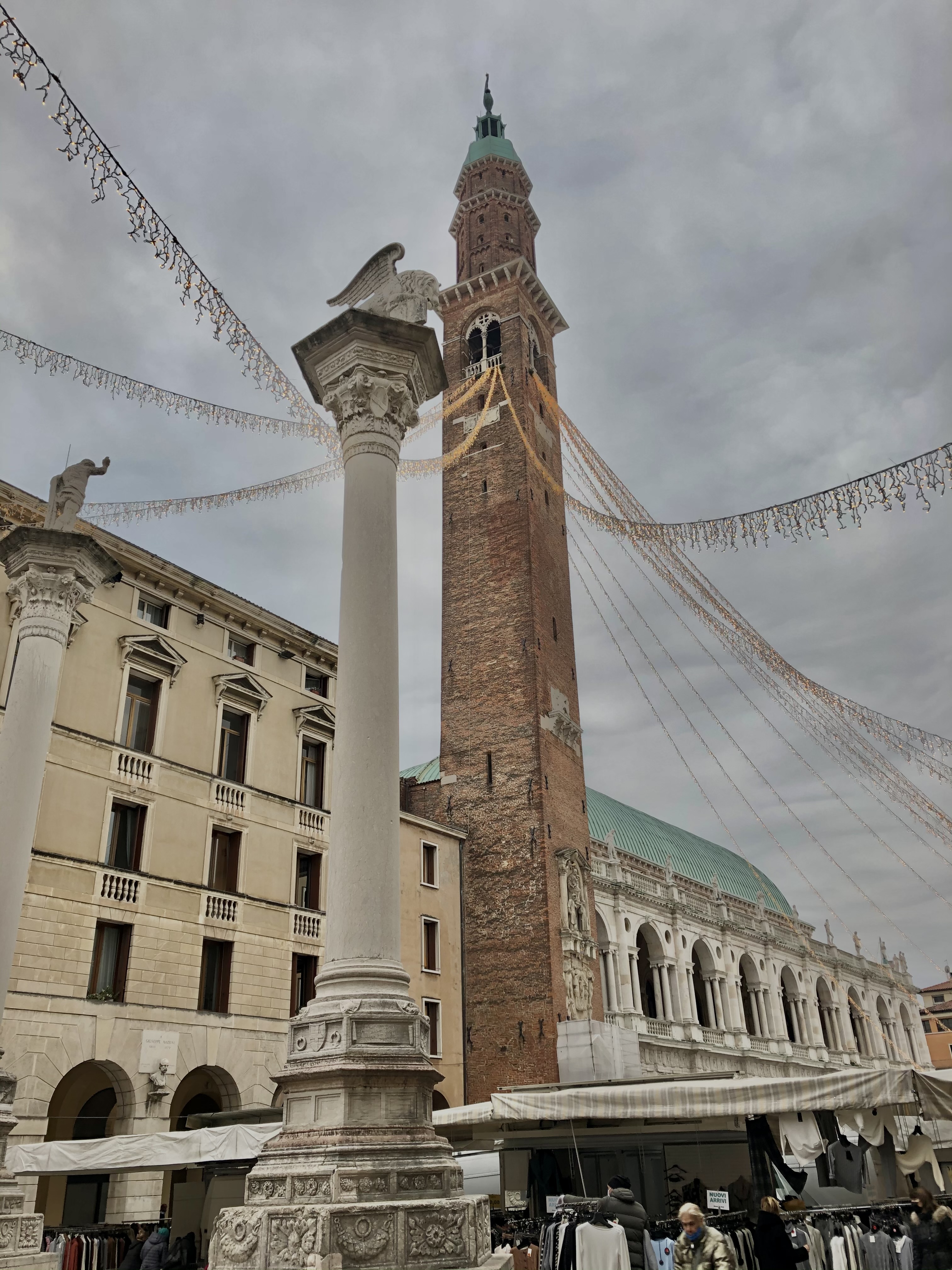
At one end there are two columns: at the top of one of them there is the lion of Saint Mark, the patron saint of Venice, while the other column has a statue of Christ the Redeemer, another Venetian symbol. All this because Vicenza was part of the Serenissima, the Venetian Republic, from 1404 to 1797, which wasn’t so bad, they were years of peace, economic prosperity, and the creation of a cultural and artistic legacy for future generations.
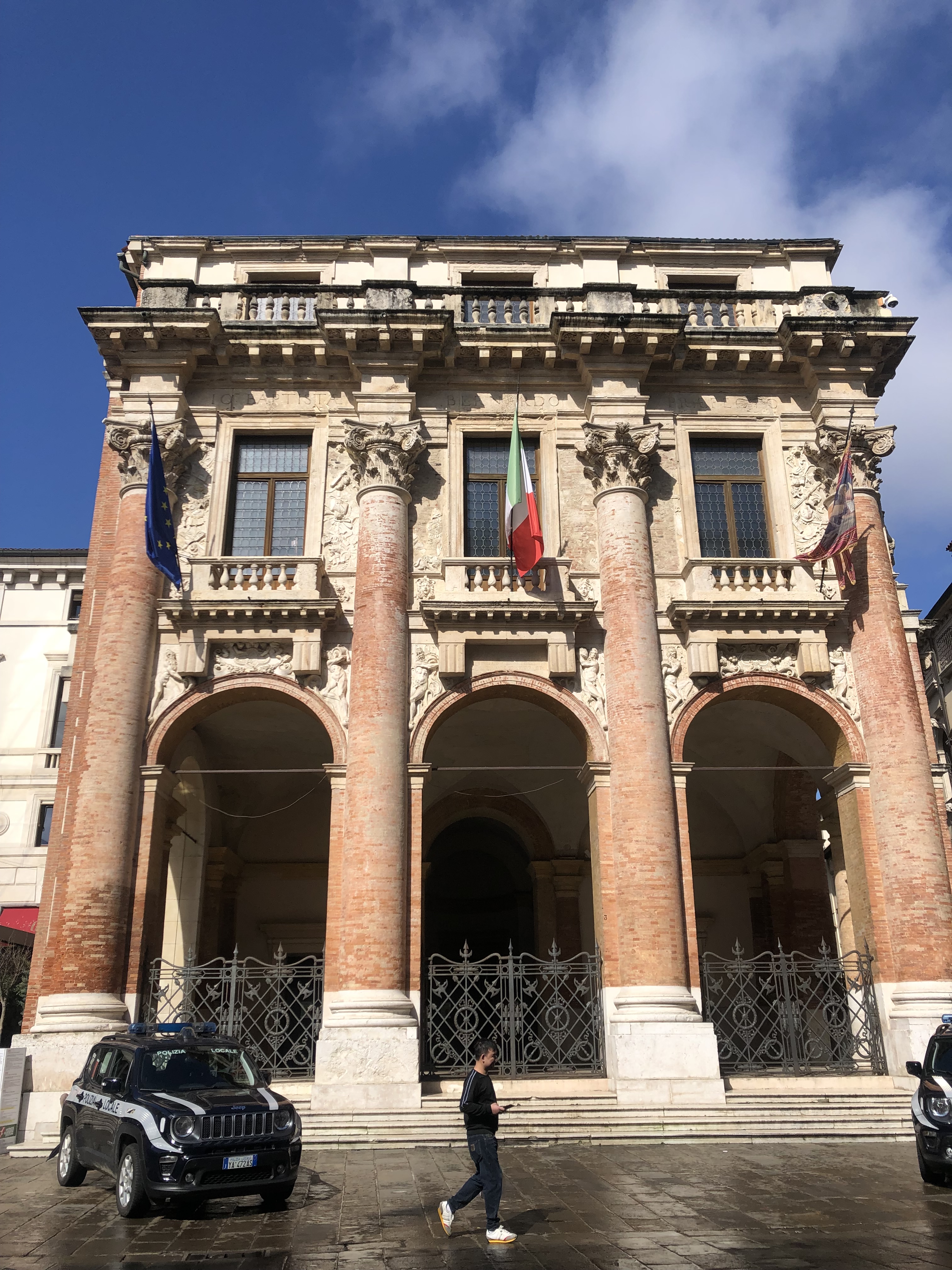
Loggia del Capitanato
Originally designed by Palladio for the Prefect of Venice. It’s very grand with those fancy Corinthian columns topped with leaves and scrolls and the pink stone contrasts well with the white. The stucco (render) decorations are dedicated to the people of Vicenza who fell at the battle of Lepanto in 1571.
It continues to be a seat of government today as it’s the meeting place of the Giunta Comunale, the municipal council.
Basilica Palladiana
This used to be seat of the local magistrate. Palladio added to the existing structure by designing the white arcades. Underneath the arches there used to be the workshops of the goldsmiths. Now there are some quaint jeweller’s shops and through the main archway is the JEWELLERY MUSEUM, which you can read about here.
The Basilica is open to the public to view temporary art exhibitions on the top floor. You get to see whatever is on and marvel at the roof of the building which is like an upturned wooden boat.
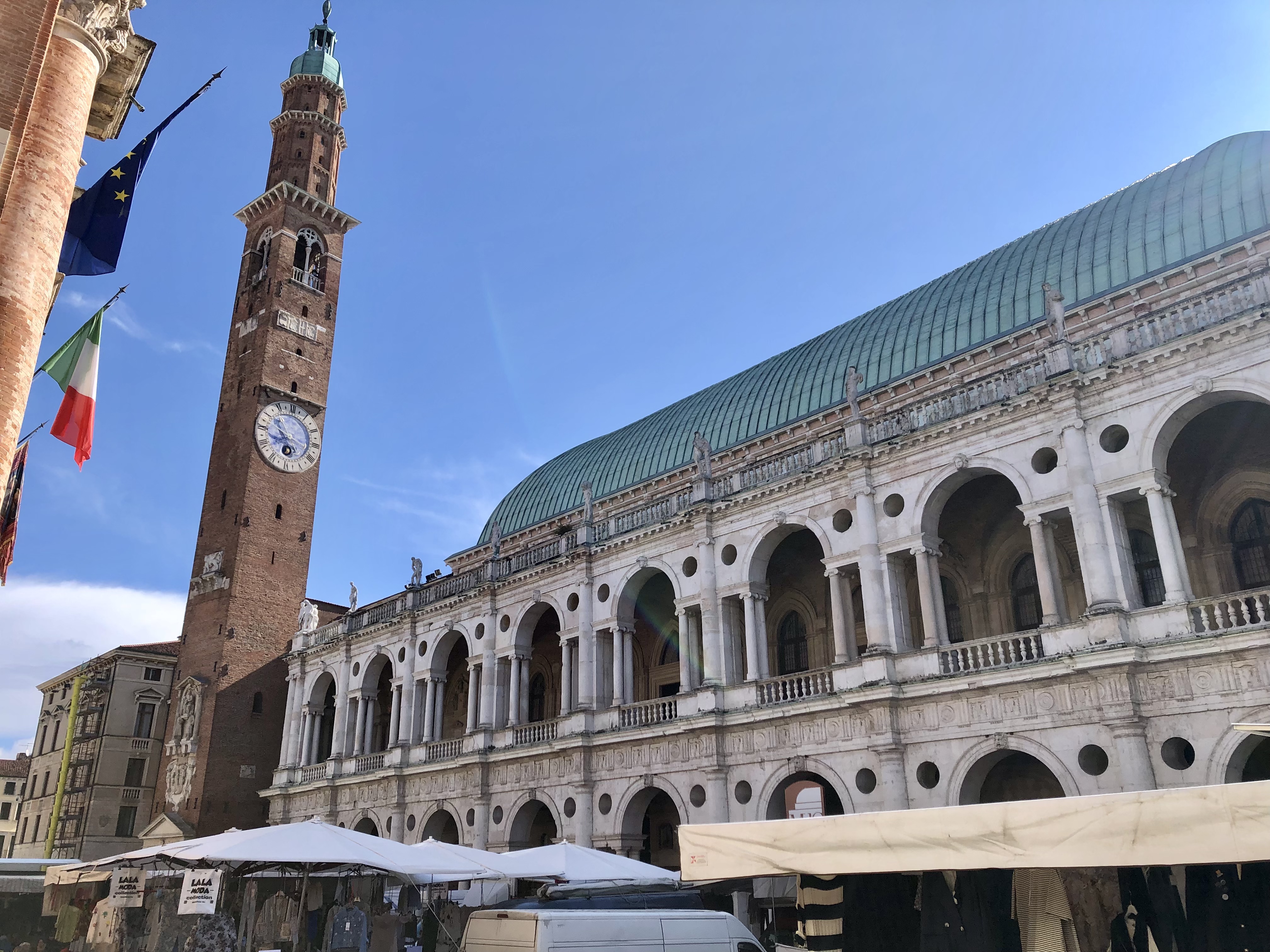
Torre Bissara
This photo-friendly clock tower has survived an earthquake and was partly rebuilt after Allied bombing, but it’s still here. The prettiest moment is to see it at Christmas when strands of lights loop down from the top.
Piazza delle Erbe
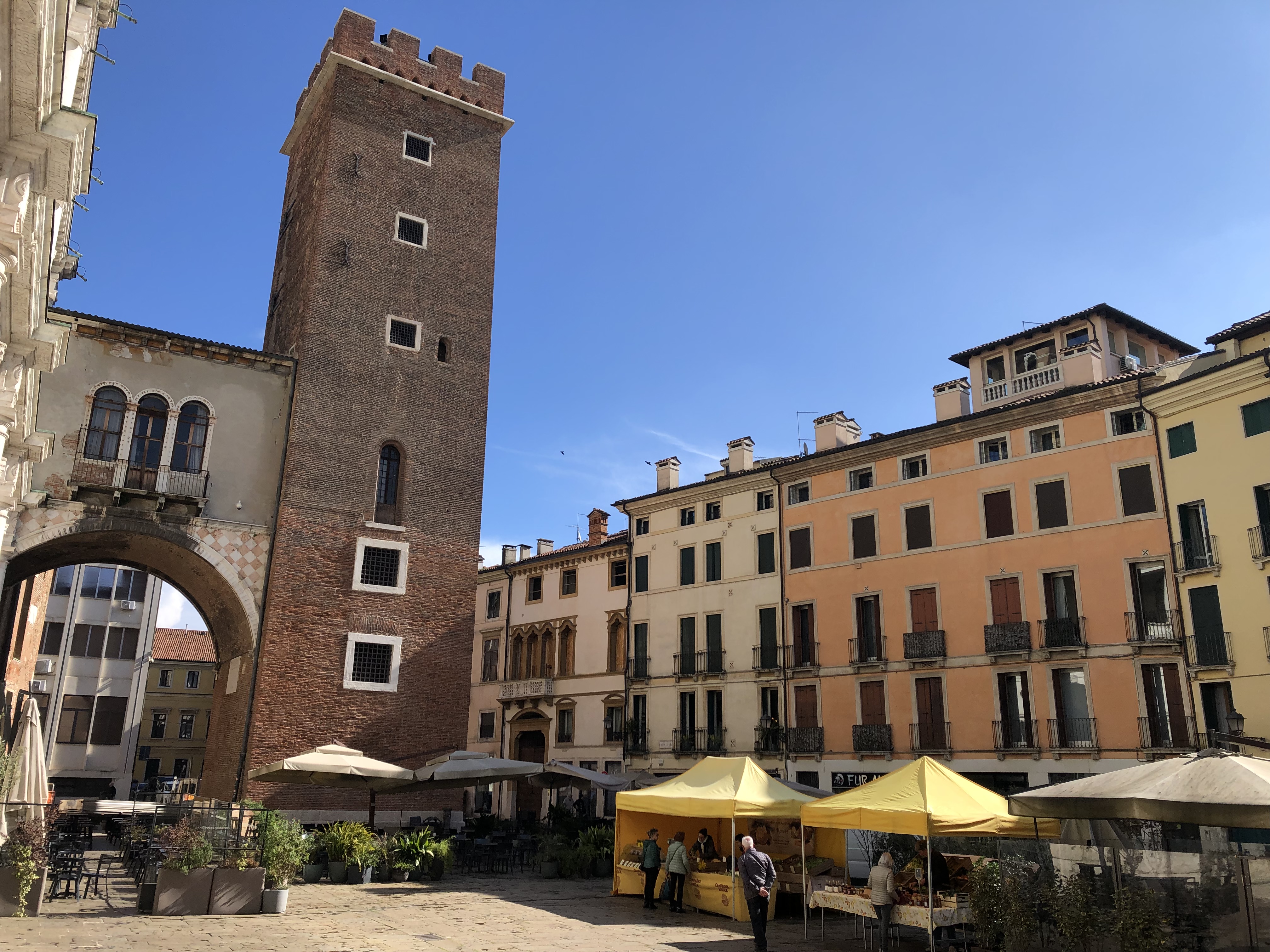
Go through the archway of the Basilica and down the steps into this square and you’ll feel another vibe, more relaxed, especially with all the places to eat and have a drink that you can find here. The tall tower on your left is the Torre del Girone dates from medieval times and was once a prison. The big arch between the tower and the Basilica has the grand name of Arco degli Zavatteri and is actually where they used to sell ciabatte slippers
This square has plenty of places to eat and drink. You can start with a Spritz and some spunciotti (small open rolls with various toppings) at Il Grottino in an old warehouse under the Basilica.
Casa Pigafetta
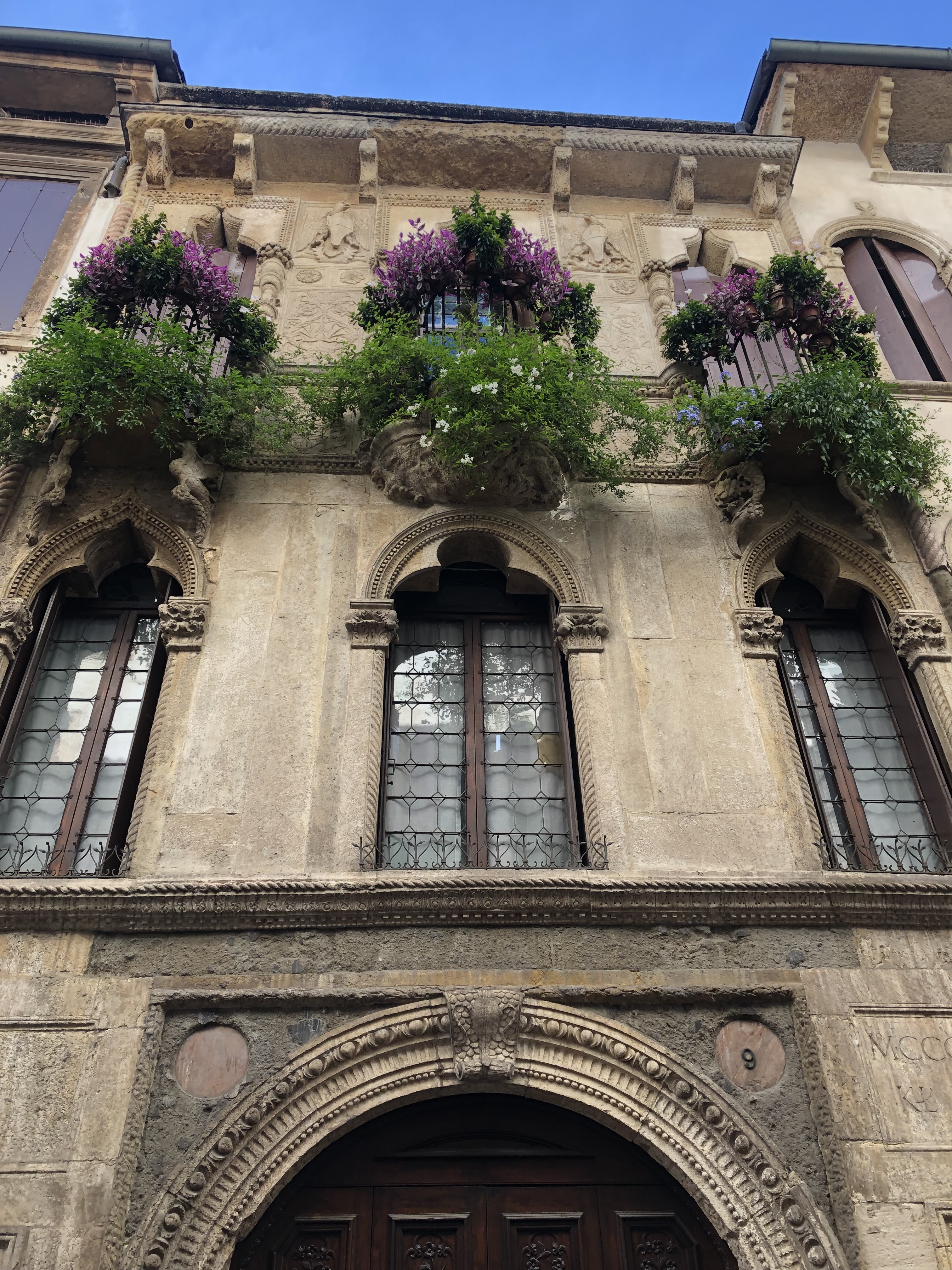
Named after Antonio Pigafetta, who in fact might have lived next door. He came from a noble Vicentino family and is famous for having circumnavigated the world with Ferdinando Magellan between 1519 e il 1522 and for keeping the travel log of the journey. Seeing as Magellan never made it back and there were few survivors, Pigafetta’s records took on even greater importance.
You can’t visit this house, just look up to admire it from the outside with its trefoil windows and Venetian pointed arches. Look even more and you can see an eclectic assortment of decorative elements: dragons, phoenix, griffins and cornucopia- of a flamboyant Gothic style.
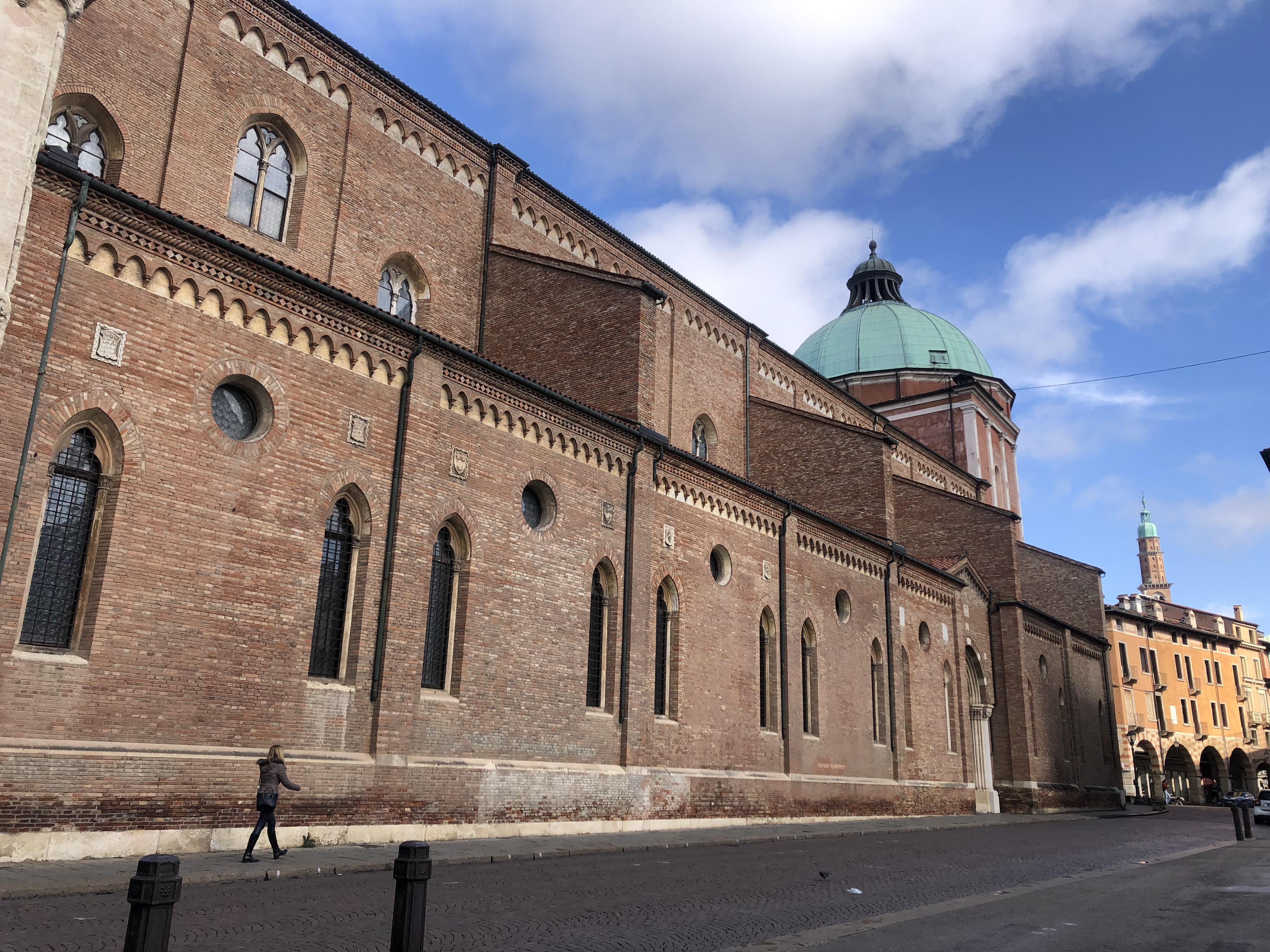
The Duomo of Vicenza
Head for Piazza Duomo, where you can visit the treasures of the Museo Diocesano. Below your feet at this point there is a Roman cryptoporticus, a covered passageway which was part of a Roman house. You can visit and walk along for yourself.
Corso Palladio
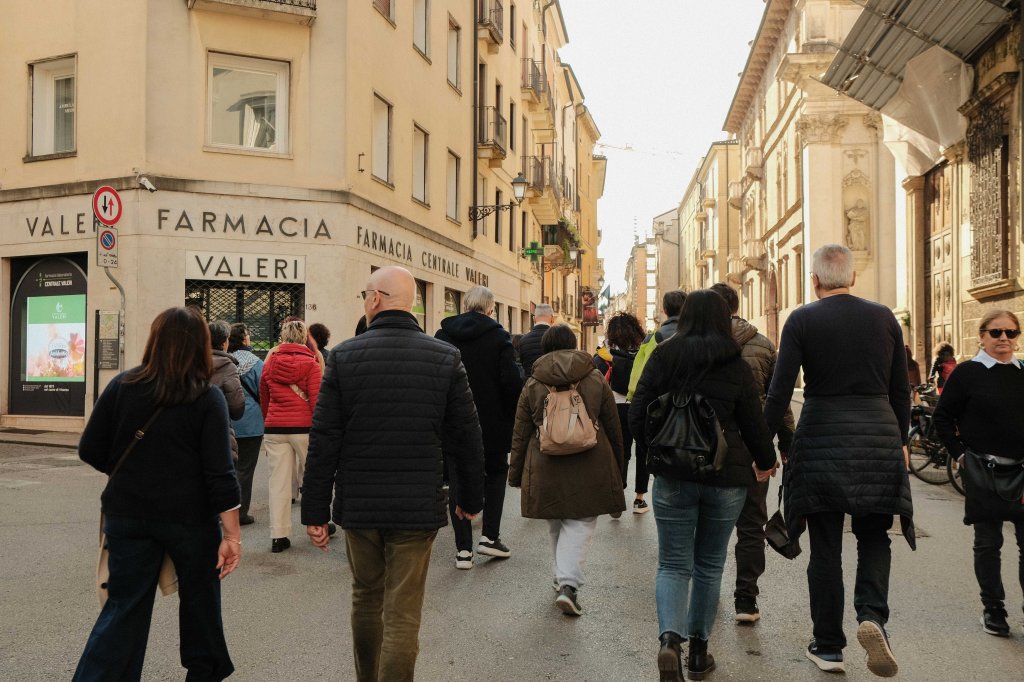
This wide and mainly pedestrian city street runs east and west and follows the Roman road below it, called the Decumanus. Here you’ll find many shops and cafés.
If you take a left into Contrà Porti, you’re likely to be in the other typical Roman road, the Cardo maximus, running at a right angle to the previous one.
This street is rich in beautiful buildings you will love and there is also the must-see Palladio Museum that I previously wrote about: https://casaalison.com/2024/12/31/a-visit-to-the-palladio-museum/
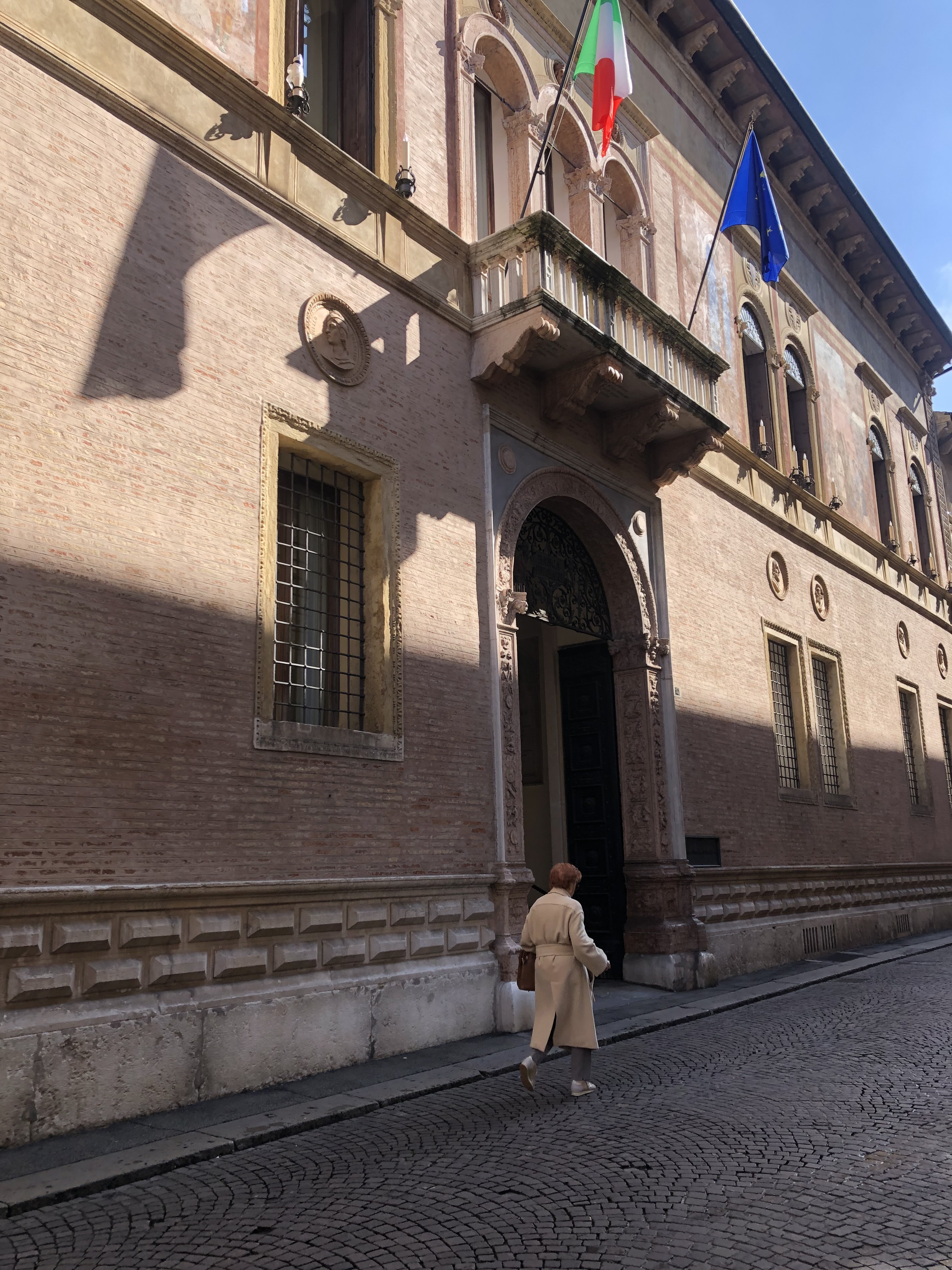
Further along there is a plaque to honour the writer Luigi da Porto who wrote the original story of the star-crossed lovers, taken up by Shakespeare and later made famous as the play The Tale of Romeo and Juliet.
Palazzo Thiene
Another Palladian creation. Can you see the textured stonework on the façade? It’s actually a fine layer over a base of bricks, as you can see from some of the crumbling parts.

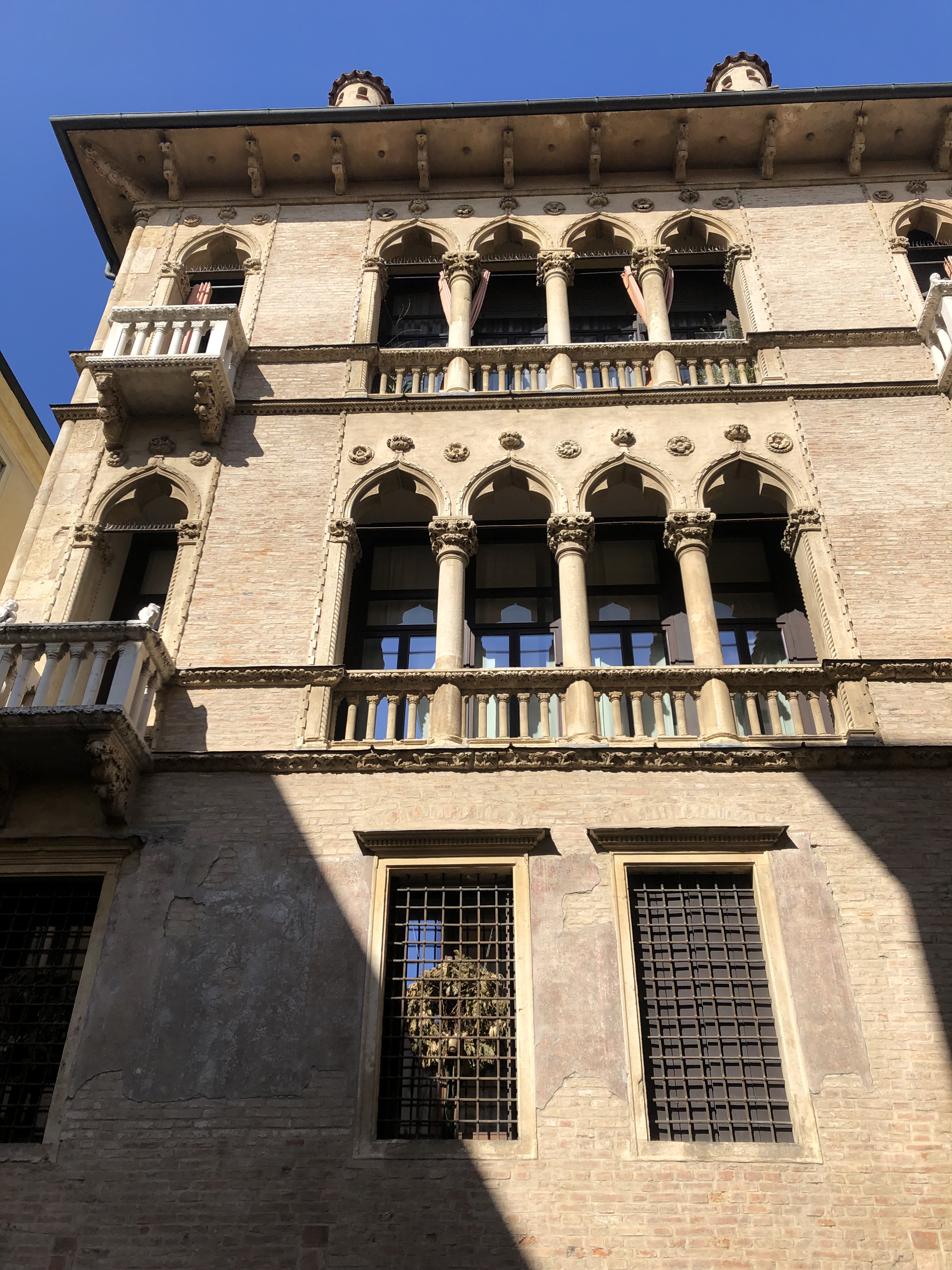
Palazzo da Schio
Back onto Corso Palladio now and heading for the Olympic Theatre, our final destination. Stop to look at this house which was built in the Gothic style typical of Venice.
Look inside the courtyard in spring and you’ll find an old wisteria tree growing
there. This beautiful building belongs to the Da Schio family who still reside in the
apartments inside.
Church of Santa Corona
You can read about my visit to this beautiful church at: https://casaalison.com/2024/12/03/why-you-should-visit-the-church-of-santa-corona-in-vicenza/
Casa del Palladio or Casa Cogollo
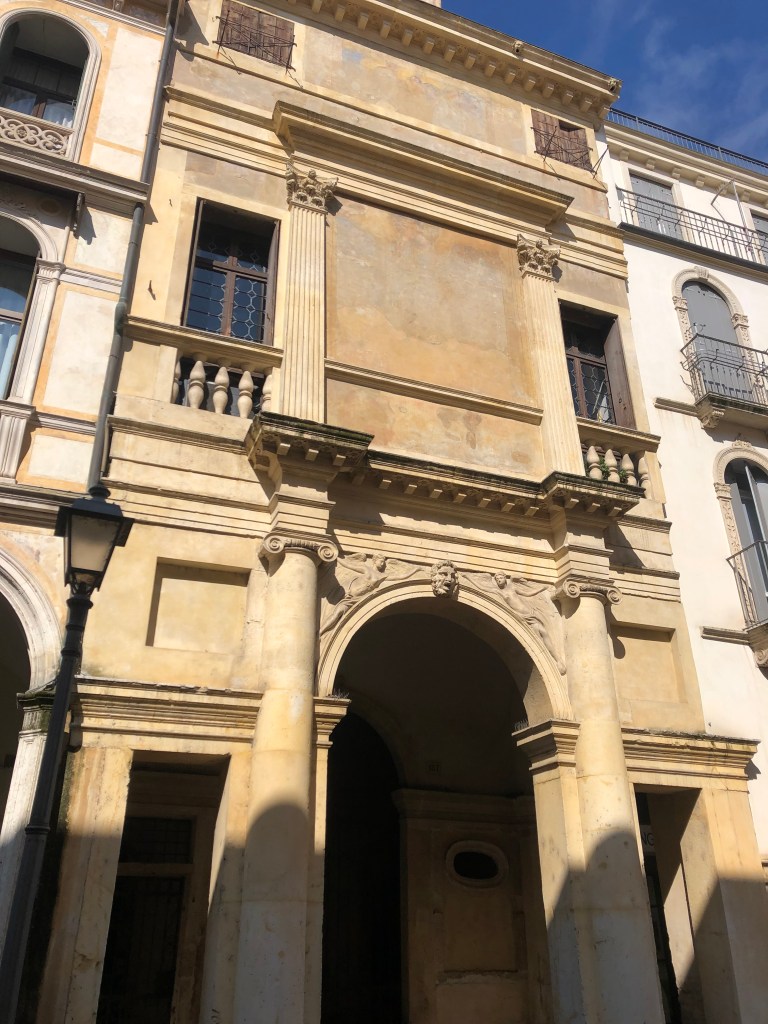
Despite the name, this was not where Palladio lived but it was one of his designs. It’s built from Nanto stone, quarried just 20km from Vicenza. The stone has yellowed over time and taken on that soft Mediterranean colour we love. The odd, flat square shape you can see is not a bricked up window but covers a fireplace on the inside.
This house is mentioned by the German writer Goethe in his book Travels in Italy, published 1816-17. What struck him the most? That such a narrow house could be so elegant.
Palazzo Chiericati
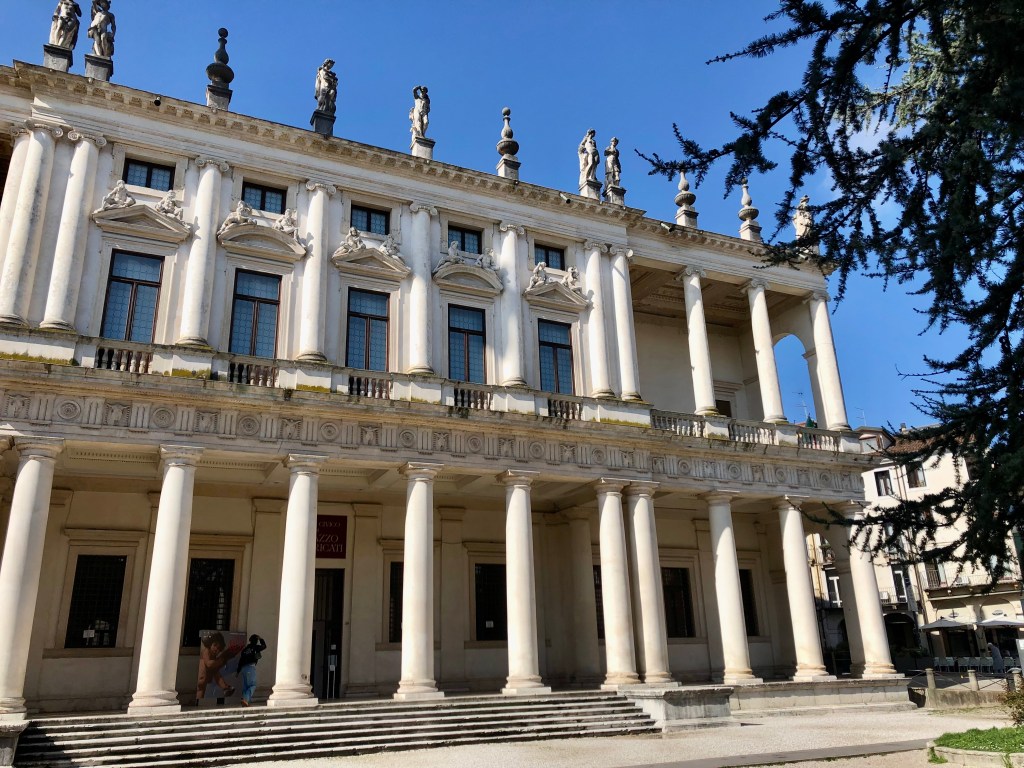
This was once a family home and is now the home of a rich collection of artworks. A new wing has been added too, so it really is time to go for a visit and see what’s new.
It’s hard to imagine but the area in front of this building where there is a small park and parking spaces now, was once the port of the city. Goods would travel along the Bacchiglione river which flows nearby all the way to the Adriatic Sea.
The Olympic Theatre
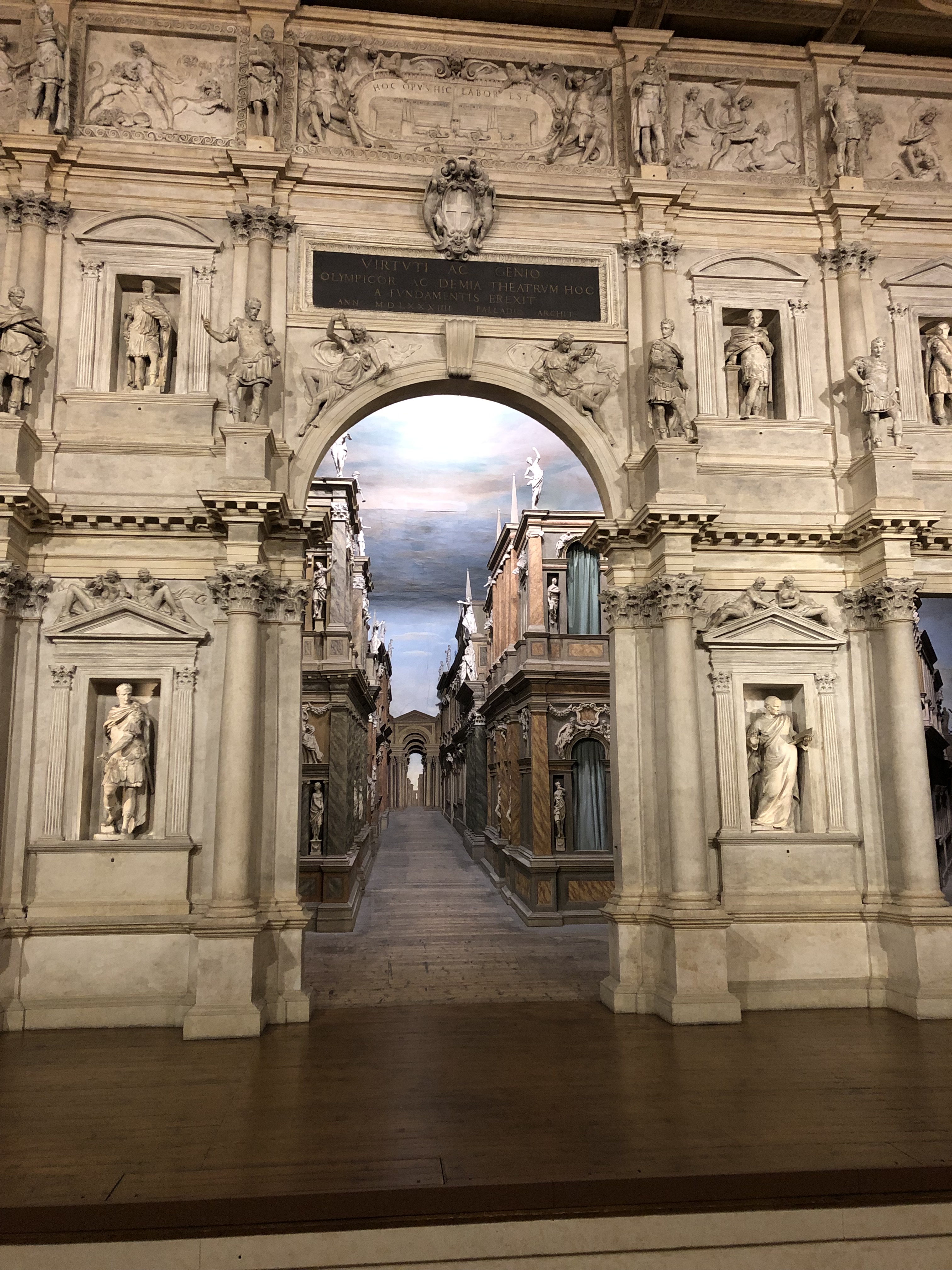
I’ve probably saved the best to the last as your aesthetic soul with love this place. It’s the oldest indoor theatre in the world and was designed by Palladio in 1580 at the age of 72 and following his death was completed by his son.
The wooden seats are the same as they were all those years ago and the scenery created by Vincenzo Scamozzi, Palladio’s star student, are still the same: recreating the city of Thebes for performance of Oedipus Rex.
There’s a busy season of concerts and other cultural events here (during the warmer months as there’s no heating), so you can immerse yourself in music or drama and take in the rest of the beauty as you look around.
Judging by the number of building cranes I had to try to eliminate from these photos, the local council and private enterprises have many more building projects in mind.
These could be areas that no longer serve their original purpose or have been abandoned for too long and deserve another chance to come back to life.
 casaalison
Leave a comment